Many critical theories have been developed in international relations (IR) over the past century, such as Post-colonialism, neo-Marxism, critical theory, feminist IR, and ontological security, aiming to break away old-fashioned military and economic explanations of state behavior. Although the critical security studies have gained a relative importance recently, the mainstream security studies have also remained stubborn in the sense that they adopted new frameworks and revisions to their core argumentation in order to challenge the works of critical theories today. In defense of critical security theories, in this piece, the ontological security has been chosen due to having special emphasis on origins of state identity, explanatory definitions on perceptions-based security and insights on the clash of paradigms at intra-state and inter-state levels.
The issue regarding the mainstream IR, let’s consider the realism which has been dominating the IR academic realm since the scholar E.H. Carr’s famous book “The Twenty Years Crisis”, the respective scholars of the theory endured and resisted the critical theories that treated culture and state identity as fundamental variables, using an interpretive approach to shape foreign policy. In Imre Lakatos’ terms, realist scholars never accepted the falsification of their arguments and continually revised their stance to ensure its survival. The scholars like John Mearsheimer and Stephen Walt, for instance, revised the entire structural realists by applying the cultural side of the states, which is absent in the core arguments of realism, yet the respective scholars fused the cultural dimensions with core ideas of the theory.
But indeed, these remain insufficient compared to the critical security studies. When looking at the current developments, such as the rise of China, resurgent Russia, the United States (US) under Donald Trump, explaining the current dynamics by looking at the changing material elements of military and economy, and balance of power is not enough. Today’s geopolitics is not only about survival in an anarchical environment, but rather how the narratives of states survive.
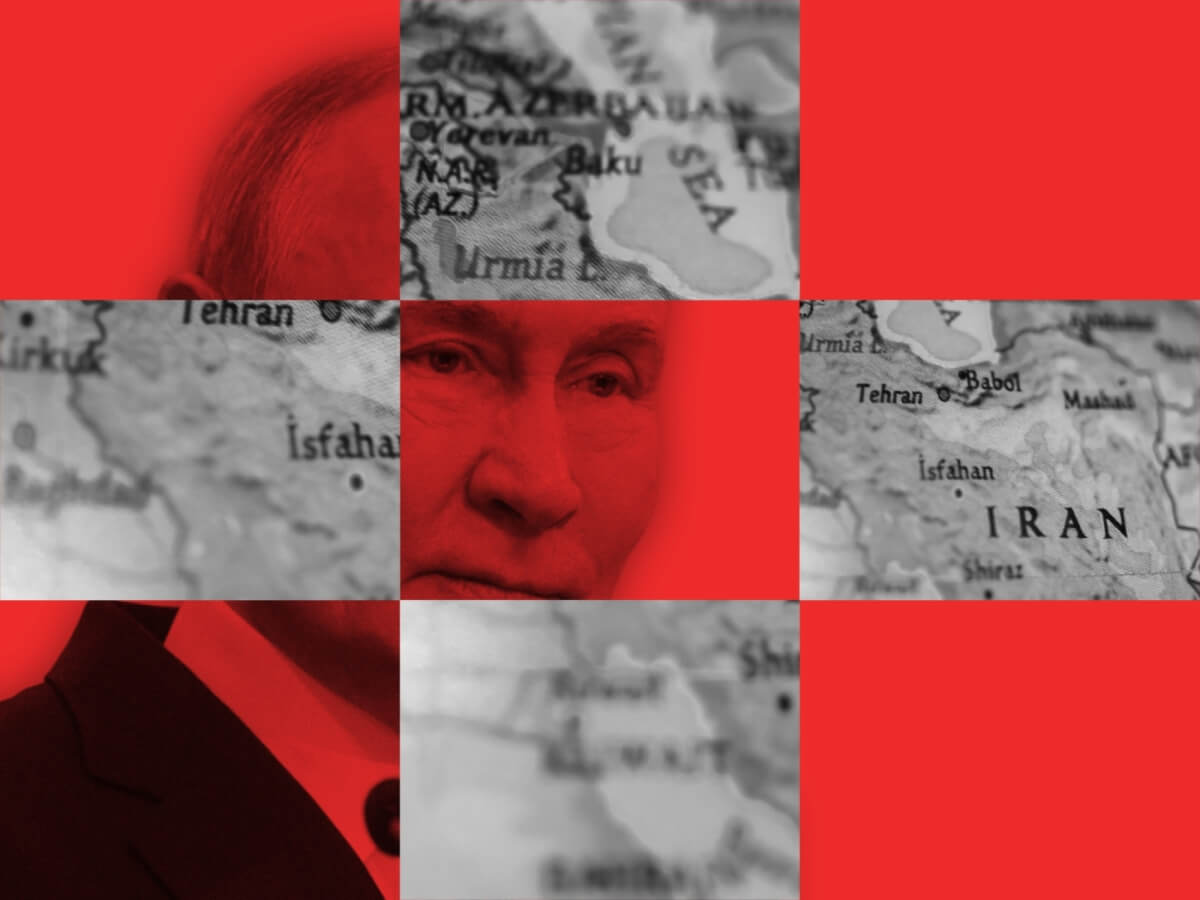
One of the finest critical security paradigms, the ontological security theory looks at the anxiety of states regarding the biographical continuity of identities, narratives and cultures in the long term. The period we are experiencing is the post-Washington Consensus era, which was caused by deep anxieties of globalisation’s “interference” on daily lives, leading to the populist backlash. Trump is just one example of that trend who used the narrative of champion of the people. The war in Ukraine is also another turning point. Because, it is not just about fear of North Atlantic Treaty Organization (NATO) expansion and creating a buffer zone between Russia and NATO, as repeatedly mentioned by John Mearsheimer, this is also about show of force as Vladimir Putin demonstrated that Ukraine is part of over a millennia old great Russian civilization and does not deserve to be a state and a nation because it is an “artificial state”.
China applied a similar anti-Western narrative. The Chinese President Xi Jinping is positioning the country’s new position in world politics as a new center that will achieve the “harmonious world”. The narrative basically emphasizes the position of the Chinese state as the “protector” of the developing nations of the world against Western “injustices”, as long as they respect China’s so-called existential threats in the Asia-Pacific region, not just carrying the military and economic priorities, but honor and pride dimensions too.
Indeed, under the current developments, this does not mean mainstream security studies have become obsolete. They are still valid and offer accurate explanations. The problem regarding the mainstream IR is that they do not show the whole picture and are stuck between pure negativism and optimism. Robert O. Keohane, for instance, takes IR as a pendulum between liberalism and realism. While realism is strong in one period of diplomatic history, liberalism becomes stronger in another, and the vicious cycle continues like that. The goal, however, must be to break that cycle. Therefore, this mission has to be a priority for critical security studies as part of the discipline. Basically, today’s geopolitics is not just about calculating the material capabilities, the quest for survival and becoming a hegemony alone. There is also a cultural dimension to the story. In the case of current China-Japan tension, for instance, the Prime Minister Sanae Takaichi’s remarks on intervening to defend Taiwan were immediately perceived by China to recall the old memories of Japan’s war crimes during World War II. Basically, what is experienced is not just about military threats but also about keeping the national identity and narratives continue, and at this point, the research on critical security studies must be expanded.