Messages to Türkiye from Beijing’s quiet rooms (2)
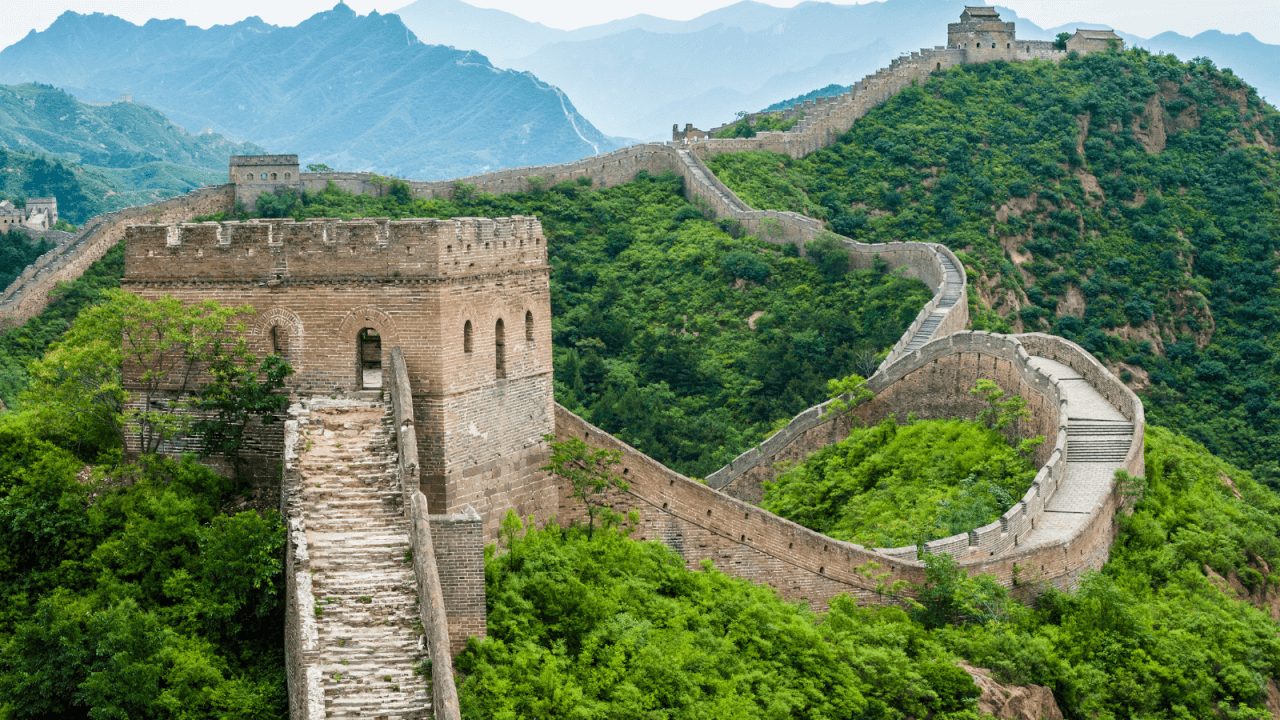
I have climbed the Great Wall more times than I can count – with ministers, business leaders, ambassadors and, most recently, with my wife. Standing in the wind at Badaling, I was reminded again that this is not just stone and mortar; it is a physical expression of a state’s fears, strategy and worldview. In Türkiye, one question is asked constantly: “Was this wall built against the Turks?” The answer requires nuance. It was not built only against the Turks. But from the Huns and Göktürks to the Mongols and other steppe empires, all the northern raiders – including Turkic peoples – were very much in mind. Did the Wall always work? No. The Mongols and Manchus often came through not by assaulting stone walls, but through trade, marriage, and politics.
Today, real power does not lie in walls and tanks, but in trade routes, ports, data flows and energy corridors. The Great Wall’s message to the present is clear: No wall is eternal. What endures are not fortifications, but relationships and bridges. Once facing each other across a frontier, Turks and Chinese now sit on the same side of the table in energy, finance and infrastructure talks.
Beyond the “China Threat” Slogans
In Western capitals, you hear three familiar mantras: “China threat”, “debt trap diplomacy”, “a plan to take over the world.”
But if you look at Africa’s debt structure, you will still find that Western banks and funds are the largest creditors. China is certainly important, but not dominant, and much of China’s finance goes into revenue-generating infrastructure: ports, highways, metros, power plants, hospitals, and factories. That does not mean the model is problem-free. There are legitimate concerns about transparency, collateral, political bargaining, and how defaults are handled. But the line that China is simply “lending to seize countries” is, in most cases, a political slogan rather than a serious analysis.
The reality is this: the world is no longer locked into Western capital as its only option. There is an alternative source of finance and infrastructure – and it is Chinese. This shakes the comfort of being the only game in town. Many of the loudest complaints stem from that loss of monopoly.
Of course, China has its own internal problems: Tough regulation, uneven legal predictability, the opacity created by the party–state fusion, persistent intellectual property disputes, and a sense among some foreign firms that they are under political or regulatory pressure. All of that is real. But the answer is not decoupling or building walls. Supply chains are deeply intertwined, technology depends on global circulation, and capital flows do not respect borders.
Which brings us to the core conclusion: You cannot take China out of the system. You can only decide how intelligently you will work with it.
The West’s Deep Fear – and a “Cold Peace”
In conversations with Western leaders, technocrats and investors, one underlying sentiment is unmistakable. For the first time in two centuries, they can clearly see that they may no longer be the sole architects of the global order.
China has a permanent space station.
It produces the overwhelming share of the world’s solar panels.
It dominates the EV and battery supply chains.
It leads in high-speed rail.
Chinese firms control critical nodes in global port networks.
In refining critical minerals, in battery chemistry, and in rare earths, China is close to a monopoly.
If oil once had OPEC, critical minerals now have a de facto OPEC – and it is China.
On the US–China axis, I describe the current state as a “cold peace”. We see handshakes, warm phrases and “competition, not conflict” rhetoric. Beneath that, we are watching one of the fiercest strategic struggles of the century. Trade persists, but investment is retreating. Technology sharing is curtailed. Sanctions and countersanctions proliferate. It is an odd balance where countries, in effect, “talk while they fight – and trade while they decouple”.
Türkiye at the Crossroads: Neither Just West, Nor Just East
Türkiye is literally and figuratively a crossroads country. It is a NATO member, part of the EU Customs Union, and deeply enmeshed with the US and Europe in defence and trade. At the same time, it is a critical node for the Belt and Road, the core of the Middle Corridor, and the junction for Caspian and Middle Eastern energy routes.
Türkiye–US trade hovers around $30bn. Türkiye–China trade has reached roughly $47bn – but with a glaring asymmetry: only about $4bn of that is Turkish exports. Chinese FDI in Türkiye is about $2bn – far below US and European levels. This tells us two things: China is an indispensable supplier and technology partner for Türkiye. If we design this relationship poorly, we will amplify dependency risks.
So the question is not “Whose side are we on?” The more precise question is “What kind of China strategy will protect Türkiye’s long-term interests, build domestic capacity and reinforce our access to Europe?”
It is a mistake to respond with fear and build walls. It is equally dangerous to romanticise China as a saviour. Those who panic will lose. Those who idealise China will also lose. Those who will win are the ones who study China and Asia coldly; who look at data, define their interests clearly and manage the relationship with strategic discipline.
Hong Kong: China’s Legal and Financial Laboratory to the World
Walking in Hong Kong again, what impressed me most was not a noisy comeback, but a quiet determination. The city is a unique laboratory that fuses China’s economic depth with English law and arbitration traditions. Legal security, arbitration capacity, banking depth and logistical muscle converge in one place. A significant share of global energy and commodity contracts – their documentation, collateral, insurance, and financing structures – can be designed and booked here.
For Turks, Hong Kong has a particular relevance. There is now a small but capable Turkish community in banking, law, logistics, technology, jewellery, retail and academia. Many Turkish firms choose to establish first in Hong Kong rather than going directly to the mainland – using the city as a platform for finance, legal protection and access to regional supply chains. The active presence of Consul-General Sercan Evcim and Trade Counsellor Dinçer Tatlıoğlu helps turn this potential into an institutional framework.
Put simply, those who read Hong Kong correctly will understand the mathematics of the new world faster.
From Hardship Posting to Superpower Stage: Turkish Diplomacy in Beijing
When I served in Beijing during and after Tiananmen, China was still considered a hardship posting. It was closed to the outside world, economically fragile, but searching for a path of transformation. Serving there was a test of both physical endurance and intellectual resilience. That picture has changed completely. China is now the new superpower of the 21st century. Ankara has understood this, and – like the Americans, British, Japanese, French and Russians – now sends some of its brightest diplomats to Beijing.
The reasoning is simple: Every correctly structured relationship with China will directly affect Türkiye’s economic, technological and strategic position in the decades ahead. Today, Ambassador Selçuk Ünal and his carefully selected team reflect this new understanding. From the defence attaché to the trade counsellor, from investment office representatives to cultural officers, they are not merely performing protocol; they are engaged in multi-dimensional diplomacy across investment, technology, security and culture. Serving in Beijing is no longer a remote hardship. It is standing at the centre of the emerging world order. This time, it is not an age of scarcity, but an age of opportunity – for those who know how to use it.
A Five-Year Roadmap for a Türkiye–China “Leap”
If Türkiye wants a real leap in relations with China over the next five years, I see five priority tracks. First, elevate leader-to-leader diplomacy into a strategic framework. In China, clear signals come from the top. Without a political green light, neither state-owned enterprises nor provincial governments will take long-term risks. Recent meetings between President Erdoğan and President Xi – in Astana at the Shanghai Cooperation Organisation summit and in Tianjin – have already sent a message of “a new period in relations”. The next step is to convert this into a concrete 2025–2030 Türkiye–China Action Plan with clear sectoral priorities – energy, critical minerals, defence industry, digital infrastructure, agriculture and food, tourism – and explicit responsibilities and timelines.
Second, correct the trade imbalance intelligently. We cannot flip the trade deficit overnight; we import a large volume of high-value-added Chinese goods and will continue to do so. But we can raise our exports from roughly $4bn to at least $8–10bn. The most realistic channels for this are:
- Agriculture and food: Olive oil, quality wine, hazelnuts, dried fruits, organic products – China’s middle class pays for “healthy products with a story”;
- Industry: Defence supply chains, machinery, automotive components, chemicals – built around joint production and exports to China;
- Tourism and education: Attracting more Chinese tourists and students would generate not only foreign exchange, but long-term “Türkiye capital”. Special Eximbank schemes, dedicated logistics arrangements and “pilot cities” within China for Turkish brands would accelerate this shift.
Third, flagship projects in critical minerals, green transition and digital infrastructure. China has de facto dominance in lithium, cobalt, graphite, rare earths and battery chemistry. Türkiye has significant potential for boron, rare earths, nickel, and other critical minerals. If designed wisely, joint facilities in Türkiye could cover the chain from mineral processing to cathode–anode production and battery assembly. Add to this data centres, 5G/6G infrastructure, cyber security, cloud and fintech cooperation, and you have a truly strategic partnership architecture.
Fourth, build a genuine trust architecture – especially around the Uyghur issue. The Uyghur/Xinjiang file hangs over Türkiye–China relations like a sword of Damocles. Public sensitivity in Türkiye is high; China sees it as a hard “internal affairs” red line. If left unmanaged, this issue will derail progress every time a crisis flares. The only way forward is to:
- Establish a quiet but institutionalised consultation mechanism;
- Organise small, credible delegations of MPs, scholars and religious/cultural figures for mutual visits;
- Encourage calibrated transparency steps from Beijing to address humanitarian and cultural concerns;
- Keep Ankara’s tone within the language of diplomacy and law, not slogans.
Without mutual trust, no strategic partnership can be sustainable.
Fifth, develop a province- and company-level strategy that still respects signals from the centre. Shanghai, Guangdong, Shandong, and Chongqing – each offers Türkiye a different mix of opportunities: finance and logistics, automotive and batteries, petrochemicals, and steel. The right approach is direct engagement with provincial governments, major cities, and business associations within the broader political framework set by Beijing. In other words, a controlled but ambitious deepening along the axis of leaders, ministries, provinces, and companies.
Not “Threat or Opportunity” – But “Strategy or Drift”
China is neither a pure “threat” nor a romantic “saviour”. Seeing it as either is to misread the new world. In the coming years, those who panic about China will lose. Those who idolise China will also lose. Those who will win are the ones who read China and Asia with a cool head, place their own interests at the centre, and move not with emotion but with strategy. Türkiye has the historic memory, geographic position and institutional capacity to be one of those countries. The real question is whether we will trust our own judgement, define our long-term interests clearly, and meet the Asian-centred century not with walls, but with smart bridges.