Few expressions are repeated as frequently today in academic and diplomatic circles as the rules-based international order (RUBIO). Yet it is invoked most often in the negative: that it is under threat, fraying, or collapsing. Some argue that the order itself was always a Western construction, deployed selectively by powerful states. Others, especially in Europe and parts of Asia, regard it as the only barrier preventing a return to unrestrained power politics.
This debate raises a more fundamental question: is a rules-based international system still possible at all? Can states, in today’s geopolitical conditions, still accept constraints on their behaviour, commit to legal norms, and cooperate through institutions? Or has the very idea become unrealistic in an era of revived great-power rivalry, contested legitimacy, and technological disruption?
I would argue that a rules-based system remains possible, but not in the form many imagine. We cannot return to the unipolar era of the 1990s, nor to the belief that a single model of governance would become universal. What is still possible is a renewed, inclusive, and law-anchored system that stabilises a multipolar world through shared constraints and predictable behaviour.
To explore this claim, in this article four critical questions will be examined:
1. What is the rules-based system and how did it emerge?
2. Why is it not functioning today?
3. If restoration is impossible, what remedies are feasible?
4. What is practically required to make such a system operational again?
What is “Rules Based International Order” (RUBIO) and How did it Emerge?
The phrase “rules-based international order” gained prominence in Western strategic documents in the 2010s. But the underlying idea is older. We can think of it as resting on three concentric circles:
(1) At the centre lies the United Nations Charter, negotiated in 1945 by states emerging from the devastation of global war and colonialism. Its principles, namely, sovereign equality, the prohibition of the use of force except in self-defence or with Security Council authorisation, the peaceful settlement of disputes, and the advancement of human rights, constitute the closest thing we have to a constitution for the international community.
(2) After 1945, and particularly after 1991, this legal core was supplemented by a dense network of multilateral institutions like the Bretton Woods system, arms-control agreements, the GATT/WTO regime, regional organisations such as the EU, Council of Europe, ASEAN, and a growing body of human rights and non-proliferation norms. This layer reflects what scholars describe as the liberal international order, encompassing the concepts of open markets, multilateralism, and the idea that power should be constrained by rules.
(3) Finally, there is the relatively recent discourse of a “rules-based order” promoted by some Western governments. Critics, including Russia and China, argue that this discourse sometimes appears to elevate “club-based norms” above universal international law.
For the purposes of this article, RUBIO will be used in a broad, neutral sense: a system in which states accept that their behaviour is shaped and constrained by agreed rules, institutions, and procedures, and where the use of force and unilateral economic coercion remain the exception. This order did not emerge overnight. It developed through the Cold War, détente and the Helsinki process, decolonisation, the post-1991 wave of globalisation, and the expansion of regional organisations. With each stage came new expectations and new sources of contestation.
Why RUBIO Is Not Functioning Today?
The rules-based order has not collapsed suddenly; it has eroded gradually under the pressure of four mutually reinforcing trends:
(1) The prohibition against altering borders by force, arguably the foundational norm of the post-1945 system, is being violated openly.
• Russia’s invasion of Ukraine is a direct challenge to the UN Charter’s core principles.
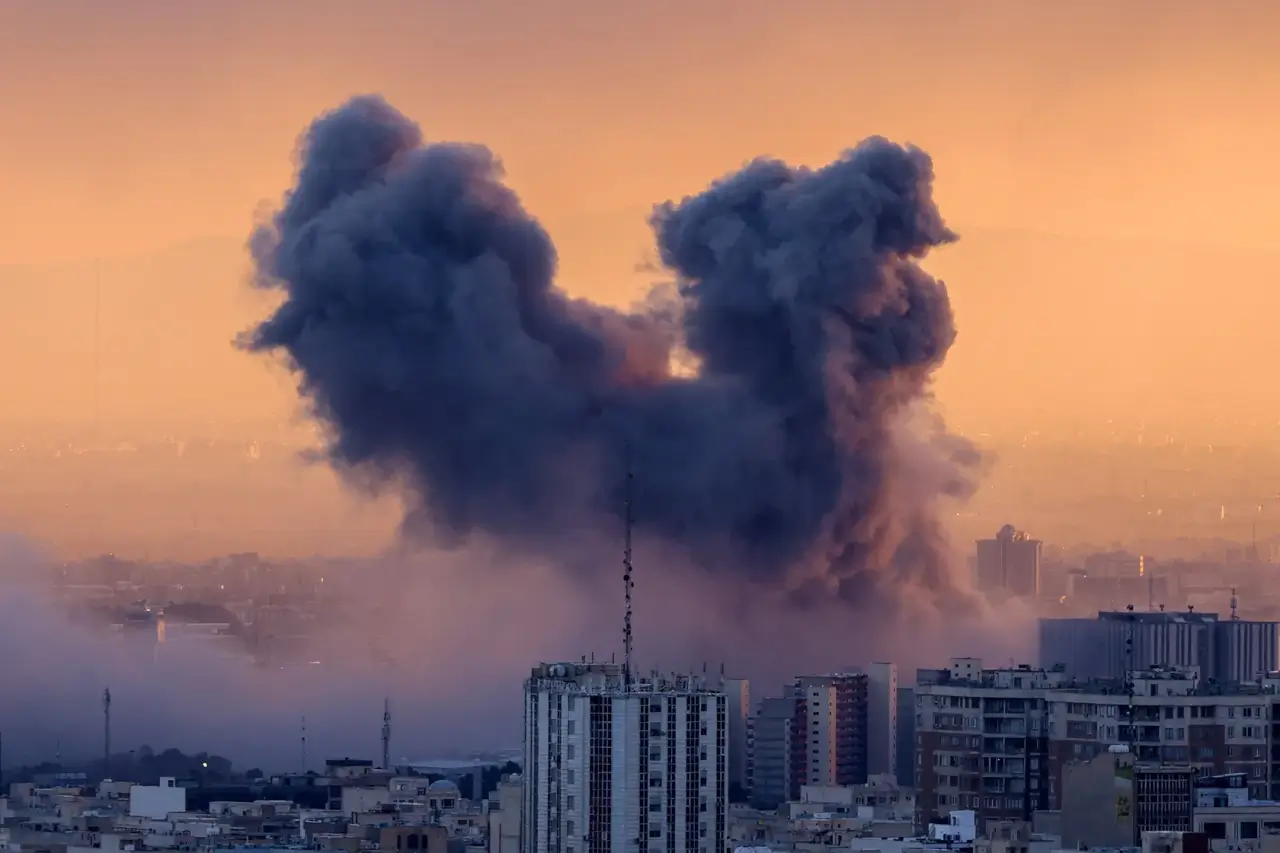
• Use of force without Security Council authorisation, from Iraq in 2003 to unilateral actions in Syria and elsewhere, has normalised bypassing the UN.
- Conflicts in the Middle East have exposed the fragility of humanitarian law and the limits of international accountability.
To many states, therefore, power has re-emerged as the decisive arbiter.
(2) One of the most damaging vulnerabilities of RUBIO is its legitimacy gap.
• Violations of sovereignty condemned in Europe are sometimes tolerated elsewhere.
• Unilateral sanctions, often with extraterritorial reach, are seen as tools of coercion rather than instruments of collective decision.
• Major powers increasingly depart from multilateral economic principles, invoking national security to justify tariffs, export controls and discriminatory industrial policies.
From the perspective of many in the global South, the message appears to be:“Rules are universal—until they are not.”
(3) RUBIO now faces systemic competition.
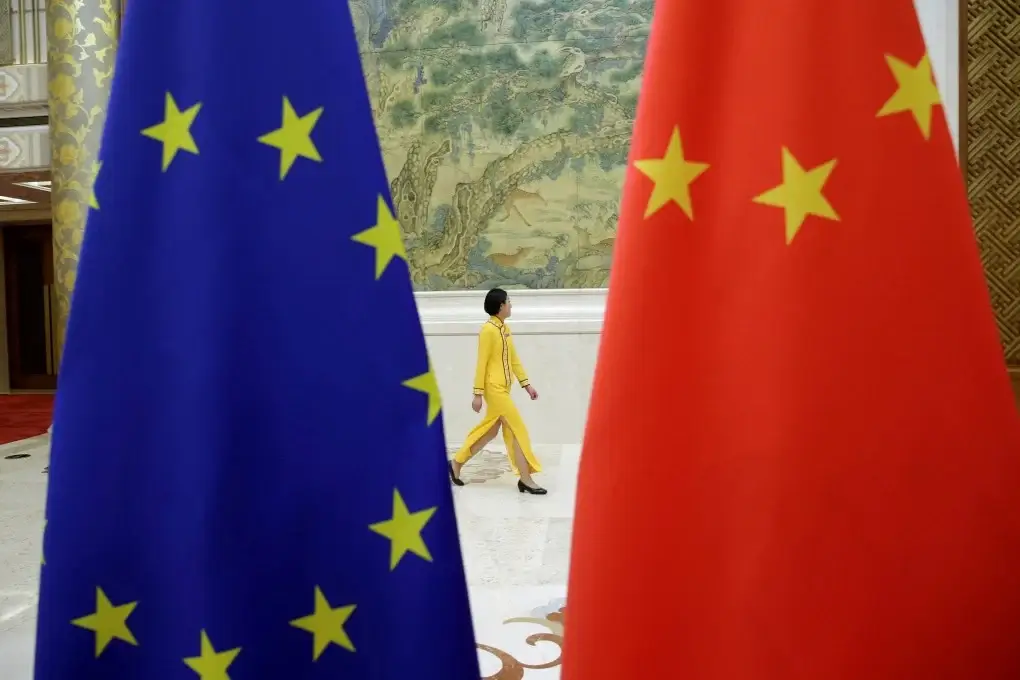
• Russia and China promote narratives portraying it as a Western construct incompatible with sovereign equality.
• Civilizational and multipolar discourses challenge universal norms.
• Some new multilateral coalitions such as BRICS+, SCO, AUKUS, or other regional security fora, offer alternative or partial substitutes to universal multilateralism.
Authority, therefore, is dispersing across multiple fora, fragmenting the landscape of global governance.
(4) Even where norms remain intact on paper, key institutions are struggling.
• The UN Security Council is paralysed by vetoes.
• The arms-control architecture (from INF to New START) is collapsing.
• The WTO dispute system is effectively suspended.
• Regional organisations such as the OSCE and Arab League are weakened by internal divisions.
The combined effect of all of the above is a loss of predictability, trust, and incentives for cooperation.
Is “Restoration” the Right Concept? What Remedies Are Feasible?
Restoration suggests returning to an earlier state. But the world that produced the post-1991 order no longer exists. What we need is renewal, not restoration. We need re-anchoring and re-legitimising the essential features of RUBIO under conditions of renewed multipolarity.
Here, I would submit three pillars of a viable remedy for consideration:
(1) Re-anchoring RUBIO in International Law: The order must be grounded in the universality of the UN Charter, not in ad hoc coalitional “rules”. The first step toward renewal is to re-legalise the international order. This requires:
• unequivocal recommitment to Article 2(4);
• universal application of humanitarian law;
• avoidance of legal exceptionalism;
• clarity that club-based norms cannot override the Charter.
(2) Re-balancing Representation and Voice: Without improved representation, no state will feel genuine ownership of the system. Institutions must reflect today’s world, not the world of 1945.
• UNSC working methods should be more transparent and inclusive.
• IMF/World Bank quotas and leadership selection must adjust to contemporary economic realities.
• WTO rules must be updated for the 21st century.
(3) Re-embedding Great-Power Restraint: No order survives without self-restraint among the most powerful actors. In fact, contrary to the prevailing narrative, restraint is not weakness, it is the foundation of stability. Renewal requires:
• modest but meaningful strategic stability dialogues among the U.S., China and Russia;
• new arms-control arrangements for emerging technologies (AI, cyber, autonomous systems);
• habits of communication that reduce the risk of miscalculation.
In international relations consistency matters. A rules-based order cannot be convincingly defended if it is not consistently practiced. Similar principles, therefore, need to be applied to conflicts in Europe, the Middle East, Africa and Asia. Unilateral sanctions should be replaced by multilateral processes, human rights concerns must be treated equally across regions, and governments must be transparent about the interests behind their policies.
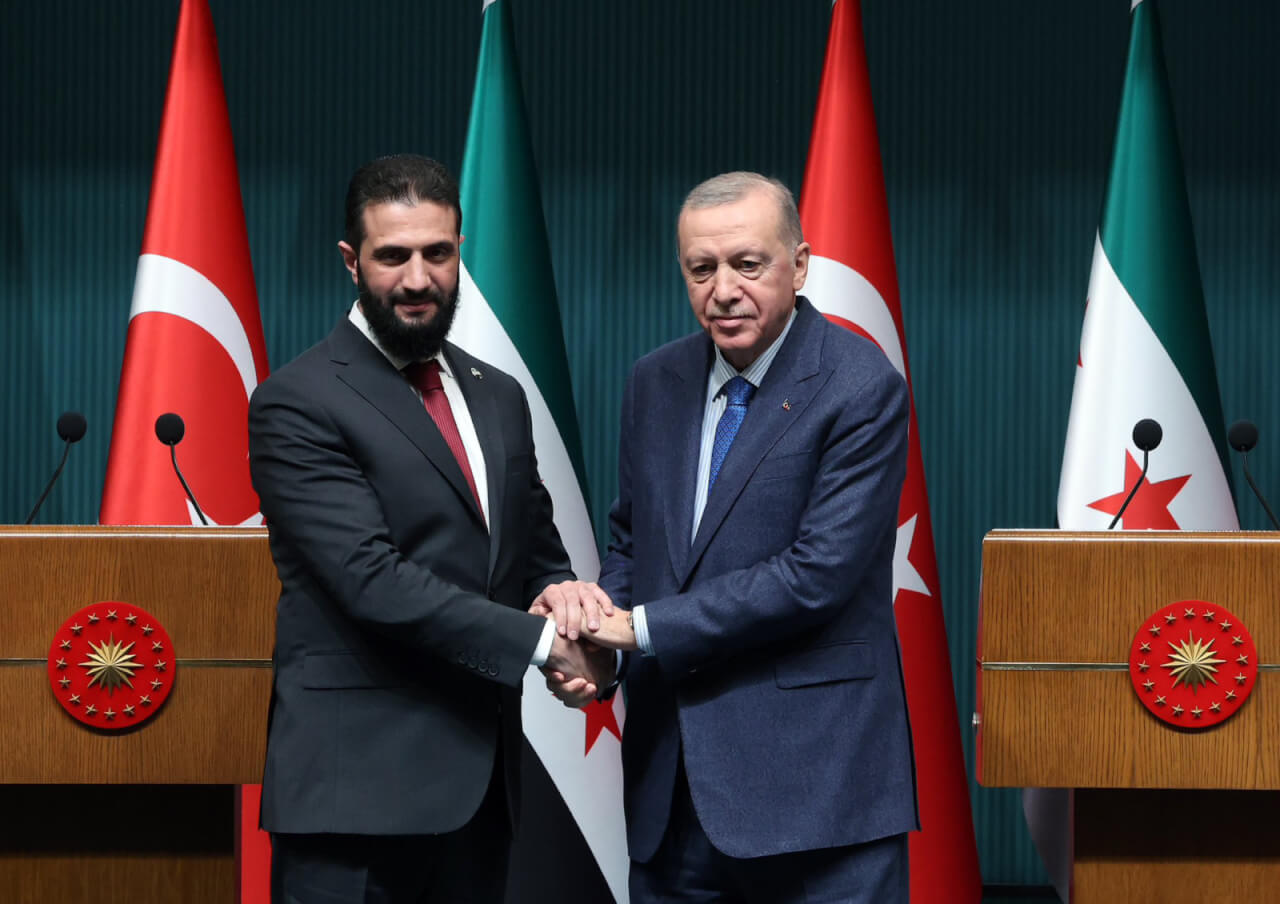
Middle powers such as Türkiye, India, Brazil, Indonesia, South Africa, Mexico, Japan, and others, have both the interest and legitimacy to act as custodians of international law. They can mediate, de-escalate and build bridges across geopolitical divides. Their active engagement is essential for any sustainable renewal of RUBIO.
What Is Needed to Make RUBIO Operational Again?
Once the principles are established, the question of operationalising the system becomes the essential question. Here, one could the following priorities to be implemented:
(1) Tie the Rules-Based Order Explicitly to the UN Charter: Reaffirm the primacy of international law and ensure that all references to “rules” are grounded in it.
(3) Repair Institutions Instead of Replacing Them: Revitalise the UNSC, WTO, OSCE, AU, ASEAN, and other multilateral platforms. Incremental improvements can have stabilising effects.
(4) Reduce Double Standards: Apply norms consistently across regions and cases. Equal treatment is the gateway to restored legitimacy.
(5) Update Global Governance for Modern Realities: Develop rules for AI, cyber operations, digital trade, climate security, and global health. Those are the areas where current frameworks are outdated or non-existent. Those are the new risks and challenges of our time and they cannot be addressed by old mechanisms.
(6) Make Great-Power Conduct More Predictable: Even minimal strategic understandings can reduce the risk of escalation. Dialogue, however limited, is essential.
(7) Empower Middle Powers as Stabilising Agents: Their balancing role and broader legitimacy make them indispensable to sustaining rules in a multipolar world.
(8) Deliver Tangible Benefits: Multilateralism must demonstrate practical value: security, economic opportunity, crisis prevention, and access to global public goods.
Conclusion
The rules-based international system is still possible, but not as a return to the past. The world that produced the post-Cold War order no longer exists, and nostalgia is not a strategy. What remains possible and urgently necessary is a renewed, credible, and inclusive order in which states accept fundamental legal constraints and commit to predictable conduct, even while competing. Such a system must be
• anchored clearly in international law,
• representative of contemporary power realities,
• consistent in application,
• updated for modern challenges, and
• supported by both great-power restraint and middle-power responsibility.
A rules-based order will endure only if it delivers fairness, predictability and security. It will function when states rediscover the long-term value of legality over unilateralism and cooperation over fragmentation. The challenge is formidable, but the alternative is not a better version of multipolarity; it is instability without limits. Yes, a rules-based international system is still possible. But only if we are willing to reimagine it, rather than restore it.