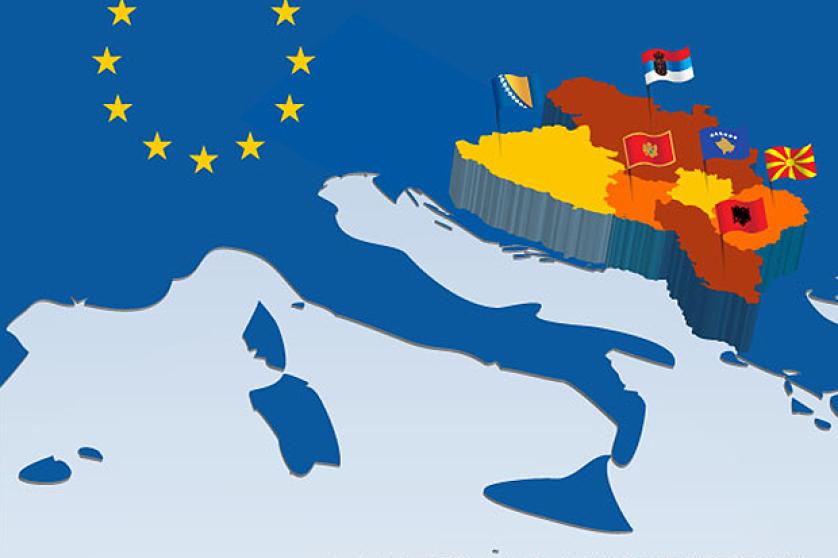
This report is a summary of a research project, entitled “National Role Conceptions in Foreign Policy: A Comparative Analysis of the Western Balkan States,” funded by the Scientific and Technological Research Council of Türkiye (TÜBİTAK, Project Number: 324K086) during the period February – August 2025.
As two senior International Relations students, Batuhan Gökyer and Sude Kızıltaş, had the opportunity to work as interns of a TÜBİTAK-funded research project led by Dr. Önder Canveren (project coordinator), Prof. Dr. Murat Necip Arman (project researcher), and Prof. Dr. Bülent Sarper Ağır (advisor). This project aims to display foreign policy tendencies of North Macedonia, Serbia, Kosovo, Albania, Bosnia and Herzegovina, and Montenegro through thematic discourse analysis within the 2008-2024 United Nations General Assembly (UNGA) speeches of the leaders.
To provide concrete scientific results for each state, Holsti’s (1970) National Role Conceptions Theory was used. At first, the initial meetings were held to define and determine the separation of work, and to learn how to cooperate. Thanks to the project coordinator, both interns were well informed about the project and the process. From the very beginning, an excellent team spirit was formed, and the process progressed in a coordinated and parallel manner. The project had begun with the collection of the data set. It was a bit challenging for the team to find all UNGA speeches; however, it contributed to the development of web research capabilities, and the data was meticulously compiled in the folders. During this research, it was enjoyable to predict the foreign policy decisions of the Western Balkan states before the analysis, and the project coordinator provided prominent insights about the region.
After that, initial readings were completed to learn everything about the research before starting coding in MAXQDA. These readings provided interns with a new perspective while contributing to their intellectual development related to International Relations. Moreover, the use of the MAXQDA application was learned with the support of educational videos, and it was a turning point for the interns since it was the first time that they undertook practical work in their academic life. Using the compromise method for paragraph-based coding had also begun for each country. As coding progressed, relevant national roles were embraced, and further initiative was taken for this step by the interns. At this stage, different ideas emerged from time to time, and an amazing debate environment was formed where everyone was able to feel comfortable.
Following that, at the end of the coding process, qualitative and quantitative preliminary findings were obtained. The overall results were examined using MAXQDA tools, and consistency was checked. Predictions shared before coding were revisited, and an entertaining comparison was made. Recalling was carried out with the responsibility required by scientific research, and the 90% compliance rule was ensured.
Finally, quantitative and qualitative analyses were initiated. In conducting the quantitative analysis, frequency distribution, Pareto analysis, word cloud, co-existence models, cluster analysis, and Mill’s (2011) comparative analysis were utilised. Some of the data obtained was surprising and prompted further consideration for qualitative analysis. Although qualitative analysis was not a part of the interns’ scope of study, the project coordinator has provided significant teachings on that matter. This gave the two undergraduate interns almost a postgraduate perspective. The interns clearly observed their developments thanks to these gains.
Table. Clustering analysis for the NRCs and sources among the states
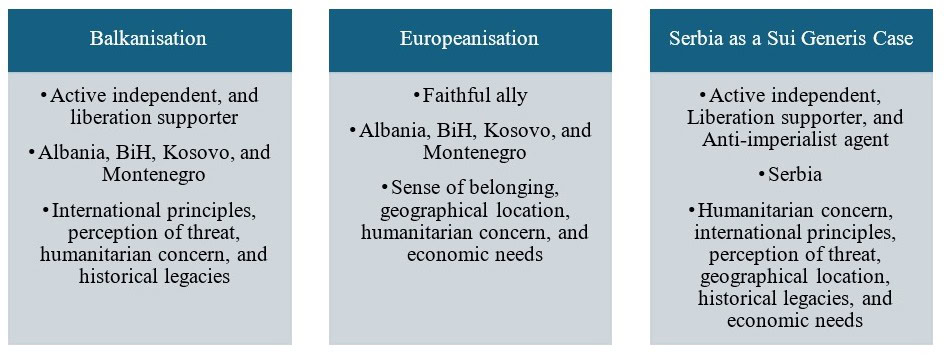
The research project came up with three main themes that emerged from the NRCs in the region:
- The active independent and liberation supporter roles shared by Albania, BiH, Kosovo, and Montenegro refer to past, continuity and conflict in the region, which we themed as Balkanisation with the help of the relevant literature (Todorova, 1997; Trapara, 2020; Proroković, 2024). International principles, perception of threat, humanitarian concern, and historical legacies emerge as causal sources of the adopted NRCs.
- Faithful ally (for Euro-Atlantic integration, that is, NATO and EU memberships) is the NRCs adopted by Albania, BiH, Kosovo, and Montenegro. Their Europeanised foreign policy discourse as in clash with the first theme of Balkanisation, is a sign of future change and cooperation. Sense of belonging, geographical location, humanitarian concern, and economic needs emerge as distinctive sources of the second theme.
- Serbia is a sui generis case in the region due to the adopted NRCs (active independent, liberation supporter, and anti-imperialist agent) and interpretation of the underlying sources. Therefore, we subtitled the findings and results for Serbia, distinct from other states in the region.
In conclusion, the comprehensive study on the intriguing and dynamic Western Balkan region has been finalised, and the article was written by Dr. Önder Canveren and Prof. Dr. Murat Necip Arman. At the end of the project, the interns’ progress was observed, and important feedbacks were provided. The interns felt well supported throughout the whole process. They continue to actively utilise their accumulated knowledge about the Western Balkan region and pursue their research on the Balkans. At the end of the day, this project has revealed research identities of the interns and encouraged them to look for further opportunities.
The interns would like to express their sincere gratitude to Dr. Önder Canveren, Prof. Dr. Murat Necip Arman, and Prof. Dr. Bülent Sarper Ağır for broadening their horizons.
Short Abstract
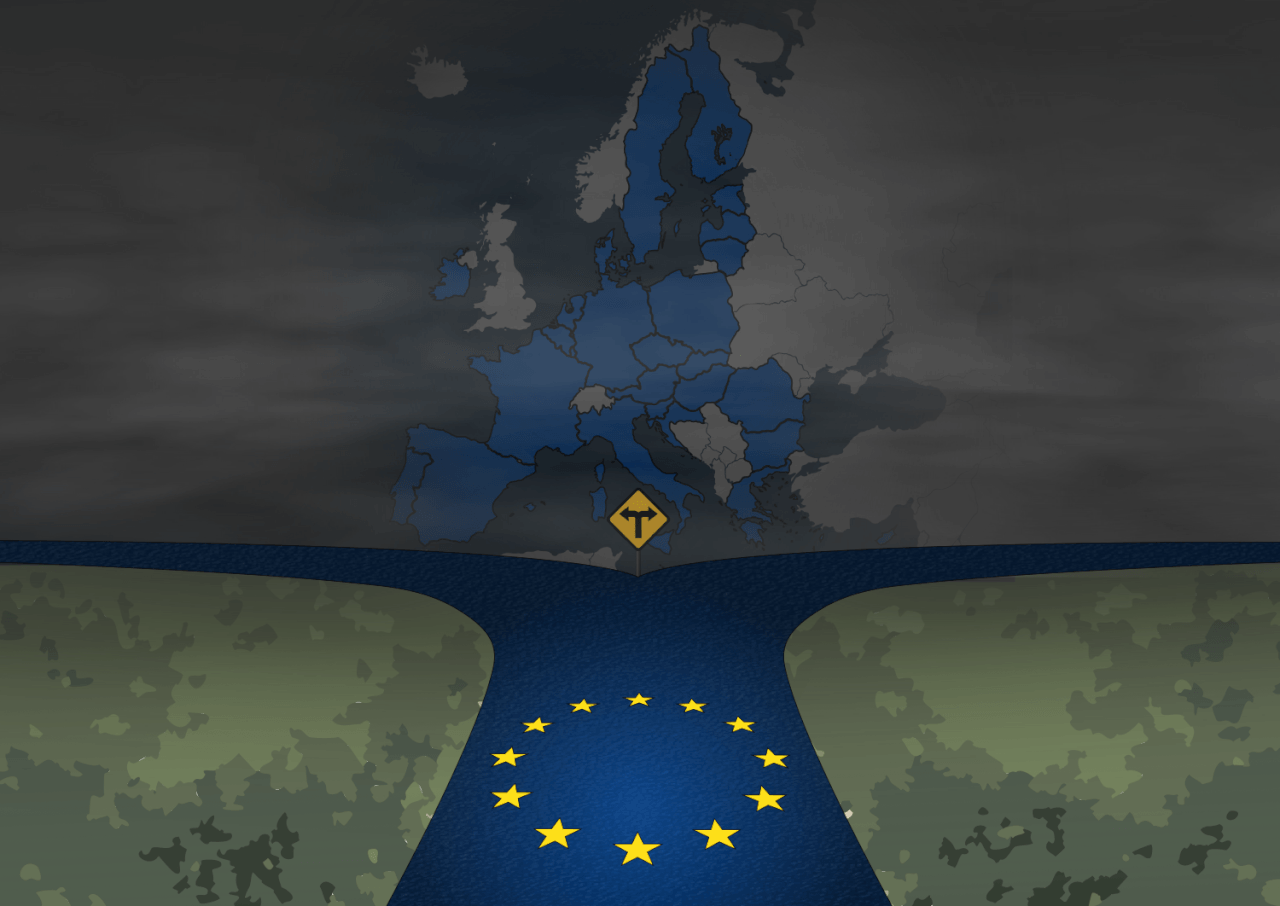
This TÜBİTAK-funded analysis examines the national role conceptions (NRCs) and causal sources that Albania, Bosnia and Herzegovina (BiH), Kosovo, Montenegro, North Macedonia, and Serbia adopt in their foreign policies. Using Holsti’s (1970) NRCs, the project team conducted a comparative discourse analysis for speech-texts at the United Nations General Assembly (UNGA) for 17 years. The unharmonious NRCs (active independent, liberation supporter, and faithful ally) and causal sources refer to a foreign policy dichotomy between past, continuity, and conflict (Balkanisation) and future, change, and cooperation (Europeanisation) in the region.
References
Holsti, K. J. (1970). National role conceptions in the study of foreign policy. International studies quarterly, 14(3), 233-309.
Mill, J. S. (2011). A System of Logic: Ratiocinative and Inductive. Cambridge: Cambridge University Press.
Todorova, M. (1997). Imagining the Balkans. London: Oxford University Press.
Trapara, V. (2020). The Balkans as Geopolitical Periphery of Eastern Europe: Past Implications for an Uncertain Future. A. Jović-Lazić and A. Troude (Eds.). Security Challenges and the Place of the Balkans and Serbia in a Changing World (pp. 75-86). Belgrade: University of Belgrade.
Proroković, D. (2024). Ontological security as a factor in Balkan geopolitics. Studia Europejskie – Studies in European Affairs, 3, 73-87.