Abstract: Kurds constitute a viable ethnic group with historic roots and presence in four Middle Eastern countries: Iran, Iraq, Syria, and Türkiye. The relations between the central governments of these countries and their minorities have often been contentious and occasionally violent. I propose two policy measures for these four countries in this paper to implement regarding their respective Kurdish minorities. First, while remaining fully committed to the prevention of separatism, they should enhance the cultural and political rights of the minorities and reduce the development gap of the predominantly Kurdish regions relative to the national average. Currently, this gap is visible in all countries other than Iraq. Second, the initiative to enhance minority rights and improve their economic conditions can be better realized if these countries coordinate their policy reforms in the framework of a regional agreement. The article argues that without coordination each country will be worried that if it gives more political and social rights to its Kurdish minority, these rights might be exploited by neighbors to provoke ethnic insurgency and separatist tendencies. A coordination among these countries for harmonization of their policies toward the Kurds, will overcome this concern and will increase the likelihood that all four countries will increase the rights and opportunities that they offer to Kurds.
Introduction
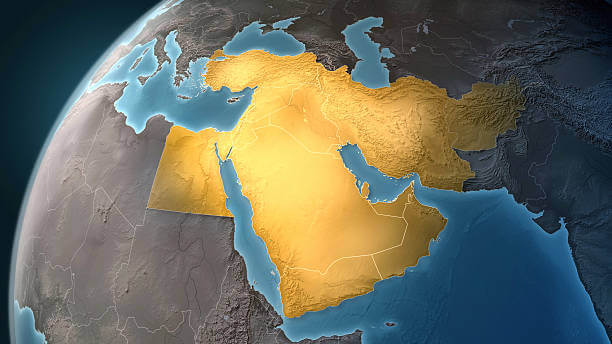
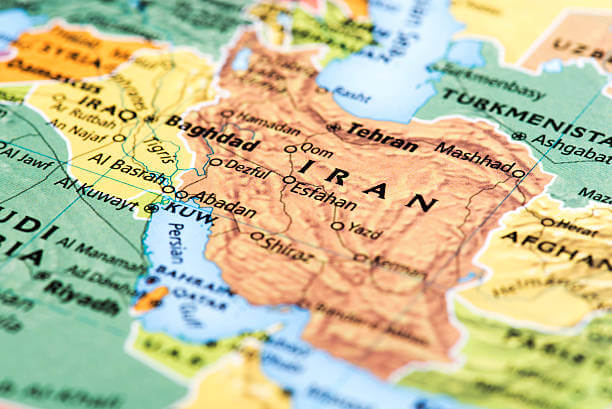
In the contemporary Middle East, the Kurds live in four countries as minorities: Iran, Iraq, Syria, and Türkiye. The exact size of their total population is unknown, but most studies estimate it between 25 and 35 million in total, with the largest concentration in Türkiye, followed by Iran. Kurdsare one of the oldest ethnic groups in West Asia, with a historical presence in southeastern Anatolia, the Iranian Plateau, and Mesopotamia, dating back more than 3,000 years. Throughout most of this long history, however, the Kurds lived as minorities in states with predominantly Arab, Iranian, or Turkish majorities.
The ethnic tension between Kurds and the central governments of the above countries remains unresolved. The aspirations of Kurds continue to collide with the concerns of these states about separatism and their desire to assimilate ethnic minorities. This paper introduces and analyzes two policy proposals related to minorities in general, and the Kurdish population in particular, in the Middle East. First, it proposes a new approach called “Zero-Max” to the rights and responsibilities of ethnic minorities, particularly the Kurds, in the region. This approach calls for combining a policy of zero tolerance for separatism with a maximalist commitment to the elimination of cultural, economic, and political discrimination against the minorities. Second, it argues that the policies pursued by each state in this new Zero-Max approach will be more effective and feasible if these states adopt it jointly and coordinate their policies toward their respective minorities. In the analytical section of the article, the benefits of these joint proposals will be analyzed.
The remaining segments of this article are organized as follows. The historical status of the Kurds, both before and after World War I, will be briefly discussed in section one. Section two presents the conceptual and theoretical framework of the two proposals, followed by an analysis of these proposals in the last section.
Status of Kurds in the Middle East Before and After the First World War
Before the rise of nationalism in the Middle East in the late 19th century, the Ottoman and the Safavid states, in which the Kurdish people resided, were governed as multi-ethnic empires. They did little to assimilate the Kurds into the dominant ethnicities’ culture or language. Instead, they expected political submission, loyalty, taxes, and soldiers (when needed) from the Kurds, like other ethnic minorities. Under each empire, the Kurds initiated occasional uprisings, which were suppressed by force.
Two factors intensified the tensions between the Kurdish tribes and the host countries in the 19th century. First, the Western colonial and semi-colonial domination of West Asia diminished the power and control of the Ottoman State and Iran’s Qajar Dynasty in peripheral and borderland areas, where Kurds were settled. This created space for Kurds to demand more autonomy. The British Empire, for example, had significant influence over the southern regions of Iran and routinely supported the ethnic minorities to undermine the authority of the central government. In the final decades of the Qajar Dynasty (1860s-1925), the central government had minimal control over most territories due to Russian dominance in the north and British dominance in the south. Similarly, British and French interference weakened the Ottoman Empire’s effective control over most Arab lands, such as Iraq and Syria.
The status of Kurds has had its unique trajectory in each country since the collapse of the empires. There are, however, some similarities. Tension and occasional ethnic violence are a common occurrence in the interaction between the Kurds and the central government. Another similarity is that the relative economic underdevelopment, lack of job opportunities, the high risk of sporadic conflict, and socioeconomic instability have forced many Kurds to migrate from their hometowns to other large cities in their host countries. Some have also moved involuntarily because of displacement policies or forced evacuations during the armed confrontations with the state.[1] Consequently, the number of Kurds living in Istanbul, for example, is larger than in any other city in Türkiye. Similarly, there are large concentrations of Kurds in Baghdad, Tehran, and Damascus, in Iraq, Iran, and Syria, respectively.
The above-mentioned underdevelopment is still an ongoing situation in Iran and Türkiye, and had applied to Iraq and Syria before the Kurdish areas of these countries gained some degree of autonomy because of civil war and external intervention. The Kurdish region of Iraq has enjoyed autonomy and self-governance since the U.S. invasion of that country in 2003, which resulted in a political arrangement among the Shia, Sunni, and Kurdish populations under a new constitution.[2] The Kurdish region of Syria has also enjoyed de facto self-governance ever since the 2011 civil war, but without an agreement with the central government. The unexpected regime change that occurred in November 2024, however, can end this situation and increase the new Syrian government’s control over the regions controlled by Kurdish groups. While no economic development and economic performance data are available for north-east Syria, where Kurdish groups hold power, the indicators for Iraq show that the Kurdish region of that country has overcome its development gap with the rest of the country and achieved a higher score than the national average on some indicators.[3]
Before the recent developments in Syria, the core argument of this article (presented in the third section) was relevant for Iran and Türkiye, where the central government can fully assert its authority and political control over the Kurdish regions. Moving forward, it is likely to be relevant for Syria as well, because of the gradual enhancement of the Syrian government’s sovereignty over the Kurdish region of that country. The balance of power between the central government and the Kurdish population in Iran, Türkiye, and possibly in the new Syria is such that the cultural and political rights of Kurds (and other ethnic minorities) remain at the discretion of the state. A new relevant development is the peace process between the Turkish state and the imprisoned leader of the Kurdistan Workers Party (PKK), foreseeing an end to the armed conflict and terror, and committing to non-violent political activities within the existing constitution and political framework of Türkiye.
There are two dimensions to the aspirations of the Kurds in all four countries: a) demand for autonomy and creation of an independent Kurdish state; b) demand for ethnic rights, which include cultural rights, language rights, and equal political rights at the individual level. The response of the central governments to these aspirations is demonstrated in Table 1.
As demonstrated in Table 1, the central governments in all four countries have consistently opposed and suppressed demands for separatism and the creation of an independent Kurdish state. Iran and Türkiye have also successfully suppressed demands for regional autonomy. Still, the weakness of the central government in Iraq after 2003 and in Syria after 2011 has facilitated some degree of Kurdish autonomy in these countries.
The culture and language policies of Iran and Türkiye toward the Kurds have varied over time. Still, both countries have adopted conservative policies and enforced a comprehensive cultural assimilation policy on minorities, including the Kurds, as part of their nation-building and creation of a common cultural and national identity.
In Türkiye, some restrictions were enforced in 1980 and even further in 1983, while the legal limits on Kurdish literature and cultural activities were lifted in 1991. The AKP (Adalet ve Kalkınma Partisi – Justice and Development Party) government, which has been in power since 2002, has offered several enhancements to cultural and social rights for Kurds. These initiatives were partly motivated by Türkiye’s desire to meet the European Union’s human rights requirements for accession. The Turkish Radio and Television (TRT) initiated limited (a few hours a week) radio and television programs in Kurdish in 2004, and a full-time TV channel (TRT-Kurdi) was launched in 2009 (Derince, 2013). These improvements were noticeable, but they were inconsistent and remained vulnerable to the ongoing tension between the PKK and the state.
Iran has historically shown more tolerance for the expression of Kurdish identity and culture, in comparison to Türkiye. At the same time, it has resorted to violent suppression of Kurdish separatist movements.[4] The Pahlavi Dynasty (1925-1979) adopted cultural assimilation programs like those of Türkiye. Then, a more tolerant approach to ethnic identities was adopted after the 1979 Islamic Revolution. In Iran, similar to Türkiye, some radio and television programs are available in Kurdish, but these programs are carefully monitored to prevent promotion of ethnic political activism or separatism. These countries have also adopted a centralized and unitary educational system in which all subjects are taught in the national language.
While there is no formal ethnic discrimination in the legal systems of Iran and Türkiye, political and security considerations often influence opportunities for civil service employment, political appointments, and industrial investment in both countries. The central government appoints the provincial governors in the Kurdish region of Iran, often non-Kurds.[5] In Türkiye, entry-level and mid-level civil servant positions are open to Kurds; however, promotion to key high-level positions faces considerable scrutiny and restrictions (Ahmed, 2022). The candidates for mayor and city council members in Iran are carefully vetted to reject those who might have separatist tendencies. In Türkiye, the political candidates are not subject to political screening before elections. Still, the central government has, in recent years, frequently annulled the local election results or removed elected officials who are perceived as sympathetic to the PKK.
The higher political and security risk levels in Kurdish regions have hurt both public and private investment. As a result, the industrial and manufacturing activity levels in the Kurdish areas are below the national average, contributing to lower per capita income levels.
Overall, the reaction of the state to Kurdish ethnic aspirations in Iran and Türkiye, after World War I, can be analyzed in two dimensions: a) the state response to demands for independence and autonomy, and b) the state response to demands for cultural, political, and economic rights. In our conceptual analysis in this section, the response in each dimension can range from zero to maximum accommodation, as shown in Table 2. Hence, a two-dimensional indicator can demonstrate a state’s response to these two types of demands. For example, “Zero-Min” can be interpreted as zero tolerance for autonomy and independence demands, plus minimum toleration of Ethnic rights. Similarly, “Min-Max” would mean minimum tolerance for autonomy and maximum tolerance for ethnic rights.
As indicated in Table 2, all four host states have shown zero tolerance for separatism. The Turkish state was at war with the PKK from the 1980s until 2025, and Iran has periodically used force against Kurdish separatist groups such as PJAK (Partiya Jiyana Azad a Kurdistanê – Kurdistan Free Life Party). The zero tolerance for separatism is in line with the historic behavior of the ethnic majorities in both countries.[6]
Table 2 identifies three types of ethnic rights, and as discussed earlier, Iran and Türkiye are currently granting these freedoms at minimal or moderate levels. For example, several Kurdish language stations, including the TRT/Kurdi, operated by the state-owned TRT, are currently broadcasting in Türkiye. Iran has also adopted a similar policy, and the official radio and television corporation (IRIB) offers several TV programs in Kurdish, including IRIB/Kurdistan and Sahar TV.
In the category of ethnic political rights, the Kurds enjoy political rights as individual citizens, which include the right to vote and the right to run for office as candidates. They also enjoy the same rights as other citizens to participate in non-governmental organizations (NGOs) and political parties, provided these organizations are non-ethnic in nature.[7] As a result, the level of political rights for Kurds is categorized as moderate in Table 2, which in this context reflects the gap between the political rights of the Kurdish citizens versus the ethnic-majority citizens of the host country.
The vision: From Zero-Min to Coordinated Zero-Max
Considering the current state of ethnic relations between the central governments and the Kurds in Iran and Türkiye (and potentially Syria), this article presents two proposals for enhancing their rights. First, the state in both countries is strong enough to suppress separatist tendencies while enhancing the ethnic rights of the Kurds. In other words, both countries can transition from a Zero-Min equilibrium to a Zero-Max equilibrium without worrying that such a move will increase the risk of insurgency and separatism. On the contrary, these states might reduce separatist tendencies by enhancing the cultural, economic, and political rights of their Kurdish populations. This positive effect has been demonstrated in numerous empirical studies on the status of ethnic minorities in various countries (Cedeman et al., 2010; Stewart, 2008; Kymlicka, 1995). Second, both states will be more successful in enhancing Kurdish rights and reducing their economic development gap if they coordinate their policies. I refer to the combination of these two policies as the Coordinated Zero-Max Equilibrium.
In the proposed Coordinated Zero-Max approach, participating countries agree to support one another in two types of activities. First, they agree to help each other to prevent ethnic separatism and maintain territorial integrity (the Zero concept). Accordingly, they will not support the Kurdish insurgency in each other’s territory.[8] Second, they agree to coordinate their programs to enhance the Kurds’ cultural, political, and economic conditions (the Max concept). For example, suppose one country is replacing appointed governors with opportunities to elect governors through provincial elections. In that case, the two countries can discuss this policy to see if the second country can also offer a similar change.
The coordination of policies can have several positive benefits for the transition toward enhanced rights for the Kurdish populations. Coordination among the states can help them overcome the fear that the enhancement of ethnic rights will result in ethnic insurgency and political instability. To understand this benefit, we must examine the concerns and interests of the majority ethnic population in each country regarding ethnic minorities. The Turks of Türkiye, the Persians of Iran, and the Arabs of Iraq and Syria prioritize nationalism, territorial integrity, and a unified national identity. With the emergence of modern states in the Middle East, after World War I, the central governments (representing the majority ethnic group) have supported cultural homogenization (assimilation of the ethnic groups in the national culture; for example the Arabization of Kurds in Iraq), and promotion of the national language, as essential requirements for state building, and prevention of ethnic separatism.[9] Not surprisingly, these policies have led to ethnic grievances and demands for additional rights. Despite these grievances, the states have reservations about the needs of any ethnic minority for cultural expression and political self-governance.
The second factor that has affected the perception of the state and the majority population in these countries is their concern about external intervention in support of minority aspirations and potential uprisings. This fear is rooted in the historical experience of these countries. On several occasions of conflict and high tensions between these countries and external powers, such as Russia and the British Empire, the ethnic minorities, particularly those residing in border regions, were armed and assisted by these powers to launch insurgencies against the central governments.[10] Policy makers in Iran and Türkiye also point to how external support for Kurds in Iraq and Syria during periods of state weakness, resulted in the creation of semi-autonomous Kurdish regions.
The third consideration that discourages these states from granting more rights to the Kurds is the fear of each other. The political leadership (that represents the majority ethnic group) in each country, is often concerned that if it offers social and political concessions to Kurds unilaterally – or grant them more concessions than the neighboring countries – this policy could be exploited by neighbors to provoke Kurdish separatist insurgency and violence. This perception is rooted in the prevalence of rivalry and distrust in the bilateral relations among Iran, Türkiye, and the Arab countries.
Hence, the lack of trust and coordination among the countries with Kurdish populations reduces their incentives to increase the ethnic rights of Kurds unilaterally. In the social sciences, this type of behavior can be analyzed using a two-player game-theorethic model. In the context of our analysis, Iran and Türkiye are the two players. Each country’s options are either to increase the rights of the Kurdish minority or maintain them at a low level. They operate in an environment where the outcome of their choices (the costs and benefits of each option) depends on the other player’s choice. Table 3 illustrates this two-player game model, Each country can select between two policies: the low and high levels of ethnic rights for Kurds (referred to as “Limited Rights” and “Enhanced Rights”).
The pair of numbers in each cell represents the payoff (the net benefit) of the policies that they have selected. In each cell, the first number represents the benefit for Iran (considered the horizontal player), and the second number represents the benefit for Türkiye (the vertical player (The exact value of numbers is not important, and what matters is the difference between them, which is used for comparison) Cell A, for example, represents the payoffs if both countries adopt the “Limited Rights” for Kurds, which is equivalent to the Zero-Min equilibrium in our analysis. Since the benefit of these two policy choices for each country will depend on the behavior of the other country, each country will select its strategy based on how it anticipates the other country to behave. We assume they are both initially in the Zero-Min position identified by cell A. We will use this as the base stage of our analysis and set the payoff to the ruling majority in both countries to zero, which is represented by the pair (0, 0) in cell A in Table 3. [1][2]
Tables 3 shows the behavior of Iran and Türkiye under two scenarios. panel 3-A illustrates the payoff table when the level of trust between the two countries is low, resulting from the absence of consultation and coordination between them. Each country is aware that if it enhances the rights of Kurds and the other country adopts the same policy, it will be better off. This outcome can be achieved through coordination between the two countries so that they both transition from “Limited Rights” or “Enhanced Rights”, and it is demonstrated in cell D. Transition from cell A (which represents the Zero-Min condition) to cell D (representing the Zero-Max condition) will increase each country’s payoff. In the low mutual trust scenario (Table 3, panel 3-A), this transition increases the expected payoff for both countries by a small amount, from zero to 0.5. This means that, due to a lack of trust, each country discounts the benefits of enhancing the ethnic rights of Kurds. In the high-mutual-trust scenario (Table 3, panel 3-B ), which can be achieved through coordination and cooperation, the same transition from “Limited Rights” to “Enhanced Rights” will increase the payoffs from zero to two for both countries.
In the low-trust scenario (without coordination), neither country is willing to adopt the “Enhanced Rights” policy. To understand why this is the case, let’s examine Iran’s decision-making process. Iran asks what my best option would be if Türkiye selected the Limited Rights option. Iran’s payoff will be zero if it selects the Limited Rights option in this case, and it will be -2 if it selects the Enhanced Rights option, because it believes that Türkiye will not switch to the “enhanced Rights” option. Similarly, if Türkiye selects the “Enhanced Rights” option, Iran will compare its playoffs in cell B, with a benefit of 1, and cell D, with a benefit of 0.5. In this case, Iran will select the Limited Rights option again. This means that, due to a lack of coordination with Türkiye, it is in Iran’s interest to choose the Limited Rights option regardless of Türkiye’s actions. If we apply the same reasoning to Türkiye’s decision process, we will see that Türkiye will also select the “Limited-Rights” option. Hence, the expected outcome of this game in a low-trust environment (i.e., no coordination) is that both countries will choose the Limited-Rights policy, which reflects the Zero-Min equilibrium.
Coordination and establishment of trust can change the outcome of this game between Iran and Türkiye, as demonstrated in Panel B of Table 3. As a result of coordination, the relative reward of the Enhanced Rights strategy will increase for both countries. Under this scenario, if Iran believes that Türkiye will adopt the Enhanced Rights option, it will also select the Enhanced Rights option with a payoff of 2 (cell D), which is larger than what it will gain by choosing the Low Rights option (a payoff of 1 in cell B). Similarly, it will be advantageous for Türkiye to select the Enhanced Rights option if it believes Iran will do the same. Therefore, coordination and trust can facilitate the transition from Zero-Min (Limited Rights) to Zero-Max (Enhanced Rights) by increasing the willingness of both countries to offer more ethnic rights to Kurds.
Regional Coordination
The analysis above focused on the second policy recommendation that calls for regional coordination to enhance ethnic rights for Kurds. Even in the absence of regional coordination, each country can move in the Zero-Max direction unilaterally, and a review of the ethnic policies in Iran and Türkiye shows that a gradual but volatile trend in this direction. Both governments have taken some positive steps, which are inconsistent, and even the moderate social and legal reforms are partially rolled back in some cases. In Türkiye, for example, the state has offered and rolled back media rights to Kurds several times since 2002. Similarly, respect for the outcome of local elections (for mayor and city council members) has experienced ups and downs repeatedly. This lack of tangible and lasting progress is rooted in the distrust factors explained in the previous section.
These four countries (Iran and Türkiye, in particular) can partially overcome their fear of ethnic concessions to the Kurds if they can negotiate a standard code of minority rights and adopt a coordinated implementation mechanism, which can increase the level of trust among them. Iran, Iraq, and Türkiye (and at a later stage, a stable Syria) can coordinate their policies on several vital issues. First, they can agree that while all citizens must learn and use the national language, Kurds and other ethnic groups could enjoy the right to know and preserve their ethnic cultures and languages. Second, they can agree on the operations of Kurdish language media (newspapers, radio, television, websites, etc.). Third, there can be coordination on the political rights and participation of Kurds in local and national governments. This agreement aims to eliminate discrimination against Kurds in all elected and appointed public sector positions across participating countries. Fourth, there can be regional coordination for the removal of social and economic discrimination against Kurds at the national level. This would imply a fair distribution of national resources, development funds, and government jobs, which would help reduce the development and income gaps between the Kurds and the ethnic majority in each country.
This type of regional coordination will make it easier for the majority ethnic group in each country to accept the concessions that they make to their Kurdish populations. Furthermore, coordinated concessions have a better chance of success because the ethnic majority in each country will feel that the concessions their government is making are not one-sided and that their neighbors are also taking similar steps. Such a coordination will increase the likelihood that these concessions will move forward and reach a level that will substantially reduce the discrimination against the Kurdish people and the existing development gap between regions.
Several historical cases in other regions of the world demonstrate how multilateral coordination has contributed to the improvement of minority and ethnic rights. One of the oldest regional agreements on cross-border ethnic groups was signed between Norway and Sweden in 1751. The Lapp Codicil of 1751 agreement recognized the rights of the Saami people, who lived in both countries, to cross the border and remain neutral in times of war between the two countries. More recently, a comprehensive agreement among Norway, Sweden, and Finland was negotiated in 2017, which calls for coordination and cooperation among the three countries to enhance the rights of the Sami people on a wide range of issues (Nilsen 2024).
Another recent example is the steps taken by the eight member countries of the Amazon Cooperation Treaty Organization (ACTO). In August 2025, they approved a standard ethnic rights policy, known as the Amazonian Indigenous Peoples Mechanism (MAPI), which aims to improve the socioeconomic status of indigenous tribes in the Amazon region across all eight member countries. It also calls for the active participation of indigenous tribes in the governance of OCTA. The MAPI introduces an innovative co-presidency model, with each OTCA member country represented by one government delegate and one indigenous delegate, ensuring parity and shared governance.
In addition to OCTA, several other regional coordination efforts exist for the protection of ethnic and indigenous rights, involving a smaller number of Latin American countries. The 1998 peace treaty between Peru and Ecuador, for example, included a plan for the development of the border region, which encompassed several policies aimed at promoting economic growth and empowering cross-border indigenous peoples (Martinetti 2018).
It should be noted that there have been several episodes of bilateral coordination among Iran, Türkiye, Iraq, and Syria ever since World War I, regarding Kurds. However, these can be categorized as security coordination against Kurdish insurgencies. In 1937, Iran, Pakistan, Afghanistan, and Türkiye signed the Treaty of Saidabad, which included an article that called for military and security cooperation between Iran and Türkiye against Kurdish nationalist movements (Watt, 1962). Ever since, there have been several other security agreements between Iran and Türkiye against Kurdish insurgency, which involve intelligence sharing and the prevention of cross-border operations by Kurdish forces. Similarly, Türkiye has periodically signed bilateral agreements with Iraq and Syria to achieve the same objectives. A visible difference between these agreements and the Zero-Max Coordination proposal is that while Zero-Max calls for positive cooperation for the enhancement of Kurdish rights in combination with security cooperation against separatist insurgency, the previous agreements have focused only on the security cooperation against Kurds without any attention to their legitimate demands for social, economic, and political rights.
The successful coordination of these countries to improve the status of the Kurds can serve as a role model for addressing the status of other ethnicities that reside in multiple countries. Iran and Pakistan both are home to large Baluch communities. The Baluchistan region in both countries suffers from poverty and economic underdevelopment, which has resulted in insurgency and occasional ethnic tensions. Like what has been proposed for the Kurds in this article, these two countries can reach a Coordinated Zero-Max agreement to coordinate their policies for improving the status of the Baluch population in their respective countries and bring peace and prosperity to their shared border regions.
Similarly, this proposal can also be applied to the status of cross-border religious minorities. The predominantly Shia Iran is home to a Sunni minority, while Saudi Arabia, which is primarily Sunni, has a Shia minority. Within the framework of a coordinated Zero-Max policy, Iran and Saudi Arabia can take coordinated steps to improve the status of their respective religious minorities.
Conclusion
Kurds are a viable ethnic group with historic roots and presence in four Middle Eastern countries: Iran, Iraq, Syria, and Türkiye. The relations between the central governments of these countries and the Kurds have often been contentious and occasionally violent. I propose two policies in this paper for these countries regarding their respective Kurdish minorities. First, while remaining fully committed to the prevention of separatism, they should enhance the cultural and political rights of the Kurds and eliminate the development gap of the predominantly Kurdish regions relative to the national average. Currently, this gap is visible in all countries other than Iraq.
Second, the initiative to enhance the socio-cultural rights of the Kurds and improve their economic conditions can be better realized if these countries coordinate their policy reforms toward the Kurds within a regional framework. The study analyzes the benefit of this coordination in the framework of a two-player game model. The analysis argues that one of the factors preventing each country from empowering the Kurds is the lack of trust toward the other three countries; regional coordination can help each country overcome this distrust. There are two reasons for advocating regional coordination. First, it creates an atmosphere of equal sacrifice, and no country feels like it is offering more concessions to Kurds than its neighbors. Second, coordination alleviates the fear of each country that a rival neighbor might take advantage of these rights to promote separatism and ethnic insurgency among its Kurdish minority.
References
Ahmed, S. (2022) Ethnic Exclusion & Reasons for Kurdish Mobilization. Modern Diplomacy.
Alberti, C., and S. Mattiace. (2023) State Responses to Autonomy Demands: Indigenous Movements and Regional Threats in Bolivia and Ecuador. Journal of Politics in Latin America, 15(2), 168-191.https://doi.org/10.1177/1866802X231183453
Ale Ahmad, Y. (2024) Quiet Strength: Kurdish Women Kolbars and the Feminization of Poverty. Iranian Studies 57, no. 2: 335–39. https://doi.org/10.1017/irn.2024.7.
Balkan, B., and S. M. Cilasun. (2018) Ethnic Discrimination in the Turkish Labor Market: Evidence from Survey and Field Data. In Economic Research Forum Working Paper, no. 1997.
Bozkurt, L. (2024) State of emergency and depopulation policy in Southeastern Turkey: forced displacement and resettlement of ethnic Kurds in the context of civil war (1990–2002). PhD diss., University of Oxford.
Derince, M. Ş. (2013) A break or continuity? Turkey’s politics of Kurdish language in the new millennium. Dialectical Anthropology 37, no. 1:145-152.
Cederman, L., and A. Wimmer, and B. Min. (2010) Why do ethnic groups rebel? New data and analysis. World politics 62, no. 1: 87-119.
Güneş, C., and R. Lowe, eds. (2015) The Kurdish Question in Turkey: New Perspectives on Violence, Representation and Reconciliation. London: Routledge.
Gunter, M. M. (1992) Foreign influences on the Kurdish insurgency in Iraq. Journal of Conflict Studies 12, no. 4.
Hassaniyan, A. (2024) The Islamic Republic of Iran’s Multipronged Approach to the Repression of Kurds. Contemporary Review of the Middle East 11, No. 3: 292–315.
Kalyvas, S. N., and P. Staniland. (2013) Insurgency and Counterinsurgency in the Arab Uprisings. Daedalus 142, no. 3: 48–64.
Kolstø, P. ed. (1999) Nation-Building and Ethnic Integration in Post-Soviet Societies: An Investigation of Latvia, Estonia, and Kazakhstan. Boulder, CO: Westview Press.
Kymlicka, W. (1995) Multicultural citizenship: A liberal theory of minority rights. Clarendon Press.
Natali, D. (2005) The Kurds and the State: Evolving National Identity in Iraq, Turkey, and Iran. Syracuse, NY: Syracuse University Press.
Nilsen, C. (2024) Rights Across Borders? The Nordic Saami Convention in Finland and Norway. Master’s thesis, University of South-Eastern Norway.
Shakir, F. (2024) The Power-Sharing Arrangements in Iraq: The Instability Within. In Power-Sharing in the Global South: Patterns, Practices and Potentials, pp. 261-284. Cham: Springer International Publishing.
Yeğen, M. (1996) The Turkish State Discourse and the Exclusion of Kurdish Identity.” Middle Eastern Studies 32, no. 2: 216–229.
Yigiteli, N, and D. Sanli. (2020) Calculation of Human Development Indices in Turkish Provinces: A Comprehensive Panel Dataset for the 2009–2018 Period. Journal of Economy Culture and Society 61: 1–40.https://doi.org/10.26650/JECS2019-0068.
Yildiz, K. (2007) The Kurds in Iran: The Past, Present and Future. London: Pluto Press.
[1] In 1980s and 1990s, the Iraqi government destroyed many Kurdish villages, which forced thousands of Kurds into internal migration to Baghdad, Mosul and other large cities (Ozeltin et. al., 2019). The Kurdish population of Türkiye also experienced a significant amount of voluntary and involuntary migration out of southeast Türkiye during the 1980s and 1990s (Bozkurt, 2024). For an overview of internal migration and resettlement of Kurds in Iran see Vali, 2011.
[2] For an overview of power sharing under Iraq’s post-2003 constitution see (Shakir 2024).
[3] For more details see (Snow-Rackley and Rahmanian 2017).
[4] Articles 15 and 19 of Iran’s constitution recognize the language and cultural rights of Kurds and other ethnic minorities. Türkiye’s constitution does not recognize any official language other than Turkish. For more details, see (Hassaniyan 2024).
[5] For an analysis on the ethnicity of government officials in Iran see (Rasanah, 2017).
[6] The cases in which the state, representing the dominant majority, voluntarily concedes autonomy or independence to an ethnic minority are rare. This rarity in the case of Latin American states is demonstrated by Alberti and Mattiace 2023.
[7] None of the four countries has ever tolerated the formation of pro-separation Kurdish political parties. In Türkiye some parties such as the People’s Equality and Democratic Party (DEM) have a heavy Kurdish participation and advocate for ethnic rights of Kurds and other minorities. The Turkish state often imposes severe legal restrictions on these ethnic parties and arrests some of their leaders (Gunes and Lowe, 2015). In Iran several pro-Kurdish political parties, such as the Kurdistan Free Life Party (PJAK), have emerged in the past five decades, but the state regards them as illegal terror organizations, and membership will result in punishment (Yildiz, 2007).
[8] On several occasions Iran and Türkiye have accused each other of supporting the Kurdish insurgency in each other’s territory. There is also documented evidence that Iran and Iraq supported Kurdish insurgency against each other during periods of tension and conflict. Iran supported the Kurds of Iraq against Saddam Hussein’s regime during the Iran-Iraq war. Iran also supported the Kurdish insurgency against the central government in Iraq on several occasions.
[9] For a review of these cultural homogenization policies and their consequences in Iran and Türkiye see Vali (2011) and Yegen (1996) respectively.
[10] For detailed accounts of these external supports for ethnic insurgency in MENA see Gunter, 2011; Kalyvas, 2013; Natali, 2005.
Nader Habibi
Nader Habibi is the Henry J. Leir Professor of Practice in the Economics of the Middle East at Brandeis University’s Crown Center for Middle East Studies. Before joining Brandeis University in June 2007, he served as managing director of economic forecasting and risk analysis for Middle East and North Africa in Global Insight Ltd. Mr. Habibi has worked in academic and research institutions in Iran, Turkey and the United States since 1987. He earned his PhD in Economics from Michigan State University. His most recent research projects are: a) Economic relations of Middle Eastern countries with China, b) analysis of the excess supply of college graduates in Middle Eastern countries, c) impact of economic sanctions on Iranian economy. Habibi also served as director of Islamic and Middle East Studies at Brandeis University (August 2014-August 2019). He has published a work of fiction about Middle East geopolitics titled: Three Stories One Middle East (2014). Links to his publications are available at https://naderhabibi.blogspot.com/.
To cite this work: Nader Habibi, "From Zero-Min to Zero-Max:Enhancing Minority Rights and Reducing Regional Development Gaps Through Multistate Coordination – Nader Habibi" Global Panorama, Online, 26 February 2026, https://www.globalpanorama.org/en/2026/02/from-zero-min-to-zero-maxenhancing-minority-rights-and-reducing-regional-development-gaps-through-multistate-coordination-nader-habibi/
Copyright @ 2025 Global Academy. Design & Development brain.work
All on-line and print rights reserved. Opinions expressed in works published by the Panorama belongs to the authors alone unless otherwise stated, and do not imply endorsement by the IRCT, Global Academy, or the Editors/Editorial Board of Panorama.
Newsletter Subscription
Subscribe to our newsletter to stay informed about updates.