Abstract
How does vicarious identification shape Turkey’s foreign policy toward the Sunni self, and how does it reinforce Turkey’s ontological security? This study examines how the AKP government constructed a “we” discourse with Sunni Syrians through the concepts of vicarious identification and ontological security. It argues that Turkey’s identification with the Sunni population beyond its borders serves to reinforce its own ontological security and sustains a self-image of a regional power that protects vulnerable kin communities. Drawing on discourse analysis of official statements, party rallies, press conferences, and parliamentary speeches, the study analyzes the AKP government’s approach to the Syrian Civil War between 2011 and 2015. By examining Syria as a case, the analysis shows a pattern in which Turkey constructs a vicarious identity and legitimizes intervention by framing itself as their protector. The study contributes to understanding how vicarious identification maintains Turkey’s ontological security.
Keywords: vicarious identification, ontological security, Syria, Turkey
Introduction
A substantial body of literature in international relations examines Turkey’s ontological security concerns. Ontological security theory explores how states seek to ensure their existential security through biographical narratives, routines, and practices. It also suggests that ‘the self’ relieves its existential insecurity by creating meaning after experiencing traumatic events (Mitzen, 2006; Rumelili, 2015). However, ontological security theory tends to focus on how states stabilize the self through internally generated narratives and routinized practices, paying comparatively less attention to how external actors’ suffering and experiences may be incorporated into the state’s sense of self.
Much of this literature analyzes Turkey’s relations with the West, the Kurdish issue, and its rising aspirations to play a regional power role. It argues that Turkey experiences ontological insecurity vis-à-vis Europe due to the Ottoman Empire’s defeat by European powers in the early Twentieth Century (Zarakol, 2011; Çapan & Zarakol, 2019). Turkey’s stigmatization by the West as “non-Western,” “backward,” and “inferior” has further intensified this insecurity.
The literature also examines how ethnic conflicts, particularly the Kurdish issue, can paradoxically sustain Turkey’s ontological security. Moreover, ontological security studies show that Turkey seeks to regain an agenda-setting role in international relations by drawing on its historical, political, and sociocultural ties (Adısönmez & Al, 2025). Thus, they highlight Turkey’s shift from a defensive, survival-oriented stance to a more interventionist foreign policy aimed at strengthening its ontological security.
However, the existing literature does not sufficiently explain how and why external conflicts and others’ suffering become experientially meaningful to the Turkish self, nor how these experiences are internalized in ways that go beyond strategic interest or abstract identity claims. This paper addresses this gap by foregrounding the concept of vicarious identification.
This paper demonstrates how religious, cultural, and historical identity elements are mobilized to enable Turkey’s vicarious identification with Sunni Syrians. Vicarious identification explains how Turkey does not merely respond to the Syrian conflict as an external crisis but comes to “live” it as part of its own ontological narrative, thereby deepening and sustaining ontological security claims that might otherwise remain fragile or abstract. This study advances ontological security scholarship on Turkey by revealing how external others’ experiences are incorporated into the state’s self-understanding, enabling more enduring and affectively charged foreign policy commitments.
At this point, it is necessary to elaborate on the connection between ontological security and vicarious identification. Browning (2018, p. 251) conceptualizes vicarious identification as a process in which individuals do not merely draw lessons or benefits from others’ experiences. Instead, they “live” those experiences as if they were their own. It occurs when people internalize others’ narratives and integrate them into their own biographical stories, incorporating external suffering, triumph, or trauma into their sense of self. From this perspective, this paper demonstrates how the Justice and Development Party (AKP) government (2002 to the present) positioned itself as the “protector” of Sunni Syrian victims while simultaneously constructing a broader “regional power” narrative. In doing so, vicarious identification extends ontological security theory by specifying the relational and affective mechanisms through which foreign suffering becomes constitutive of state identity and foreign policy behavior, rather than merely a context to which the state reacts.
Turkish foreign policy during the Cold War was grounded in secular and republican principles. Following the outbreak of the Arab Spring in 2011, a more pronounced interventionist, conservative, and nationalist approach became evident. However, earlier precedents can be identified. In the 1970s, the center-left Republican People’s Party (CHP) led a coalition government (January 1974 to November 1974) that framed Turkish Cypriots as “brothers” to justify its military intervention in Cyprus as an effort to protect them from massacres carried out by Greek forces (Goode, 2023). Nevertheless, the CHP leadership adopted a secular discourse emphasizing democracy and freedom to present Turkey’s intervention as consistent with a pro-Western foreign policy orientation.
In contrast, the AKP occupies a distinctive position in its embrace of Sunni groups such as the Muslim Brotherhood. It frames their protection as Turkey’s historical responsibility toward its sectarian kin abroad through references to Islamic and Ottoman history. President Recep Tayyip Erdoğan’s ambition to position himself as a leading figure in the Sunni world became evident after the Arab Spring in 2011 (Adisonmez & Al, 2025). Since then, Turkey has supported Muslim Brotherhood–affiliated movements, such as Tunisia’s Ennahda and Egypt’s Freedom and Justice Party (FJP) (Taş, 2022). Turkey has portrayed them as legitimate actors resisting nepotism, corruption, and authoritarianism. In addition, the AKP government has been vocal in expressing sympathy for Hamas. The AKP has also condemned what it characterizes as Israel’s systemic oppression of Palestinians, particularly in Gaza during the summer of 2014.
In parallel, Syria emerged as a key case for understanding the AKP’s vicarious identification with ‘Sunni self’ following the outbreak of the civil war in 2011. Although the AKP government initially maintained cordial relations with the Alawite-led Assad regime (1971-2024) and encouraged then-President Bashar al-Assad (2000-2024) to implement democratic reforms and hold free elections, it eventually terminated its dialogue with the regime. This shift occurred because of the regime’s brutal repression of Sunni populations. Consequently, the AKP government expressed growing sympathy for what it framed as “Sunni suffering” at the hands of the Assad regime. Like Egypt and Tunisia, the AKP provided a safe haven for Syria’s Sunni-led opposition groups. These included the Syrian National Council (SNC) and the Free Syrian Army (FSA).
This study highlights how the AKP adopted highly sectarian narratives to align itself with victimized Sunni Syrians, and shows how Erdoğan, first as prime minister and later as president (2003 to the present), and Ahmet Davutoğlu, who served as both foreign minister (2009-2014) and prime minister (2014-2016), employed religious concepts such as “martyrdom,” “brotherhood,” and the “Ansar– Muhajirun dichotomy.” They used these concepts to position themselves as protectors of Sunni Syrians (Polat, 2018). This strategy also served as a discursive tool to evoke the glorified era of Ottoman rulers such as Selim the Grim (Yavuz Sultan Selim), known for his conquests in Syria and Egypt and for seizing the caliphate in the 16th century (Kujawa, 2023). The paper thus demonstrates how political leaders can construct a narrative of a victimized kin or sectarian population beyond their borders to influence and justify foreign policy decisions.
Methodologically, the study employs discourse analysis to identify AKP elites’ attempts at vicarious identification with the Sunni Syrians by examining their speeches in Parliament, press conferences, and party rallies. Drawing on ontological security scholarship, this study operationalizes discourse analysis to trace how political elites construct narratives of Self and Other. These narratives serve to stabilize the state’s sense of identity, continuity, and purpose. Vicarious identification is identified through discursive practices that portray Syrians as morally proximate, politically aspirational, or historically connected to Turkey. This process extends the boundaries of the national Self. Particular attention is paid to recurring metaphors, moral claims, and role attributions. These elements show how AKP elites represent Turkey as a protective, exemplary, or civilizational actor vis-à-vis Syria.
The paper begins by outlining the relationship between ontological security and vicarious identification within IR scholarship. It then analyses Turkey’s vicarious identification with Syrians through narratives surrounding the Syrian conflict of the 2010s, incorporating empirical data. Specifically, the study examines party and parliamentary speeches and press conferences delivered by AKP elites, including then-Prime Minister Erdoğan and then-Foreign Minister Ahmet Davutoğlu, during the Syrian war. Speeches were collected from Turkish parliamentary debates, AKP party rallies, and press conferences between March 2011 and June 2015.
The analysis focuses on periods during which debates intensified around Turkey’s role as a democratic “role model” for Syrians and the potential fall of the Assad regime. These periods include the AKP government’s launch of the “open-door” policy toward Syrian migrants, the sectarian narratives employed by AKP elites toward Alevis and secular groups in Turkey, and the eruption of border conflicts between Turkish and Syrian armed forces. This period also encompasses the AKP’s attempt to resolve the Kurdish issue through dialogue with the Kurdistan Workers’ Party (PKK). This effort contributed to desecuritization and a reduction in fears regarding state survival until June 2015, when conflict between Turkish forces and the PKK resumed. In the aftermath of the failed peace process, the AKP adopted nationalist and securitizing discourses to respond to terrorist attacks from both the PKK and its Syrian counterpart, the People’s Protection Units (YPG) (Tür, 2025). At the same time, it paid less attention to Syrian refugees.
Theoretical Framework: Ontological Security and Vicarious Identification
This paper emphasizes that political elites require external enemies to sustain ontological security. Before delving into the broader discussion of the relationship between enemy-making and ontological security, it is necessary to clarify what ontological security entails. Ontological security is a process that requires maintaining the stability of people’s autobiographical narratives (Zarakol, 2011; Gellwitzki & Houde, 2023). Kinnvall (2004, p.746) defines ontological security as a person’s feeling of basic safety in the world and their inherent trust in others. Likewise, Giddens (1990, p.92) describes it as the assurance people have in the stability of their own identity and the consistency of the social and physical environments around them. Ontological security rests on reflexive awareness, knowing what one is doing and why one is doing it, and consequently on a stable sense of self-identity (Rumelili, 2015, p.11). In other words, people need basic trust from others to maintain psychological safety and avoid existential insecurity. Consequently, ontological security is a continuous developmental process rather than a static state of being.
While physical insecurity typically focuses on military threats or rival states’ capacities, ontological insecurity manifests in states as existential anxiety and uncertainty (Zarakol, 2011; Rumelili, 2015; Gellwitzki & Houde, 2023; Güç, 2025). While physical security evokes the anxiety of death in a state striving for absolute security, ontological insecurity drives the anxiety of meaninglessness (Ibid). A sense of biographical continuity and its communication with others are essential components of ontological security. To maintain their ontological security, even actors can compromise their physical security (Mitzen, 2006). Rumelili claims that an object of fear also provides answers to existential questions about being and the self in relation to the external world and others. This occurs by constructing the object of fear as the Other—radically different and morally inferior (Rumelili, 2015, p.16). Thus, it is a process that must be continually constructed and is always vulnerable to external events, such as ethnic and sectarian conflicts (Kinnvall, 2004; Browning, 2018).
Ethnic, religious, or sectarian conflicts can create conditions that help maintain ontological security. Kinnvall (2004, p. 748) points out that emphasizing insecurity as an inherent part of power relations underscores the need for a stable, reassuring identity. This need becomes even stronger in situations of uncertainty caused by factors beyond one’s control, such as identity conflicts. In this context, Kinnvall (2004, p.749) and Mitzen (2006) discuss how political leaders frame existing conflicts within a security narrative to promote a stable identity. This approach reinforces certain traits in individuals and allows them to define themselves in relation to others (Kinnvall, 2004, p.749; Rumelili, 2015). Consequently, constructing a security-based sense of self always involves a “foreign-other,” since identity is dynamic and continuously shaped.
Political uncertainty can provoke anxiety at the national level. Nationalism and religion often act as particularly strong “identity markers,” offering reassurance to those in need (Kinnvall, 2004; Browning, 2018). Kinnvall (2004, p.742) notes that when people feel vulnerable and anxious, the pursuit of security becomes central. This often manifests as an emotional struggle where leaders rally support around simple causes. Nationalism and religion are especially effective because they provide narratives of security, stability, and straightforward solutions. As a result, defining enemies, deciding on strategies to confront them, and restoring a sense of ontological security become key political tools.
Nations can also gain moral legitimacy through vicarious identification. Political leaders may encourage this connection via religion, history, and culture to strengthen a sense of security.
Therefore, the influence of history, culture, and religion as strong identity markers lies in their ability to provide unity, security, and a sense of inclusivity during periods of conflict and uncertainty. Through vicarious identification with victimized populations beyond borders, political elites can also claim moral authority and legitimacy in both domestic and international arenas. In this context, this paper examines how political elites construct vicarious identification. They do so by mobilizing religious, historical, and cultural narratives to align themselves with vulnerable communities beyond their borders.
The External ‘Sunni Self’ During the Syrian War
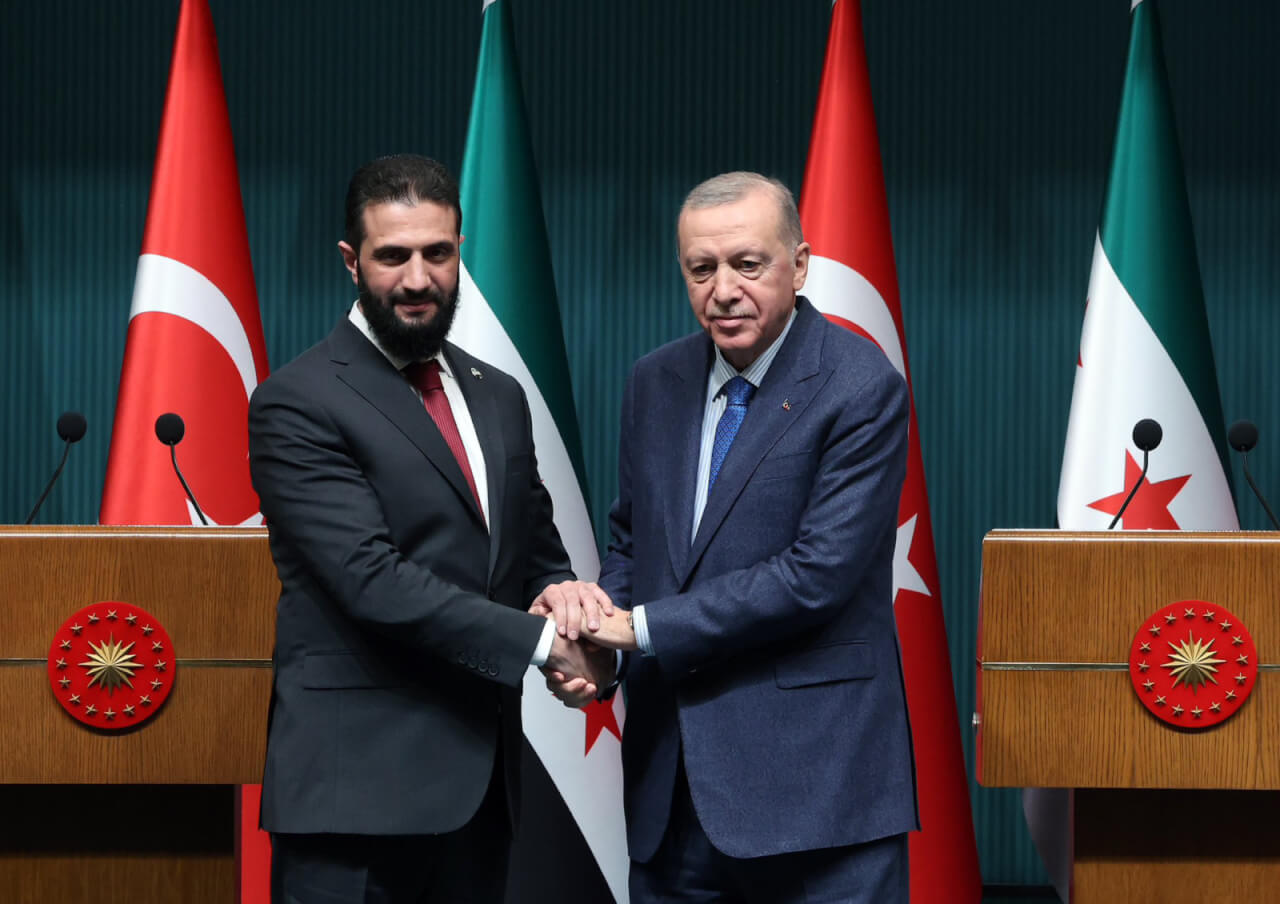
The AKP government (2002to the present) aimed to exert its regional hegemony vis-à-vis Syria and Sunni Syrians after the outbreak of civil war in 2011 (Gafarlı & Roknifard, 2023). The sectarian narrativesof the AKP became evident after its sharp criticisms over the oppressive policies of the Assad regime against the Syrian protestors (Taşpınar, 2012). In August 2011, Foreign Minister Ahmet Davutoğlu (2009-2014) met President Assad to find a solution to end the Syrian Uprising (Şenbaş, 2018). Although Davutoğlu forced Assad to apply democratic reforms and to construct law and order, the Syrian regime insisted on calling the Syrian opposition “radical terrorists” and defended its oppressive policies. In response, the AKP government embraced the Syrian opposition, namely the Syrian National Council (SNC) and Free Syrian Army (FSA) and adopted a pro-Sunni position against the Assad regime (Taşpınar, 2012; Altuğ, 2013). Amid escalating tensions and perceived threats from Syria, Turkey also had to address the humanitarian consequences of the conflict, leading it to adopt an open-door policy for Syrian refugees (İletişim Başkanlığı, 2024). On 15 June 2011, Davutoğlu held a press conference at a Hatay refugee camp, emphasizing Turkey’s humanitarian approach to Syrians. He called them ‘brothers’ to justify interventionist policies and highlighted Turkey’s ‘open-door’ policy for those oppressed by the Assad regime:
It is out of question for us to close the door to our Syrian brothersin any way, or to stop (the number of asylum seekers) after ten thousand. But of course, when this turns into a huge wave, it has the potential to turn into a regional and international issue. In this regard, our heart and goal are to start the process as soon as possible that will prevent such a wave of migration from continuing to increase (Deutsche Welle, 2011).
The AKP government also sought to draw on examples from Sunni Islamic history to justify its interventionist policy in Syria. It foregrounded prominent symbols, namely the Umayyad Mosque[1] and Saladin Ayyub[2], to underscore that the Syrian conflict was significant for the defense of Sunni Islam. For this reason, he holds a significant place in sectarian historical memory as a defender of Sunni Islam against the Shi’ite Fatimid dynasty (909–1171) and the Crusaders. For instance, Prime Minister and later President, Erdoğan (2003-present), frequently invoked Saladin as the Sunni leader who expelled the Crusaders from Jerusalem (Erdoğan, 2025). Thus, Erdoğan’s references to the “Umayyad Mosque” and “Saladin Ayyub” functioned as metaphors for the Umayyad Empire, which was ruled by a Sunni elite in Damascus from the 7th to 8th centuries (Taşpınar, 2012).
By invoking these historical figures and sites, the AKP not only framed the Syrian conflict in sectarian terms but also positioned its domestic political rivals as antagonists to this vision of Sunni Islamic solidarity. The AKP government criticized the opposition Republican People’s Party (CHP) for its alleged support of the Syrian regime and its neglect of the traumas of Sunni Syrians (Karakaya-Stump, 2019). It drew a parallel between the CHP’s Alevi, Kemalist, and secularist credentials and the Alawite-led Assad regime, consistent with the AKP’s emphasis on Ottoman heritage in Syria. The sectarian tone became evident when Erdoğan delivered a speech at the AKP group meeting in parliament on 5 September 2012. In his speech, he not only criticized the CHP’s alleged support for the Assad regime but also portrayed Syria as part of Turkey’s religious, cultural, and historical memory:
You will see that the CHP will lack the face to go to Damascus when the time comes, but I hope we will go to Damascus as soon as possible and embrace our brothers there. I hope we will read Fatiha (the first chapter of the Quran) at the tomb of Saladin and perform our prayers in the Umayyad Mosque (T24, 2015).
Erdoğan’s Syrian policy adopted a sectarian tone to portray the CHP elite as negligent on the issue and to pressure the AKP government to support Sunni Syrians in their plight. This aligns with the ontological security perspective, as the AKP framed Turkey as the protector of Sunni Syrians against the Assad regime.
As the Syrian Civil War progressed, border skirmishes between Turkey and Syria intensified. For instance, a Turkish RF-4E Phantom reconnaissance jet was shot down by the Syrian regime on 22 June 2012, after Syria claimed the aircraft had violated its airspace (Bostan, 2012). In response to escalating tensions and Syrian shelling of Turkish border towns, the Chief of the Turkish General Staff, Gen. Necdet Özel, visited the Syrian border on 4–5 October 2012 to demonstrate Turkey’s resolve and assess military preparedness (Burch, 2012). These mounting cross-border confrontations set the stage for a broader pattern in which domestic security incidents were increasingly interpreted through the lens of Ankara’s conflict with the Assad regime. This tendency to frame domestic security threats within the context of regional tensions became especially pronounced following high-profile incidents.
After the Reyhanlı bomb attack, which killed fifty-three Turkish citizens in May 2013, the AKP government argued that the Assad regime organized this attack as a response to Turkish intervention in Syria (Fahim & Arsu, 2013). After this attack, Erdoğan delivered a public speech at Reyhanlı on 25 May 2013 in which he emphasized the sectarian character of the Syrian conflict: “(…), it [Turkey] has always been Ansar for the oppressed.” (Hürriyet, 2013). It is striking that Erdoğan used “Ansar” as the qualifier to depict the “open-door” policy of Turkey towards the Sunni Syrians as a moral obligation deriving from Turkey’s Islamic beliefs. He turned to the analogy of the “Ansar-Muhajirun” dichotomy as a tool for vicarious identification to depict the evolving relationship between the Turks and the Sunni Syrian refugees. The Muhajirun became the persecuted Sunni Syrians, described as “persecuted brothers,” akin to the Muslims who migrated from Mecca to Medina in 622. Moreover, the Turkish people, in that respect, became the ‘Ansar,’ a description attuned to the accommodating behaviour of the inhabitants of Medina who helped and greeted the Muslims fleeing from Mecca in the face of persecution (Polat, 2018, p. 505). Yet, at the same time, the Ansar-Muhajirun dichotomy served to trigger ontological security of the AKP, depicting Turkey as the protector of the oppressed Sunni Syrians.
Furthermore, the AKP government aimed to bolster its image as a leader among Sunni Syrians to consolidate conservative voters ahead of the June 2015 general elections. Hence, the government also drew upon the traumatic memoirs of Sunni refugees who had been forced to migrate from the Balkans and the Caucasus to Turkey following the defeat of the Ottoman Empire. The AKP used these traumas to justify its pro-refugee policies regarding Syria. During a party rally in Istanbul in May 2015, Prime Minister Davutoğlu (2014-2016) emphasized Turkey’s historical responsibility to protect Sunni Syrian refugees from the oppression of the Assad regime. In this context, Davutoğlu criticized Kemal Kılıçdaroğlu (2010–2023), the former leader of the CHP, for his staunch opposition to Syrian refugees:
He (Kılıçdaroğlu) said: “Why don’t we return these Syrians to the Assad regime? Dear citizens who experienced Muslim migration from the Balkans and the Caucasus, I ask you: would we hand over the oppressed (Sunni Syrians) who have taken refuge with us to their oppressors (the Assad regime)? Does this befit the heirs of the Ottoman Empire (Akparti, 2015)?
It was evident that Davutoğlu vicariously identified with the plight of the Syrian refugees. Moreover, he portrayed Turkey as the heir of the Ottoman Empire in its responsibility to protect the oppressed. In doing so, he sought to reinforce a sense of ontological security.
Conclusion
The case demonstrates that the AKP government employed narratives of shared suffering and responsibility to portray Sunni Syrians as ‘brothers’. AKP leveraged historical memory, sectarian symbolism, and cultural proximity to justify interventionist policies and reinforce Turkey’s self-image as a regional protector. Constructing a vulnerable external Other thus helped elites mitigate internal anxieties and bolster ontological security, positioning Turkey as a moral and strategic actor in its neighbourhood (Rumelili, 2015; Polat, 2018).
This study contributes to the theoretical development of ontological security in international relations by demonstrating how vicarious identification operates as a key mechanism through which external experiences are internalized and incorporated into state identity. By moving beyond the conventional focus on internally generated narratives and routines, the paper highlights how Turkey’s engagement with the suffering of Sunni Syrians is not merely strategic or instrumental but constitutive of its own ontological self. This approach illuminates the relational and affective dimensions of state identity, showing how external trauma can become a source of biographical continuity and moral purpose that sustains foreign policy commitments. In doing so, the paper extends ontological security theory by integrating emotional and narrative processes, offering a more nuanced understanding of how states “live” the experiences of others and how such experiences shape both identity and action in the international arena.
Future research could examine how vicarious identification functions in other regional contexts or how domestic audiences internalize these narratives over time. Comparative studies of states with similar historical or religious nationalist projects may reveal broader patterns in the mobilization of vicarious identification. Overall, this study underscores that the boundaries of the self in international politics are neither fixed nor confined to the nation-state but are continually negotiated through emotional, symbolic, and discursive practices that intertwine security with identity.
Engaging recent scholarship on Turkish foreign policy shaped by evolving national and civilizational identity, alongside strategic concerns, would further enrich this analysis. Linking identity-driven perspectives to vicarious identification highlights how Turkey’s self-image as a moral regional actor guides foreign policy and reinforces domestic legitimacy (Adısönmez & Al, 2025), situating the study within current debates on the interplay of identity and strategy.
References
Adısönmez, U. C., & Al, S. (2025). From Beka to Ghaza? New ontological security regime and Turkey’s neo-imperial bid in world politics. Alternatives, 50(4), 648–666.
Akgül Durakçay, F., & Ovalı, A. Ş. (2025). West as a source of ontological insecurity: Tracing continuity and change in anti-Western discourse in Turkish foreign policy. Alternatives, 50(4), 704–723.
Akparti.org. (2015). Başbakan Davutoğlu’nun İstanbul mitingi konuşmasının tam metni. Retrieved December 24, 2025, from https://www.akparti.org.tr/haberler/basbakan-davutoglu-nun-istanbul-mitingi-konusmasinin-tam-metni/
Altuğ, S. (2013). The Syrian uprising and Turkey’s ordeal with the Kurds. Dialectical Anthropology, 37(2), 123–130.
Baadj, A. (2013). Saladin and the Ayyubid campaigns in the Maghrib. Al-Qantara, 34(2), 267–295.
Bostan, Y. (2012, June 23). Suriye Türk jetini vurdu. Sabah. Retrieved December 15, 2025, from https://www.sabah.com.tr/gundem/2012/06/23/suriye-turk-jetini-vurdu
Browning, C. S. (2018). “Je suis en terrasse”: Political violence, civilizational politics, and the everyday courage to be. Political Psychology, 39(2), 243–261.
Browning, C. S., Joenniemi, P., & Steele, B. J. (2021). Vicarious identity in international relations: Self, security, and status on the global stage. Oxford University Press.
Burch, J. (2012, October 12). Turkey warns Syria against cross-border shelling. Reuters. Retrieved December 9, 2025, from https://www.reuters.com/article/syria-crisis-idUKL6E8LA4KN20121010/
Can, S. (2017). The Syrian civil war, sectarianism and political change at the Turkish–Syrian border. Social Anthropology/Anthropologie Sociale, 25(2), 174–189.
Daoudy, M. (2016). The structure-identity nexus: Syria and Turkey’s collapse (2011). Cambridge Review of International Affairs, 29(3), 1074–1096. https://doi.org/10.1080/09557571.2016.1231659
Erdoğan, R. T. [@RTErdogan]. (2025, December 26). Kudüs’ün Fethi’nin 838’inci yıl dönümünde, bu mukaddes şehrin ikinci fatihi Selahaddin Eyyubi’yi ve kahraman askerlerini rahmetle yâd ediyorum. Hazreti Nebi’nin ve ondan önce gelen peygamberlerin bizlere emaneti olan Kudüs için mücadele etmeyi azim ve kararlılıkla sürdüreceğiz [Tweet]. X. https://x.com/RTErdogan/status/1973792329795305588
Fahim, K., & Arsu, S. (2013, May 11). Car bombings kill dozens in center of Turkish town near the Syrian border. The New York Times. Retrieved December 11, 2025, from https://www.nytimes.com/2013/05/12/world/middleeast/bombings-in-turkish-border-town.html
Gafarlı, O., & Roknifard, J. (2023). Relations with Russia in The Context of Turkey’s Policy in Constructing its ‘Strategic Autonomy’. Uluslararası İlişkiler Dergisi, 20(79), 33-49.
Gellwitzki, C. N. L., & Houde, A. M. (2023). Narratives, ontological security, and unconscious phantasy: Germany and the European myth during the so‐called migration crisis. Political Psychology, 44(2), 435–451.
Giddens, A. (1990). The consequences of modernity. Stanford University Press.
Goode, J. F. (2020). The Turkish arms embargo: Drugs, ethnic lobbies, and US domestic politics. University Press of Kentucky.
Güç, K. (2025). Spatial Context of Ontological Security in Foreign Policy Analysis: The Case of Türkiye’s Blue Homeland Policy. Uluslararası İlişkiler Dergisi, 22(88), 45-64.
Karakaya-Stump, A. (2019). The AKP, sectarianism, and the Alevis’ struggle for equal rights in Turkey. In H. Yilmaz & J. Beckford (Eds.), Alevism as an ethno-religious identity (pp. 53–67). Routledge.
Kinnvall, C. (2004). Globalization and religious nationalism: Self, identity, and the search for ontological security. Political Psychology, 25(5), 741–767.
Kujawa, K. (2023). Turkey and the politics of memory. In Europe’s Islamic legacy: 1900 to the present: Proceedings of the online conference hosted by the University of Cambridge on 20 October 2020 (p. 9). BRILL.
Mitzen, J. (2006). Ontological security in world politics: State identity and the security dilemma. European Journal of International Relations, 12(3), 341–370.
Mufti, M. (2009). Daring and caution in Turkish strategic culture: Republic at sea. Springer.
Polat, R. K. (2018). Religious solidarity, historical mission and moral superiority: Construction of external and internal ‘others’ in AKP’s discourses on Syrian refugees in Turkey. Critical Discourse Studies, 15(5), 500–516.
Rumelili, B. (2015a). Conflict resolution and ontological security: Peace anxieties. Routledge.
Rumelili, B. (2015b). Identity and desecuritisation: The pitfalls of conflating ontological and physical security. Journal of International Relations and Development, 18, 52–74.
Şenbaş, D. (2018). Post-Cold War relations between Turkey and Syria. Transnational Press London.
Taş, H. (2022). Erdoğan and the Muslim Brotherhood: An outside-in approach to Turkish foreign policy in the Middle East. Turkish Studies, 23(5), 722–742.
Taşpınar, Ö. (2012). Turkey’s strategic vision and Syria. The Washington Quarterly, 35(3), 127–140.
Tür, Ö. (2025). Syrian transition at year one: A new struggle for Syria (Policy Brief No. 8). GlobAcademy. https://www.globacademy.org/politika-notlari/
Ülgül, M. (2020). Religion and empire: Islam as a structural force in the Umayyad and the Ottoman Empires. Novus Orbis: Siyaset Bilimi ve Uluslararası İlişkiler Dergisi, 2(2), 111–130.
Volfová, G. Ö. (2016). Turkey’s Middle Eastern endeavors: Discourses and practices of Neo-Ottomanism under the AKP. Die Welt des Islams, 56(3–4), 489–510.
Zarakol, A. (2011). After defeat: How the East learned to live with the West. Cambridge University Press.
News Articles & Online Sources
Başbakan Erdoğan Reyhanlı’da halka seslendi. (2013, May 25). Hürriyet. https://www.hurriyet.com.tr/gundem/basbakan-Erdoğan-reyhanlida-halka-seslendi-23365948
“Esed’le geçiş olabilir” diyen Erdoğan, daha önce Şam yönetimi için neler söylemişti? (2015, September 25). T24. https://t24.com.tr/haber/esedle-gecis-olabilir-diyen-Erdoğan-daha-once-sam-yonetimi-icin-neler-soylemisti,310818
Türkiye: Suriyeli sığınmacılara kapımız açık. (2011, June 15). DW. https://www.dw.com/tr/t%C3%BCrkiye-suriyeli-s%C4%B1%C4%9F%C4%B1nmac%C4%B1lara-kap%C4%B1m%C4%B1z-a%C3%A7%C4%B1k
Türkiye’de bulunan yabancıların sayısı ve vatandaşlık durumları ile ilgili iddialara dair açıklama. (2024, August 21). İletişim Başkanlığı. https://www.iletisim.gov.tr/turkce/haberler/detay/turkiyede-bulunan-yabancilarin-sayisi-ve-vatandaslik-durumlari-ile-ilgili-iddialara-dair-aciklama
[1] The Umayyad Mosque in Damascus, one of the world’s largest and oldest mosques, is considered the fourth holiest site in Islam and, according to tradition, the place where Jesus will return before the End of Days (Ülgül, 2020). It holds symbolic significance in Turkish–Islamic history, having been controlled, restored, and defended against Crusaders by the Great Seljuk (1037–1157) and Ottoman (1299–1922) empires.
[2] Saladin Ayyub (1138–1193), a Kurdish-born Muslim sultan of Egypt and Syria, famously defeated a large Crusader army at the Battle of Hattin and captured Jerusalem in 1187 (Baadj, 2013).