Why does Turkishness feel so exposed, even fragile, today? This is not a matter of nostalgia. It is neither Ottoman romanticism nor Republican grandstanding. Rather, it is the result of a quiet but profound contradiction I have observed over many years — between what I encounter abroad and what I increasingly sense at home in Turkey.
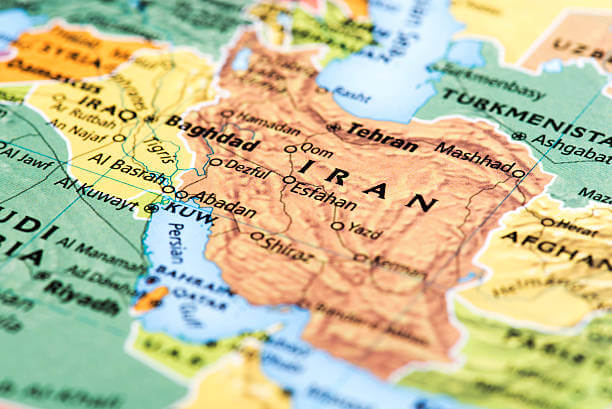
When you speak with Turkic communities in Russia, Central Asia, Iran or the Balkans, you often hear the same sentence repeated with striking consistency: “We exist, but we have no recognised name.” In Turkey itself, the feeling is almost the reverse: “We have a name — but is its substance being steadily hollowed out?” These two sentiments converge on a single, unavoidable question: What is Turkishness?
From Empire to Republic: A Necessary Reminder
The Ottoman Empire never described itself as a “Turkish Empire.” Its official terminology was Memâlik-i Osmaniye — the Ottoman realms — a dynastic, religious and status-based imperial structure. The Turkish element was not located at the centre of imperial administration, but mainly among rural, land-tied populations. This is often misread today. It was not a denial of Turkish identity, but a structural feature of a multi-ethnic empire. Indeed, the label “Ottoman Turks” was not an internal self-definition but a European designation. From an early stage, European political geography referred to the empire simply as “Turkey”.
The Republic marked a deliberate rupture. It replaced the ummah with the nation, dynasty with citizenship, and religion with law. Turkishness was defined not by blood, but by shared language, shared destiny and shared legal order — a civic and constitutional identity designed to hold together a diverse society. That choice was rational, not ideological. What concerns us today is why this framework has become blurred.
The Turkic World Has Never Been Religiously Monolithic
To define Turkishness through a single faith is historically untenable. The Turkic world has never been religiously uniform — and still is not. Gagauz Turks are Christian. The Khazar ruling elite adopted Judaism. Uyghurs, long before Islam, practised Buddhism and Manichaeism. You can find shamanistic traditions from one of the deepest layers of Turkic spiritual history. Even beyond the core Turkic geography, Hungarians, who proudly trace their ancestry to the Huns, and Finns, linguistically connected to Eurasian steppe cultures, inhabit entirely different religious and cultural spheres today.
This confirms a simple truth: Turkishness is not a biological category. It is a historical and civilisational space. Far from being a weakness, this diversity has been a defining strength of Turkic political tradition. Historically, Turks rarely allowed religion to become the sole organising principle of the state. Governance and belief coexisted in a pragmatic — often flexible — balance.
Thirty-Five Million Turkic People in Russia: A Quiet Pluralism
One of the most explicit expressions of this pluralism lies within the borders of the Russian Federation. According to academic and demographic studies, between 30 and 35 million people of Turkic origin live in Russia today, practising a remarkable variety of religious traditions. Among them are Tatars and Bashkirs, who are predominantly Sunni-Hanafi Muslims; the Chuvash community, which largely remained outside Islam and is primarily Orthodox Christian; Yakuts (Sakha), who preserve strong Shamanistic elements, often intertwined with Christianity; Altai, Khakas and Tuva Turks who practise Buddhism alongside Shamanism; Karachay-Balkars and Kumyks who are Sunni Muslims and Nogais who are Sunni Muslim while retaining strong nomadic cultural codes.
Across Central Asia, Islam itself is lived through diverse local interpretations, shaped by pre-Islamic traditions. Among Uyghurs in China, religious practice is similarly non-uniform. The conclusion is unavoidable: shared belief has never been the glue holding Turkic continuity together. What binds these communities is linguistic kinship, historical memory and a standard civilisational code.
Most Turks are Muslim — this is a historical fact. But it does not follow that Turkishness equals Islam, nor that Islamisation implies Arabisation. Turks interpreted Islam through their own languages, legal traditions and statecraft. From the Seljuks to the Ottomans, they produced political models distinct from those of the Arab world. Arabisation is not an organic outcome of Turkish history, but a later cultural drift. Reducing Turkishness to a subordinate identity within an Arab-centric Islamic framework is historically inaccurate and sociologically counterproductive. It marginalises non-Muslim Turks and pushes Alevi, Shi’a and secular Turks to the edges of the national narrative. The result is not expansion, but contraction.
“Founding Nations” and Federalism: A Dangerous Detour
This brings us to a sensitive but unavoidable debate: periodic calls to redefine Turkey as a state founded by multiple ethnic “constituent nations”, often coupled with proposals for federalism. There is no dispute that Kurds and Arabs are integral to Turkey’s historical and social fabric. But recognising this reality is fundamentally different from restructuring the state around ethnic founding partnerships. In modern states, the notion of a “founding nation” is not symbolic. It defines sovereignty itself. Multiple founding entities inevitably raise questions of divided authority and competing legitimacy.
The Middle East region offers ample lessons: Iraq’s ethno-sectarian federalism produced chronic fragility, not stability, while Syria collapsed once identity became a bargaining chip. Lebanon’s sectarian power-sharing paralysed the state. The pattern is consistent: When ethnicity becomes a constitutional structure, the state weakens. Türkiye’s historical achievement lay not in denying difference, but in preventing ethnic identities from becoming sovereign units. Once the shared constitutional roof erodes, no group becomes safer — all become more vulnerable.
The Way Forward
If Turkishness is to remain meaningful, the path forward requires following steps:
- Defining Turkishness as a constitutional and civic concept, not religious.
- Recognising non-Muslim Turks and diverse sectarian traditions as legitimate components of the whole.
- Removing faith from the centre of identity engineering and returning it to the personal sphere.
- Rebuilding a shared future narrative through language, education, law and institutions.
Such an approach will liberate faith from political instrumentalisation.
In conclusion, Turkishness is neither bloodline nor belief. It is language, memory, statecraft and civilisational continuity. The Muslim Turk belongs, so does the Christian Gagauz. Turkishness includes the Jewish Khazar legacy, the Buddhist or Shamanist Uyghur, the Tatar, Yakut and Chuvash in Russia. A Turkish identity that forgets this pluralism does not grow stronger — it collapses inward.
States cannot survive without identity. Identities do not survive by narrowing. What Turkey needs today is not another identity debate, but a calm, inclusive and law-based civilisational framework — one capable of holding diversity without dissolving sovereignty. If that balance is restored, Turkey’s relationship both with itself and with the wider Turkic world will become more resilient, more credible and far more sustainable.