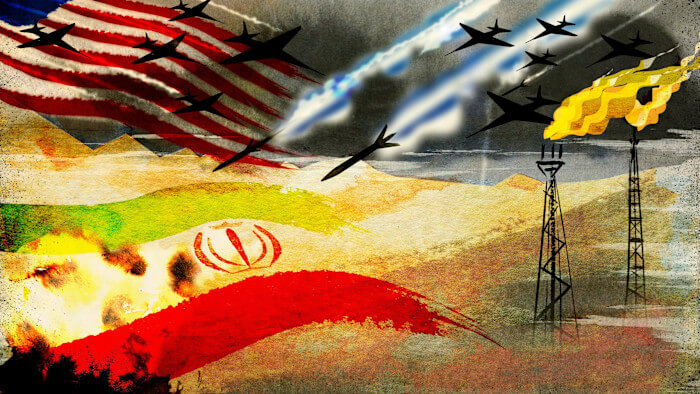
It has been exactly a month since the beginning of the US-Israel War on Iran. Attacks on Iran constitute the third instance in recent years involving the blatant use of power, where the powerful actors feel that they have a legitimate right to use force, undermining the sovereignty of weaker powers, and more importantly, resulting in an unravelling of a rule-based international order. The process started with the Russian invasion of Ukraine in February 2022 and continued with the massive counterreaction by Israel on the Palestinians based in Gaza following the Hamas terrorist attacks of October 7, 2023. The process has reached a new climax with the joint US-Israel attacks on Iran starting on February 28, 2026, at a time when negotiations were underway and proceeding smoothly with Iran and the US-Israel axis over the course of Iran’s nuclear capabilities. In all three cases, military actions have generated huge human tragedies and will continue to do so in the foreseeable future because there is no indication that any of these three conflicts will end at any time soon.
In retrospect, the war on Iran collectively waged by the US and Israel was based on two strategic miscalculations. First, the expectation was that once the key leader of the regime, such as the Supreme Leader of Iran, Ali Hamaney, and a few other top figures were eliminated, there would be a smooth process of regime transformation aided by popular uprisings against the ruling bloc. This would help to create a new power structure in Iran, which would act in the interests of the US and Israel. This favorable regime change, in turn, not necessarily in a democratic direction, would swing the pendulum further in the direction of Israel’s hegemonic ambitions in the Middle East backed by greater dominance of the US in the region. From a comparative perspective, as the first of these recent conflicts, the Russian War on Ukraine, has amply demonstrated that autocratic regimes are highly resilient and are unlikely to crumble even in the presence of massive external attacks. The regime continues to be brutal and resilient at the same time. The same process could be expected in the Iranian case given the fact that its highly centralized and authoritarian regime is likely to become even more consolidated, centralized and aggressive when attacked by the external powers. At this point, the real losers of this process are, consequently, the Iranian people. Indeed, ordinary citizens are likely to suffer further amid a tragic war, which makes restraint highly unlikely on the part of a highly centralized and autocratic regime, as it tries to maintain its grip on power against societal pressures. Furthermore, key segments of the Iranian society who are critical of the regime find themselves in an awkward situation because of the presence of mounting nationalistic feelings in the face of military attacks by powerful external forces. Nationalistic feelings have the effect of uniting diverse elements of society, both critical and supportive of the regime.
Perhaps, Trump anticipated a Venezuelan-style smooth takeover, where President Nicholas Maduro was removed from power, and a new leadership was instituted in line with the US interests as part of a neo-imperialist design characteristic of the second Trump era. Ultimately, it was naive to expect that this kind of smooth imperial design would work in the Iranian case. There was a similar expectation on the part of the Western actors that military assistance to Ukraine combined with heavy sanctions would help to undermine Putin’s popularity and facilitate regime change in Russia, paving the way for just and durable peace. These early expectations failed to materialize in the Russian case as the regime became even more autocratic and eliminated any kind of opposition remaining in the process.
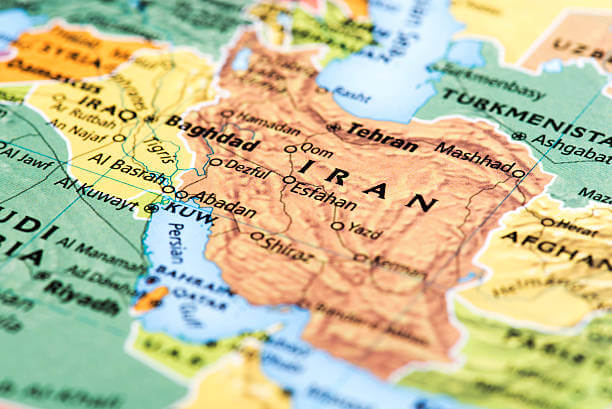
The second major miscalculation was that the war would be confined to a confrontation between the US and Israel on the one hand and Iran on the other. Instead, Iran has effectively turned the war into a regional and global conflict by its attacks on key countries of the Gulf containing US military bases. It also closed the Strait of Hormuz, a key pathway for oil and gas, on a selective basis, keeping it open to a limited number of countries, which it considered not to be allies of the US and Israel. The extension of the boundaries war on a regional and global scale was clearly a development, which Trump and his Israeli counterparts had not anticipated. These miscalculations and lack of preparedness can be clearly inferred from the incoherent speeches and decisions of Trump leading to even greater instability, unpredictability and volatility in stock markets and oil prices.
The extension of the war to the broader Middle East constituted a major blow to key countries of the Gulf, such as the UAE and Saudi Arabia, considered to be safe havens for trade, investment, tourism and human mobility. These countries had invested heavily in strengthening their ties with the Trump administration, but then they realized that they had very little protection from the US in the light of the Iranian attacks. The global implications of the war are also likely to be quite profound as energy shortages contribute to rising oil prices, leading to global stagflationary pressures. In addition to energy shortages and resulting inflationary pressures, food shortages are likely to emerge as a serious problem. The environmental damage inflicted by the war is also likely to be formidable.
Two unintended consequences of the war deserve emphasis in this context. Russia has emerged as an early winner as it capitalizes on the rise of oil prices and disruptions of energy flows from the Gulf due to the partial closure of the Strait of Hormuz. Many countries are turning to Russia to serve their energy needs augmenting its power to continue the war over Ukraine. In the context of the present conflict, Putin finds himself in a stronger position and increasingly a legitimate actor of the system with stronger bargaining power vis-à-vis the European countries over the terms of the peace process relating to its territorial claims over Ukraine. Considering Trump’s and Netanyahu’s actions in recent years, Putin’s actions to undermine the rule-based international order are no longer in the spotlight as they were back in February 2022. Indeed, US and Israel have given a kind of new legitimacy to Putin’s actions, based on the notion that the powerful have every right to use force on weaker members of the international system, creating the basis of a new world disorder, a process which may be difficult to stop and reverse in the coming years.
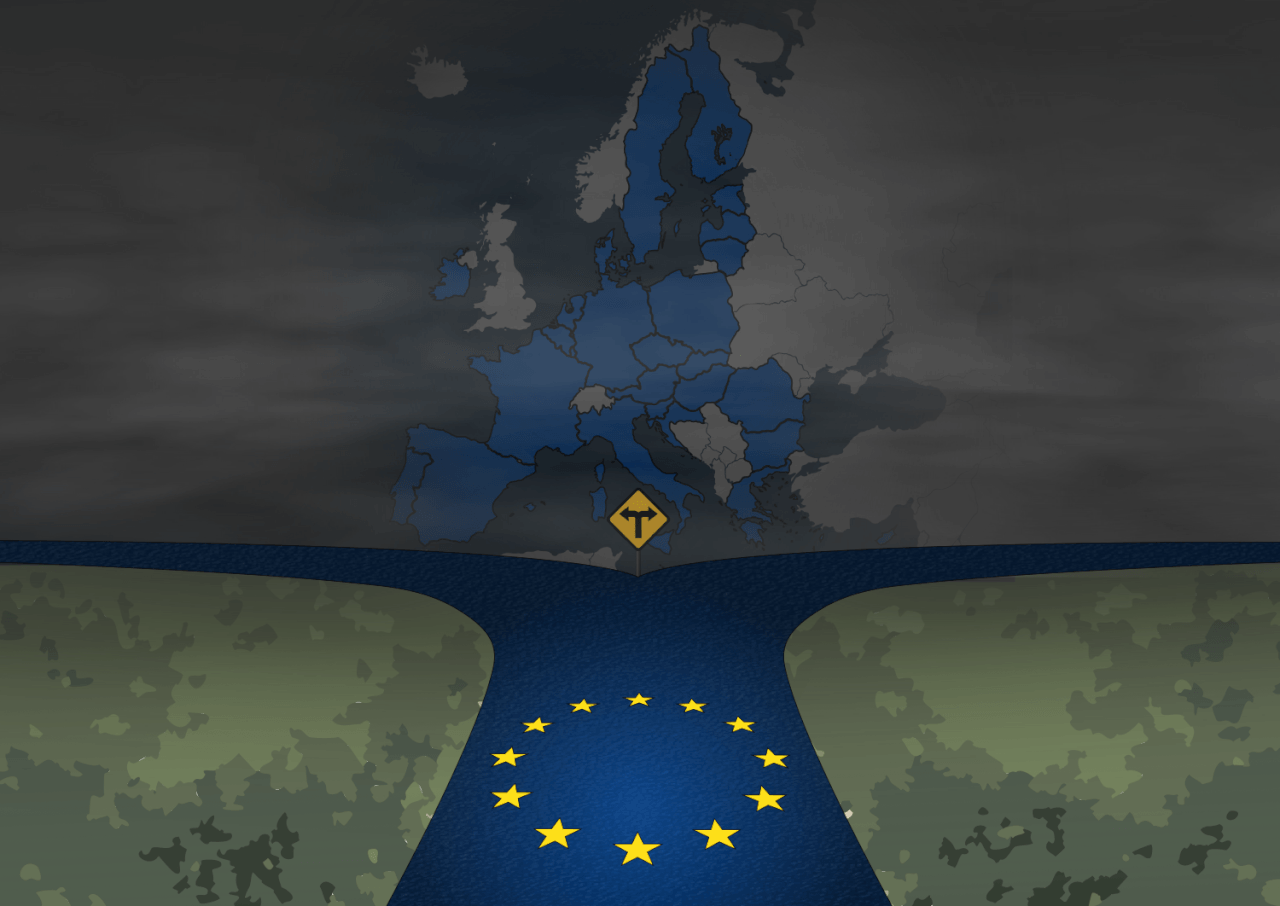
The second unintended consequence is that the war seems to have pushed an important actor, the European Union, into a position of peripheral by-stander. The European Union has been unable to exert any kind of influence to stop the attacks in the first place and push in the direction of a diplomatic solution, a path that it had favored and a process that it put considerable energy into for a long time. At the same time, the war is likely to accentuate Europe’s economic and security dilemmas even further and the fundamental feature of the European Union, the social market model, may be even harder to maintain in the face of energy shortages and renewed security challenges.
Perhaps a major consequence of the war so far and the strategic miscalculations highlighted is to undermine the US position as a responsible global power even further. The dramatic shift of the US away from its position as a responsible global leader was already evident during the early phase of the second Trump administration especially regarding the principles of international trade under the framework of the World Trade Organization as a global rule-setter in trade. The unilateral, unpredictable and neo-imperial approach to foreign policy based on the extraction of foreign territories forming the basis of Trump’s foreign policies during his second presidential term, observed in the unexpected attempt to annex Greenland, had already undermined American reputation on a global basis. The War on Iran is likely to accentuate this trend undermining the notion of US action as a responsible power in the direction of a rule-based international order even further. Arguably, no other American president would have extended his support to Israel to the point of going to war with Iran.
Trump came to office with the promise of focusing on domestic economic problems and acting as a force for peace by ending wars in different parts of the world. What happened in practice is the exact opposite of this. His policies have not only been counterproductive on the global scale but also have clearly undermined American interests. For instance, the aggressive renewed tariffs on India and Brazil pushed these countries further in the Chinese direction. What has remained of American foreign policy in recent years is the dark face of American power, with the benign face of American power, based on its soft power capabilities, clearly disappearing in the second Trump era. The dramatic decline in Trump’s popularity in American domestic politics is quite striking. With the mid-term elections approaching, Trump faces a significant hurdle. The War on Iran seems to have the support of only 34 percent of the electorate.
The first month of the war clearly showed that “regime change” in Iran is highly unlikely. It is possible, however, that war may constitute an instrument for regime change in the US, pushing the country back to a democratic path, with its positive consequences for the US as well as the broader Middle East and the world as a whole.