The global order is undergoing a profound transformation. For decades, geopolitics revolved around military alliances, territorial control, and economic blocs. Today, that framework is being reshaped by a new form of great power rivalry, one that plays out not on traditional battlefields, but in the digital realm. Competition over technological leadership, data, and digital infrastructure is rapidly becoming the defining feature of international politics.
This article explores the contours of what is increasingly described as a “Digital Cold War” between the United States and China. It examines how this rivalry is unfolding, where Türkiye currently stands within it, and what strategic choices Ankara faces as it seeks to protect its national interests in the twenty-first century.
The parallels with the twentieth-century Cold War are striking, but the instruments of power have changed. More than nuclear arsenals and conventional armies, technology now sits at the heart of global influence. The old Iron Curtain has given way to a digital one, threatening to divide the world into separate, and often incompatible, technological spheres. In this new landscape, data has become the ultimate strategic asset, and controlling its flow is as important as controlling territory once was.
This competition is unfolding across multiple arenas, from the basic architecture of the internet to the complex digital ecosystems that shape economies, governments, and everyday life.
The New Battlegrounds: Fragmented Internets and Digital Ecosystems
In the emerging digital order, control over infrastructure has become a central objective of great power competition. Power is no longer measured only in aircraft carriers or GDP figures, but in the ability to set technological standards and govern the networks that sustain the global economy. Two interconnected trends capture this shift particularly well: the fragmentation of the global internet and the rise of rival digital ecosystems anchored by competing powers.
The “Splinternet” and the End of a Unified Digital Space
In the 1990s, the internet was imagined as a borderless and liberating space, a global digital common where information flowed freely and ideas crossed borders with ease. That vision is steadily eroding. What is emerging instead is the “Splinternet”: a fractured digital world divided along political, regulatory, and commercial lines.
Several forces are driving this fragmentation. First, some states have moved aggressively to assert political and ideological control over the digital sphere. Countries such as China and Russia have constructed sophisticated systems of censorship and surveillance, often described collectively as “Great Firewalls”, designed to regulate information flows, suppress dissent, and reinforce state authority. By blocking Western platforms and nurturing domestic alternatives, these governments are effectively building national internets aligned with their political priorities.
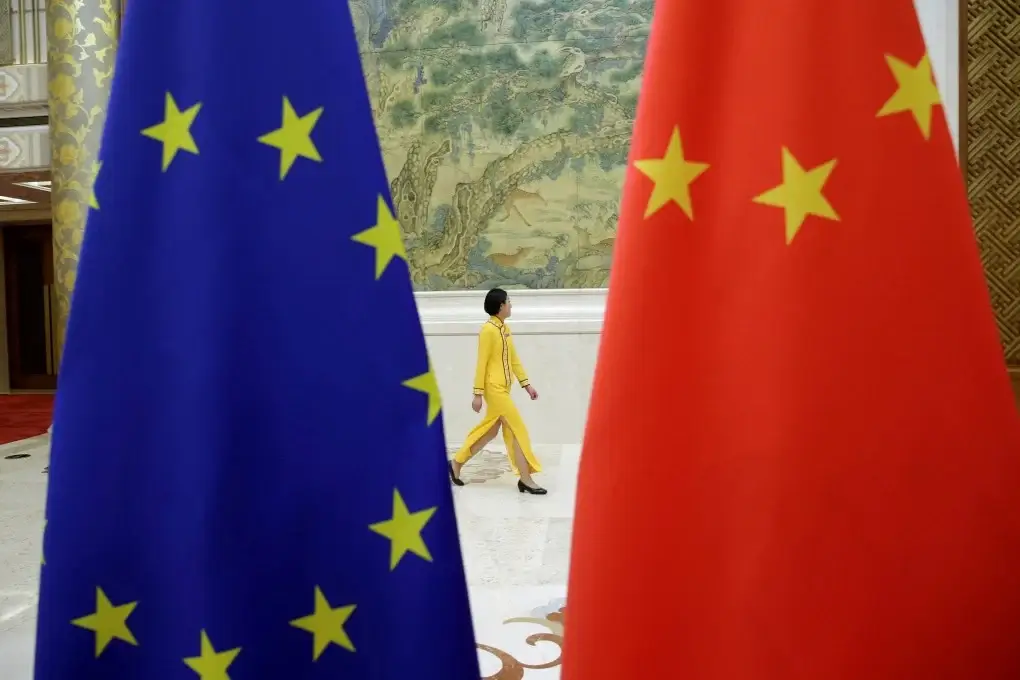
Second, regulatory divergence is deepening digital divides even among close partners. The European Union’s stringent data protection and technology governance rules, while aimed at protecting citizens, have raised significant compliance barriers for global tech firms. As countries and regions adopt their own regulatory regime, often framed as defenses against “digital foreign powers”, they unintentionally erect new walls between digital spaces.
Finally, commercial considerations reinforce these divisions. Faced with complex regulations, political risks, or limited profitability, technology companies sometimes choose to exit or avoid certain markets altogether. These business decisions further entrench digital fragmentation, restricting access to services and information based on geography.
China’s Digital Silk Road and the Challenge to Western Dominance
China’s Digital Silk Road represents the technological backbone of its broader Belt and Road Initiative. Launched in 2015, the Digital Silk Road aims to finance and construct digital infrastructure across Asia, Africa, and beyond, while positioning Chinese technologies as global standards. In doing so, it directly challenges decades of Western dominance in the digital sphere.
The initiative spans a wide range of sectors. Chinese firms such as Huawei and ZTE are building telecommunications networks, including 5G infrastructure, often at lower cost than Western competitors. Beijing is also exporting artificial intelligence applications, smart-city technologies, cloud computing platforms, e-commerce ecosystems, and mobile payment systems, offering developing countries an integrated digital package that rivals those provided by firms like Google or Amazon.
For many countries, the appeal is clear. The Digital Silk Road promises affordable access to advanced technology and helps close longstanding infrastructure gaps. Yet its expansion has triggered deep concern in Washington and European capitals. Western officials fear that Chinese-built infrastructure could enable surveillance, data extraction, or political leverage, potentially compromising national security.
More broadly, the Digital Silk Road is not just about cables, servers, and software. It is also a vehicle for exporting a distinct vision of how digital societies should be governed.
A Competing Model of Modernity
The rivalry between the United States and China extends well beyond technology and economics. At its core, it also reflects a deeper sociological challenge. For the first time in the modern era, China offers a credible, non-Western pathway to modernization and global power, calling into question the long-standing assumption that development must follow a Western liberal model.
This shift is visible even in everyday perceptions. A generation ago, “Made in China” was often synonymous with cheap and low-quality goods. Today, some of the world’s most advanced products, from smartphones to renewable energy technologies, are produced in China. The transformation is a powerful reminder that technological success can be achieved outside Western institutional frameworks.
At the heart of this alternative model lies a different understanding of the relationship between the individual and the state. Western liberal systems prioritize individual rights and freedoms as the foundation of progress. China, by contrast, emphasizes collective goals and state-led development, accepting restrictions on certain freedoms in the name of social stability and national advancement.
For many developing countries, China’s experience is both compelling and practical. It demonstrates that rapid economic growth and technological sophistication are possible without adopting Western-style liberal democracy. As a result, China’s model has become not just an ideological alternative, but a tangible development strategy—one that resonates with states seeking to modernize on their own terms.
As this alternative gains influence, countries like Türkiye find themselves at a pivotal moment, forced to chart a course in a world no longer dominated by a single developmental paradigm.
Türkiye’s Strategic Dilemma
For Türkiye, the digital transformation of global politics represents a critical turning point. As the digital world increasingly splits into American and Chinese ecosystems, Ankara’s traditional role as a bridge between East and West is under strain. The challenge now is to navigate a landscape where both indecision and misalignment carry serious risks.
Türkiye remains a committed NATO member with deep security ties to the West. At the same time, it is integrating Chinese technologies into key areas of its digital infrastructure, including through Huawei’s role in 5G development. This dual-track approach reflects the difficult choices facing many middle powers caught between the world’s two largest economies.
Several risks stand out. First, there is growing concern that Türkiye is lagging behind in the fourth industrial revolution. The country lacks domestic capacity in critical sectors such as semiconductors, leaving it dependent on foreign suppliers. Meanwhile, regional competitors are investing aggressively. The Abu Dhabi government, for example, aims to become the world’s first fully AI-powered government by 2027 and has already committed massive resources to AI-driven governance. Such initiatives risk leaving Türkiye behind.
Second, the familiar notion of Türkiye as a “bridge” risks becoming a liability if it remains passive. Simply serving as a transit point for foreign technologies, data, and capital generates limited domestic value. The real question is whether Türkiye will remain a conduit for others’ ambitions or become an active shaper of its own digital future.
Finally, excessive reliance on either American or Chinese digital ecosystems threatens Türkiye’s strategic autonomy. Lock-in to a single technological sphere could constrain foreign policy options and force alignment with one bloc at the expense of the other. Preserving independence in the digital age requires diversification and strategic foresight.
Building a Digitally Resilient Türkiye: Policy Priorities
Meeting these challenges demands more than rhetoric. Türkiye needs a proactive, forward-looking digital strategy that strengthens resilience, supports innovation, and redefines its role in the global order.
One promising path lies in deepening digital cooperation with the European Union. Like Türkiye, the EU finds itself squeezed between American and Chinese technology giants. This shared position creates space for meaningful partnership. Aligning Türkiye’s digital regulations and data protection frameworks with European standards would not only deepen economic integration with its largest trading partner but also strengthen Ankara’s leverage in dealing with both Washington and Beijing.
At the same time, Türkiye must invest in people. A fragmented world requires professionals who can operate across different technological, regulatory, and cultural systems. Supporting education, research, and exchange programs that expose Turkish talent to both Western and Asian innovation hubs would help cultivate a workforce fluent in the realities of a multipolar digital world.
Finally, Türkiye needs to rethink what it means to be a “bridge” in the digital age. Rather than a passive geographic connector, Türkiye can position itself as an active hub for digital diplomacy and cross-ecosystem cooperation. By hosting forums, enabling joint ventures, and experimenting with regulatory sandboxes that bring together Western and Eastern tech actors, Türkiye can create strategic value that neither bloc can easily bypass.
The decisions made today will shape Türkiye’s trajectory for decades. Digital great power competition is no longer a distant possibility; it is an immediate reality. With a clear strategy and decisive action, Türkiye can navigate this new era not as a bystander, but as an independent actor shaping its own digital destiny. However, this needs a long-term planning and dedication.