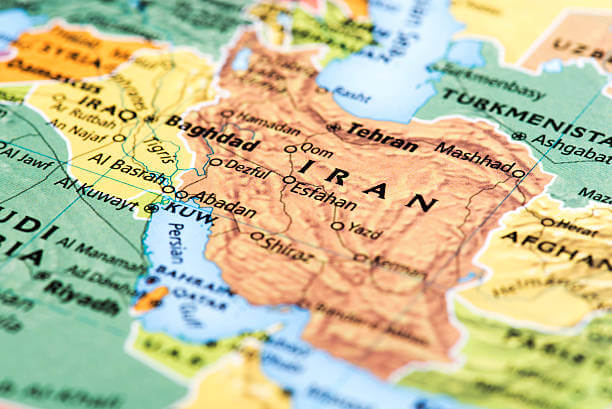
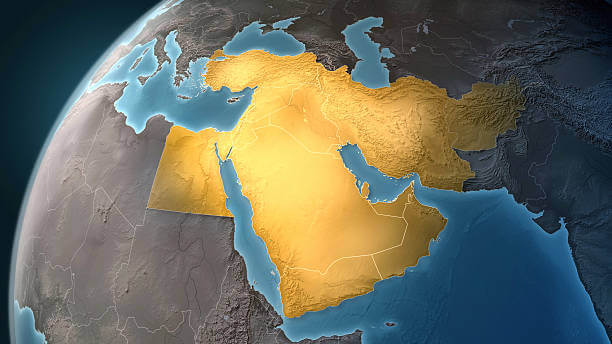
The current Iran war has forced both Turkey and the United Kingdom into a strategic space that is far more complex than either neutrality or alignment. Neither country can pretend that it is untouched by the conflict, yet neither has a strong interest in becoming a direct belligerent. That is precisely why their restraint matters. What Ankara and London are trying to do is not simply to avoid war, but to avoid the far more dangerous trap of entering a conflict whose military expansion could sharply reduce their diplomatic flexibility, economic resilience, and long-term regional influence. Recent public positions from both governments point in that direction. London has tried to distinguish between defensive support and offensive participation, while Ankara has emphasized de-escalation, diplomacy, and preventing the conflict from widening across the region.
The central analytical point is straightforward. Staying out of the war is not the same thing as staying out of the game. Too much commentary still treats regional crises in binary terms, as if states either fight or become irrelevant. But for powers such as Turkey and the United Kingdom, direct military entry can narrow rather than enlarge strategic agency. War hardens alignments, reduces room for diplomatic manoeuvre, raises economic exposure, and creates commitments that outlast the immediate phase of combat. In that sense, strategic patience is not indecision. It is a deliberate attempt to preserve influence while others become more deeply locked into escalation. The real question for both countries is therefore not whether they can avoid all costs; they cannot. The question is whether they can absorb the shocks of this war without surrendering control over their own medium- and long-term interests.
Turkey: Strategic patience as disciplined statecraft
For Turkey, the difficulty is acute because geography eliminates the luxury of distance. Ankara does not observe the Iran war from afar. It sits inside the wider security environment shaped by Iran, Israel, Syria, Iraq, the Gulf, and the Eastern Mediterranean. Any major deterioration in regional stability quickly becomes a Turkish problem through energy prices, trade routes, border insecurity, proxy networks, refugee pressures, and alliance politics. This is why restraint is so consequential for Ankara. Turkey cannot afford an approach driven by rhetorical reflex or domestic emotion alone. It needs to keep military exposure limited while preserving diplomatic access to all the actors that will matter when the shape of the post-war order becomes clearer. Turkey’s own diplomacy in recent days has reflected that logic, with Foreign Minister Hakan Fidan stressing engagement with all sides and the need to restore diplomacy even as Ankara faces direct security spillovers from the conflict.
The strategic challenge for Turkey is that almost every plausible outcome carries risks. If Iran is significantly weakened but not fully incapacitated, Ankara may face a more fragmented and unpredictable neighbourhood, especially across Iraq and Syria. If Israel emerges from the war stronger and more operationally unconstrained, Turkey could find its own regional room for manoeuvre narrowed further, particularly in a Middle East where coercive hierarchies become sharper. If the war drags on without a decisive political settlement, the result may be a prolonged environment of instability that damages Turkish interests through economic disruption and chronic security spillover. This is why, from Ankara’s perspective, staying out of the war is not passive detachment. It is an effort to avoid being trapped by outcomes in which every available choice becomes more costly.
A further reason for Turkish caution lies in its relationship with Washington. Regardless of shifting personalities, the United States remains indispensable to the outer limits of regional escalation and any eventual diplomatic management of the conflict. But if US President Donald Trump’s approach again becomes more personalist, punitive, and transactional, Turkey will need even greater pragmatism. Ankara cannot afford a posture that satisfies short-term political theatre at the cost of long-term bargaining capacity. A vindictive and highly transactional White House would increase the premium on flexibility, not ideological rigidity. For Turkey, then, strategic patience is also about preserving optionality in its wider relationship with the United States and NATO. It allows Ankara to criticize, distance itself, and hedge where needed, without crossing into direct belligerency that would lock it into commitments it may later struggle to manage. Alper Coskun’s recent analysis for Carnegie captures this well; Turkey’s interests in the Iran conflict are inseparable from its need to retain Washington’s ear.
United Kingdom: Staying out of war while staying relevant
The British case is structured differently, but the core logic is similar. The United Kingdom is not a neighbouring state in the way Turkey is, yet it remains deeply embedded in the conflict’s strategic geography through Cyprus, its military posture in the Eastern Mediterranean, alliance obligations, and its economic role in Gulf energy networks. Recent UK government statements make clear that London has tried to draw a distinction between joining offensive action and undertaking defensive operations to protect British personnel, assets, and allies. At the same time, the government has reinforced Cyprus and deployed additional capabilities to the Eastern Mediterranean after threats to RAF Akrotiri and rising regional escalation.
That distinction matters. Britain’s problem is not merely whether to support allies, but how to do so without turning its regional posture into a strategic liability. Its bases in Cyprus remain significant instruments of logistics, intelligence, and operational reach, but they are also exposed if London appears too deeply entangled in a widening war. A rational British approach therefore requires calibrated involvement: enough to defend assets, reassure partners, and preserve credibility, but not so much that the UK loses control of its own escalation threshold. In this sense, strategic patience is as relevant to Britain as it is to Turkey. It is how London protects presence without inviting overextension.
The economic dimension reinforces this caution. British energy firms remain important actors in the Gulf and wider Middle East, but they are no longer the unquestioned architects of the regional energy order. Their strength today lies more in partnership, technology, finance, implementation capacity, and long-term project integration than in geopolitical ownership of the field. BP’s finalized Kirkuk redevelopment deal in Iraq and Shell’s role in QatarEnergy LNG expansion projects illustrate this contemporary position well. British firms still matter, and matter greatly, but as embedded high-capacity partners within broader regional and global energy ecosystems.
That role is worth protecting precisely because it is no longer automatic. A wider regional war that destabilizes the Gulf, threatens sea lanes, or militarizes the Eastern Mediterranean more intensely would undermine the environment in which British firms can operate as trusted partners and technology providers. London therefore has strong incentives not only to avoid direct overcommitment, but also to preserve the form of influence it still possesses. Britain is no longer the sole manager of the regional game; it is a powerful but constrained actor operating in a more crowded field. That makes overreach especially dangerous. If it risks too much militarily, it could damage the very diplomatic and commercial role that still gives it relevance. This is what links Turkey and the United Kingdom despite their very different geographies. Both understand that direct entry into the Iran war could reduce their strategic freedom more than it would enhance their influence. Both need to remain active in the diplomatic arena without becoming prisoners of battlefield logic. Both face a regional order in flux, where influence will not be determined only by military participation but also by who retains credibility, access, and room for manoeuvre when a settlement, pause, or recalibration eventually emerges.
Strategic Restraint in a Burning Region
Turkey and the United Kingdom have not escaped the consequences of the Iran war; on the contrary, they are already operating within its political, economic, and strategic aftershocks. The war is no longer a distant crisis unfolding elsewhere. It is already shaping regional alignments, recalibrating deterrence, unsettling markets, and forcing external powers to reconsider the limits of their room for manoeuvre. Yet despite these mounting pressures, Ankara and London have so far avoided one of the most consequential strategic errors available to middle and major powers alike: mistaking geographic proximity for strategic obligation, and confusing direct military participation with genuine political relevance. What both states are pursuing is neither easy nor risk-free. It is a course defined by constant pressure, competing expectations, and the danger of appearing indecisive to allies and adversaries alike. Restraint in such a context is rarely rewarded in real time; it is often criticised as hesitation, weakness, or ambiguity. And yet, under present conditions, it remains the most rational and politically sustainable course available to them. To be drawn prematurely into the war would not necessarily produce influence; it could just as easily produce entrapment, overextension, and the loss of diplomatic autonomy at precisely the moment when flexibility matters most.
This is why strategic patience should not be misunderstood as passivity, nor should diplomatic intelligence be read as a soft alternative to hard power. In this context, both are instruments of power. They are the means through which Turkey and the United Kingdom are attempting to defend national interests, preserve freedom of action, and navigate a conflict whose outcomes remain uncertain, but whose costs are already widely felt. Their challenge is not simply to stay out of the war, but to do so without forfeiting relevance, leverage, or their place in the emerging regional order.