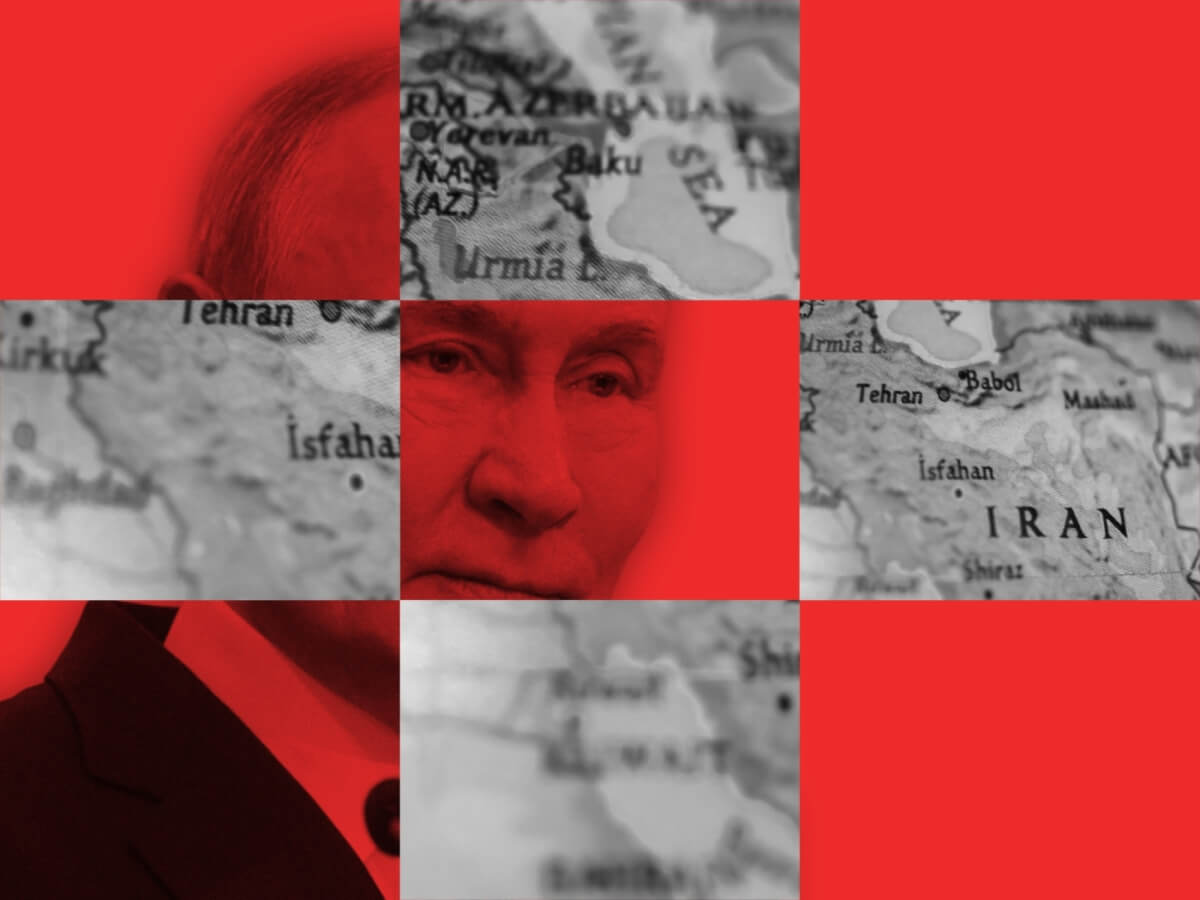
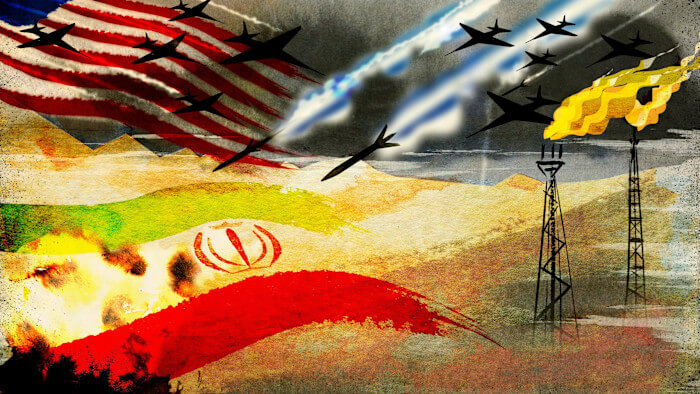
When the United States and Israel launched strikes on Iran in late February, an expected question came up: Where is Russia? Given the close ties between Moscow and Tehran, ranging from drone cooperation to sanctions evasion and a recently signed comprehensive strategic partnership, Russia’s restrained response has confused and created inconsistency for Russian foreign policy. Beyond sharp diplomatic condemnations and calls for de-escalation, Moscow has avoided any visible, high-cost intervention.
Russia’s choice has often been read as a sign of weakness or incapacity. However, such interpretations miss the strategic logic underpinning Russia’s behavior. Moscow is neither absent nor passive. It is selectively positioning itself within the crisis, leveraging opportunities while carefully managing risks by its traditional “wait and see” policy.
In other words, as the United States and Israel escalated their strikes, Moscow refrained from military involvement, prompting familiar questions about its credibility as a partner and its capacity as a global power. However, framing Russia’s response in terms of presence or absence misses the point. The Kremlin is not standing aside from the crisis; it is positioning itself within it, carefully and selectively, with a clear sense of what this war can offer. Russia’s approach is best understood through the interaction of three dynamics: opportunity, constraint, and strategic calibration.
Opportunities and Constraints for Russia
The Iran war has generated systemic effects that closely align with Russian interests. First, the disruption of energy flows, particularly around the Strait of Hormuz, has driven up global oil prices. For a sanctions-constrained Russian economy which has already been strained by war expenditures, this has provided an immediate fiscal boost. Russia’s oil revenues surged in the early weeks of the conflict, which decreased budgetary pressure and indirectly supported its war effort in Ukraine.
Second, the conflict has become a distraction for Western strategic attention. As Washington diverts political focus, military resources, and diplomatic capacity towards the Middle East, Ukraine risks losing priority. This shift is not symbolic. The diversion of air defense systems and munitions, finite resources in any high-intensity conflict, may materially affect Kyiv’s defensive capacity. Third, the conflict reinforces Russia’s long-standing preference for a fragmented global agenda. The more crises the United States must manage simultaneously, the harder it becomes to sustain coherent pressure on Russia. In this sense, instability itself becomes a strategic asset.
However, Russia’s behavior is not driven solely by opportunity. It is also shaped by a set of constraints, ranging from strategic prioritization to regional balancing, but these do not simply reflect weakness; they structure Moscow’s choices. The most immediate constraint is strategic prioritization. Russia remains deeply engaged in Ukraine, where its military, industrial, and political resources are concentrated. Diverting advanced systems, such as air defense platforms or combat aircraft, to Iran would strain these resources and undermine Moscow’s primary theater of operations.
There are also temporal and operational constraints. High-end military assistance would take months to deploy and integrate, offering little immediate impact on the unfolding conflict. In a rapidly evolving war, delayed intervention carries diminishing returns. Equally important is Russia’s regional balancing act. Unlike during the Cold War, Moscow today maintains simultaneous relationships with competing actors, including Israel and key Gulf states such as the UAE and Saudi Arabia. These ties with regional states are economically and strategically valuable. A full alignment with Iran would risk collapsing this multi-vector diplomacy. Finally, Russia is navigating a sensitive diplomatic moment vis-à-vis the United States. Despite deep antagonism, Moscow has shown reluctance to escalate tensions in ways that could jeopardize potential leverage in negotiations over Ukraine.
Strategic Calibration: Limited Alignment, Maximum Flexibility
Rather than viewing Russia’s posture as either engagement or disengagement, it is more accurate to conceptualize it as strategic calibration under conditions of asymmetric payoff. Moscow’s behavior reflects a deliberate attempt to remain embedded in the conflict while preserving its freedom of maneuver.[1] This involves three concurrent policies. Firstly, regarding the political alignment without military commitment, Russia has strongly condemned U.S.-Israeli actions and signaled diplomatic solidarity with Tehran, framing the strikes as violations of international law.
Secondly, in terms of selective, deniable support, while large-scale assistance is absent, reports suggest the possibility of limited intelligence sharing or tactical cooperation, forms of support that are difficult to verify and easy to scale up or down. Thirdly, regarding preservation of multi-directional ties, by avoiding overt escalation, Moscow maintains working relationships across the region, including with actors directly threatened by Iran.
This is not simply caution. It is a form of controlled engagement designed to preserve optionality. Russia is not choosing between action and inaction; it is structuring its involvement to ensure that future choices remain open. In this sense, Moscow pursues three roles: observing the conflict, benefiting from its systemic effects, and intervening selectively when the expected gains outweigh the risks. What emerges is not passivity, but a cautious strategy of low-cost influence projection.
The idea that Russia is “silent” in the Iran war rests on a narrow understanding of power that equates influence with overt military action. However, Russia’s behavior suggests a different logic. By refraining from direct intervention, Moscow avoids the costs of escalation while still capturing many of the conflict’s benefits. By limiting its commitments, it reduces exposure to failure. And by engaging selectively, it retains the ability to adapt as the situation evolves. Russia has applied a similar logic before. In Syria, it avoided large-scale ground deployment, relying instead on airpower and local partners to carry the burden of fighting. Ground operations were effectively outsourced to Iranian-backed forces and others, while deniable actors such as the Wagner Group expanded Russia’s reach without increasing its exposure. The result was a model of intervention that maximized influence while minimizing risk, an approach that is clearly visible in Moscow’s behavior today.
In a similar vein, this approach also reflects the nature of the Russia-Iran relationship itself. The partnership has long been transactional and pragmatic rather than alliance-based. The absence of a mutual defense obligation allows Moscow to define the terms of its involvement, and, crucially, its limits. Russia’s posture in the Iran war is not an anomaly but a reflection of a broader strategic pattern, including engaging just enough to matter, but not enough to be trapped.
Looking ahead, this approach may prove increasingly consequential. If the conflict in the Middle East endures, Russia stands to deepen its economic gains, further weaken Western focus on Ukraine, and expand its room for maneuver in global diplomacy. At the same time, its restrained posture positions Moscow as a potential interlocutor in future diplomatic processes, should it choose to assume that role.
More broadly, Russia’s conduct points to an emerging model of great-power behavior under conditions of resource constraints and systemic competition. Rather than seeking dominance in a single theater, Moscow appears to be optimizing across multiple arenas, leveraging crises not by controlling them, but by embedding itself within their consequences. The real implication is not that Russia is retreating, but that it is adapting. In a geopolitical environment defined by simultaneous crises and Western overstretch, such adaptive selectivity may offer a durable form of power.