In December 2025, marking nearly two years since the outbreak of the war in Gaza, Hamas Media Office published a 42-page document titled “Our Narrative: Al Aqsa Flood -Two years of Steadfastness and the Will for Liberation.” This document, or rather manifesto, which functions less as a factual account than as a strategic narrative, summarizes the War in the Gaza Strip from Hamas’s perspective as evidenced by the title “Our Narrative.”
This document is similar in its format to their previous document, issued in January 2024, during the war. Although the new version is a lengthy update, the document is written after the ceasefire agreement and adopts a completely different tone and purpose. Concerned about the ongoing conflict, the 2024 version was more defensive and more explanatory in its nature, aiming to answer the criticism addressed to their October 7 (2023) attack on Israeli soil. The new version is written in an apparently more assertive and confident tone, laying out how Hamas frames October 7 and seeks to consolidate its interpretation of both the attack and the ensuing war. In other words, the 2024 version was a crisis-management attempt; with the 2025 version, the group is moving toward biographical reconstruction. Divided into eight chapters, Hamas explains its understanding of the October 7 attack in its own words and situates it within a broader historical and ideological framework.
In the opening section of the document, Hamas praises the resilience of the Gaza people, forging what it calls “an epic of steadfastness,” standing “firm to their resistant identity,” and advancing the idea that “sacrifice is the path to salvation.” It emphasizes collective memory, historical continuity, and identity, defining Palestinians as “not victims forever,” and refusing to be passive witnesses to history. This framing positions suffering not as a loss but as a source of moral and political legitimacy, thereby securing their identity as a resistant actor that cannot be erased by military defeat. This narrative reconstruction is especially important for the Gaza population, who have suffered extreme losses.
Hamas situates the current conflict within a narrative of a “long-standing settler-colonial project” dating back to 1948. It condemns Israel as being inherently violent and accuses its international supporters of complicity. It also adds that Israeli military power has only strengthened Palestinian determination, resilience, unity, and moral strength, while Israel is portrayed as experiencing moral suffering, psychological and reputational decline, losing its military deterrence, and international legitimacy. This zero-sum framing casts Palestinian endurance and Israeli decline as mutually reinforcing processes.
Hamas refers to October 7 as “The day of glorious crossing,” a discursive move that reframes the attack as a symbolic and strategic success, thereby transforming the attack into a triumph. Writing after the ceasefire, Hamas defends the attack as a strategic choice and a “calculated step,” explicitly rejecting any claim that the attack was spontaneous, reactive, or an adventure. In doing so, Hamas seeks to assert agency and strategic rationality while downplaying its own responsibility for the humanitarian consequences of the October 7 attack in Gaza.
For Hamas, October 7 is framed as a legitimate act of resistance because it is framed as the inevitable consequence of a 77-year occupation marked by denial of self-determination, displacement, and collapse of political solutions. The attack is described as a “moment of truth” that shattered Israel’s image of invincibility and reasserted Palestinian dignity through martyrdom and struggle. Hamas grounds this framing in themes of sacrifice, honor, and the defense of Jerusalem and Al-Aqsa, regardless of cost, elevating symbolic and religious images above rational cost-benefit decision-making calculations.
To reinforce its claims to legitimacy, Hamas argues that October 7 was a military operation against the Israeli army and not civilians. Despite extensive visual evidence that Hamas operatives themselves documented the murder and kidnapping of civilians using body cameras, Hamas categorically denies allegations of rape and deliberate killing of non-combatants, arguing that such acts contradict Islamic principles and Palestinian national values. Civilian casualties are instead attributed to Israeli military actions. This denial serves to reject any legal culpability while preserving a decent self-image.
More broadly, Hamas portrays the war in Gaza as a “genocide” carried out by Israel with U.S. backing, while claiming that the Gaza population remained unified and in full support of Hamas without hesitation. On this basis, Hamas argues that it cannot be excluded from the future Palestinian political arrangement, presenting itself as deeply embedded in Palestinian society, with electoral (2006) and popular legitimacy, and as representing the prevailing public commitment to armed resistance.
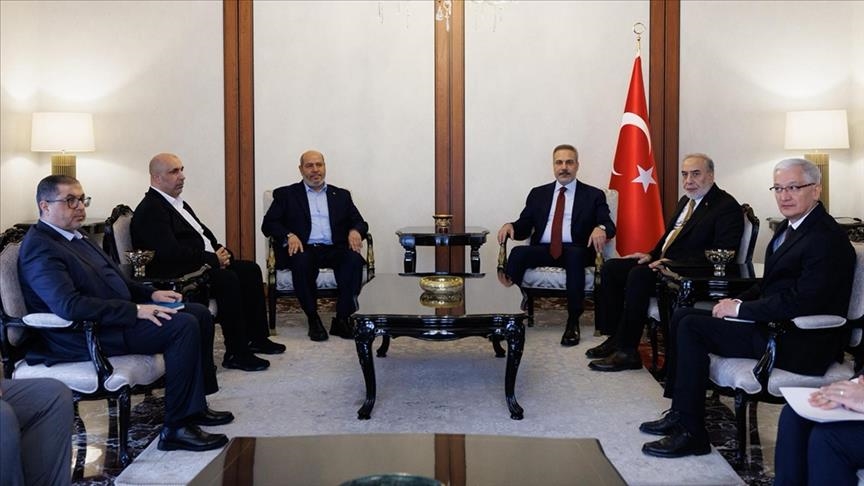
As for the ceasefire reached, Hamas portrays its role as seeking to end the war by cooperating with mediators and accuses Israel of deliberately blocking these initiatives for political and expansionist aims. For Hamas, post-war priorities include full Israeli withdrawal, reconstruction, independent governance, protection of Jerusalem and the West Bank, Palestinian unity, rejection of any regional normalization with Israel, international legal accountability, and strengthening international partnerships, highlighting mediators such as Qatar, Egypt, and Türkiye.
Countries such as Türkiye are presented as especially significant, not only as states supporting international legal efforts but also as sources of diplomatic pressure that reinforce Hamas’s claim that the Palestinian narrative has become a new global moral reference point, a new representation of humanity’s conscience. The significance of Türkiye for Hamas is evident in its role as a narrative anchor for gaining international standing.
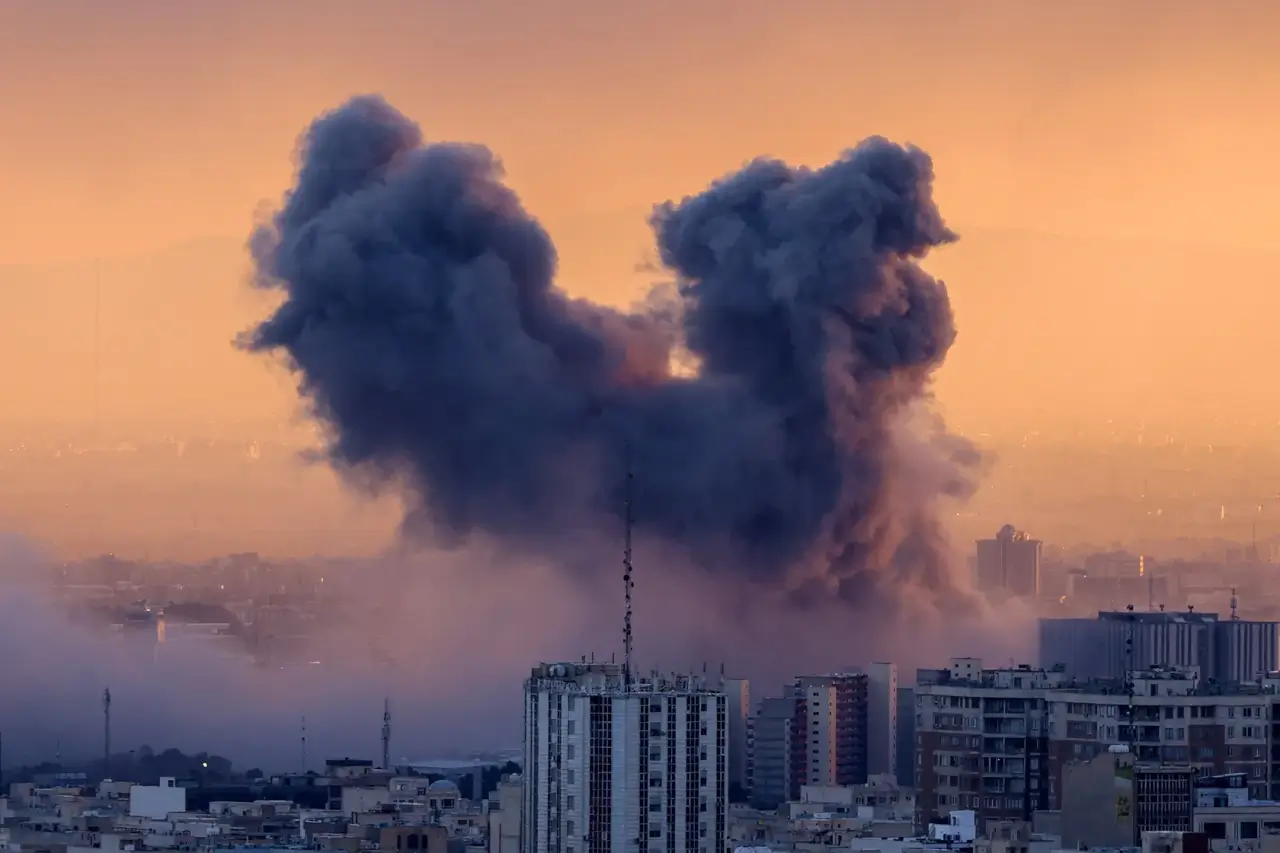
Finally, Hamas describes October 7 as a “strategic earthquake” that redrew global awareness, returning the Palestinian issue to the center of global politics while shattering Israel’s security doctrine, international standing, and exposing deep societal divisions among the Israeli public. Israel is portrayed as isolated and delegitimized with growing boycott campaigns, international legal action against its leaders, a surge in global recognition of the Palestinian state, and the collapse of normalization efforts between Israel and regional actors.
Overall, the document is markedly non-apologetic, unlike the previous one. It adopts a triumphalist approach, presenting the war as a moment of historic victory rather than a humanitarian tragedy. Hamas adopts a narrative of historical vindication, presenting the October 7 attack as a foundational moment of rebirth and realignment to secure legitimacy, garner support, and shape the regional political environment.
Read as a strategic narrative rather than a historical record, Hamas’s document “Our Narrative” is an attempt to shape the post-war political environment. Hamas intends to recast the October 7 attack as a strategic decision to affect global perceptions of the Palestinian issue. Rather than seeking sympathy for the devastating war in Gaza, Hamas advances a victory narrative that prioritizes legitimacy and global support to remain a central actor on the Palestinian issue in any post-war order.
For Türkiye, this framing matters less for its claims than its implications. Hamas positions Ankara in the center of a broader diplomatic and legal system that would challenge Israel’s international standing. This places Türkiye in a delicate position. Ankara positions itself as a leading advocate for the Palestinian cause and as the protector of the oppressed. It challenges the West-centric global order and defines its foreign policy in terms of moral values and historical responsibilities.
Ankara has a long-standing engagement with Hamas. It hosts Hamas political figures and refuses to designate the group as a terrorist organization, unlike the U.S. and the EU. Turkish support for Hamas after October 7 diverges sharply from Western policy priorities, thereby complicating its traditional regional mediating role. Although Ankara’s engagement with Hamas creates leverage and relevance, its overt support for Hamas limits its role as a mediator acceptable to Israel and Western actors, potentially hindering its participation in a final political solution.
The “Hamas factor” now sits at the nexus of Türkiye’s normative foreign policy, domestic political considerations, and relations with the West. If balanced correctly, it could create a distinct diplomatic niche. However, it also presents an ontological trap. By fully validating Hamas’s victory narrative, Ankara may secure its domestic moral standing while damaging its vital role as a regional bridge to the West.