Turkmenistan sits on one of the world’s great energy paradoxes. It is a landlocked country endowed with the fourth-largest natural gas reserves globally, yet its export options remain narrow, politically constrained, and structurally imbalanced. Geography has been both its fortune and its burden. To the east lies China, today the dominant buyer of Turkmen gas. To the north, Russia still absorbs limited volumes, often on pricing terms Ashgabat finds unattractive. To the south, Iran imports around 10 bcm, while roughly four bcm reaches Türkiye through swap or barter arrangements via Iran. These flows generate revenue, but they do not reflect Turkmenistan’s true resource potential. The deeper issue is structural over-dependence. When a single buyer dominates, pricing power erodes, and strategic autonomy shrinks. For Turkmenistan, diversification is not an ideological preference; it is economic survival and long-term statecraft.
For years, Turkmenistan explored southbound diversification through the Turkmenistan–Afghanistan–Pakistan–India pipeline (TAPI). On paper, it promised access to South Asia’s vast markets. In reality, TAPI has proven to be geopolitically and financially fragile. Security risks in Afghanistan, financing constraints, and uncertainty over long-term enforceability make it extremely difficult to bank. Studies may continue, but TAPI cannot credibly anchor Turkmenistan’s export strategy in the foreseeable future. That reality forces a strategic reset.
The Three Options
Strip away rhetoric and sentiment, and Turkmenistan’s realistic export options are threefold. First, China remains central. That relationship will endure, but pricing formulas and contractual balance must evolve if it is to remain sustainable. Second, Russia remains an outlet, but only if commercial terms are market-based rather than politically discounted. Third—and strategically most important—are westbound routes across the Caspian via Azerbaijan, feeding into the Southern Gas Corridor, and, in parallel, through Iran, expanding swaps without creating strategic dependence. Only the westbound option truly diversifies Turkmenistan into premium, rules-based markets and restores balance to its export portfolio.
For decades, westbound Caspian routes were blocked—often under the banner of environmental protection, with “sturgeon conservation” serving as diplomatic code for geopolitical veto. Russia and Iran were effective gatekeepers. Today, the context is different. Russia is deeply absorbed by the Ukraine war. Iran is preoccupied with domestic pressures and regional security tensions, including Israel. This does not mean either welcomes Turkmen gas flowing west. But their capacity and bandwidth to block decisively are weaker. Geopolitics creates windows. They are rarely permanent. From Ashgabat’s perspective, this may be one of those windows.
Why Azerbaijan is the Linchpin
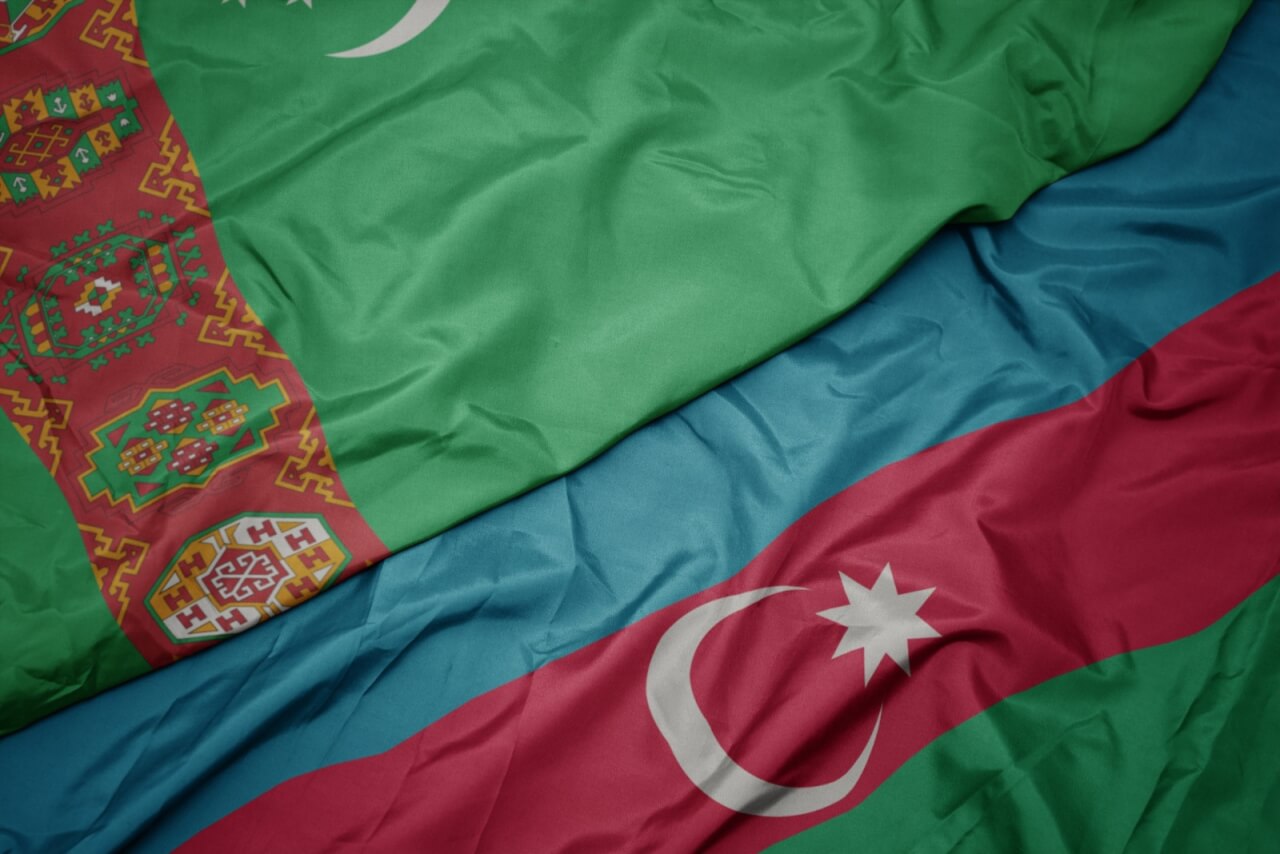
This is where Azerbaijan becomes decisive. Without Azerbaijan, Turkmen gas cannot reach Europe in a commercially credible and politically acceptable way. Azerbaijan uniquely combines geography, infrastructure, and diplomatic capital. It already operates EU-connected pipelines—The Trans-Anatolian Natural Gas Pipeline (TANAP) and Trans-Adriatic Pipeline (TAP)—and has built a reputation as a reliable supplier and transit state. For Turkmenistan, Azerbaijan is not a competitor; it is a multiplier. Turkmen volumes would strengthen Azerbaijan’s role as the Caspian’s primary energy hub and elevate Baku from supplier to gateway state. Crucially, political foundations have improved. The Azerbaijan–Turkmenistan agreement on the Dostluk field was a watershed moment. It demonstrated that sensitive maritime border disputes in the Caspian can be resolved pragmatically and bilaterally. The signal was powerful: the Caspian can be governed through cooperation, not paralysis.
Azerbaijan’s role goes far beyond pipes in the ground. First, infrastructure and transit: pipelines, compressors, metering systems, and EU-compatible regulation already exist. Second, commercial aggregation: Azerbaijani and Turkmen volumes can be combined and optimized, improving economics for all parties. Third, political facilitation: Baku’s credibility with the EU, Türkiye, the United States, and regional actors is a strategic asset no balance sheet can replicate. This is why closer presidential coordination is essential. A sustained, mandate-driven strategic track between İlham Aliyev and Serdar Berdimuhamedow, supported by empowered technical and commercial teams, would be transformational. Not symbolic meetings, but continuous ownership around a win-win vision.
Europe, Italy, and the Westward Pivot
Europe does not urgently need Turkmen gas tomorrow morning. But it wants options, resilience, and diversification. In this context, Italy stands out. Italy is emerging as a Mediterranean energy hub, linking Southern Europe, the Balkans, and broader EU markets. It also has something few others possess: a real operational footprint in Turkmenistan through Eni. Eni’s long-standing operations have built institutional trust and deep local knowledge—assets that matter immensely in Turkmenistan.
The strategic logic is clear: Turkmen gas → Azerbaijan → TANAP → TAP → Adriatic → Italy.
Italy may not urgently need Turkmen gas, but Turkmenistan needs a credible, rules-based entry into Europe. That is why recent high-level outreach to the United States and Europe—and especially the Italy visit—should be read not as courtesy diplomacy, but as a deliberate effort by Ashgabat to translate diplomacy into export optionality.
Pipelines alone do not unlock value. Investment frameworks do. For this westbound vision to become bankable, Turkmenistan must further open its hydrocarbon sector: adopt clearer, more competitive production-sharing contracts, implement transparent cost-recovery mechanisms, and establish predictable approval processes. Many resource-rich states have done this without compromising sovereignty. High-level diplomacy opens doors—but bankable contracts keep them open.
A Defining Moment
Turkmenistan’s challenge is not geology; it is geography and structure. Azerbaijan is the bridge that turns that geography from a constraint into an advantage. If Baku and Ashgabat work together—at the presidential level, with aligned teams and a clear win-win proposition—and if this is reinforced by smart engagement with the United States, Europe, and Italy in particular, the Caspian can shift from being a barrier to becoming a corridor of integration. That would reshape not only energy flows, but the strategic map of Eurasia itself.