One of the most important shifts in international mediation today is receiving surprisingly little attention: increasingly, conflicting parties themselves are seeking out mediators they trust. This is not a procedural detail. It is a structural transformation in how peace diplomacy operates. For much of the post-Cold War period, mediation was largely shaped by institutional authority. The United Nations, major powers, and regional organizations were assumed to possess the legitimacy and leverage necessary to convene negotiations and broker agreements. Mediation authority flowed from geopolitical weight, diplomatic status, or institutional mandate.
That assumption no longer fully holds.
A More Fragmented Conflict Environment
Today’s conflicts are more fragmented, prolonged, and politically layered than those of previous decades. They involve overlapping local, regional, and international dynamics, as well as a growing mix of state and non-state actors. In many conflict environments, formal negotiation tables capture only part of the real political landscape. At the same time, trust in traditional mediation actors has eroded. Major powers are often perceived as partisan or strategically self-interested. Multilateral institutions frequently struggle with political paralysis, slow decision-making, and limited flexibility. The result is a widening gap between the complexity of conflicts and the capacity of traditional diplomatic mechanisms to address them effectively.
This changing operational environment is forcing a recalibration of what makes mediation credible. Increasingly, mediation success depends less on formal authority and more on relational legitimacy: trust, access, discretion, consistency, and the ability to maintain dialogue across deeply polarized environments. In other words, in today’s conflicts, being trusted may matter more than being powerful.
Why Middle Powers Are Becoming More Visible
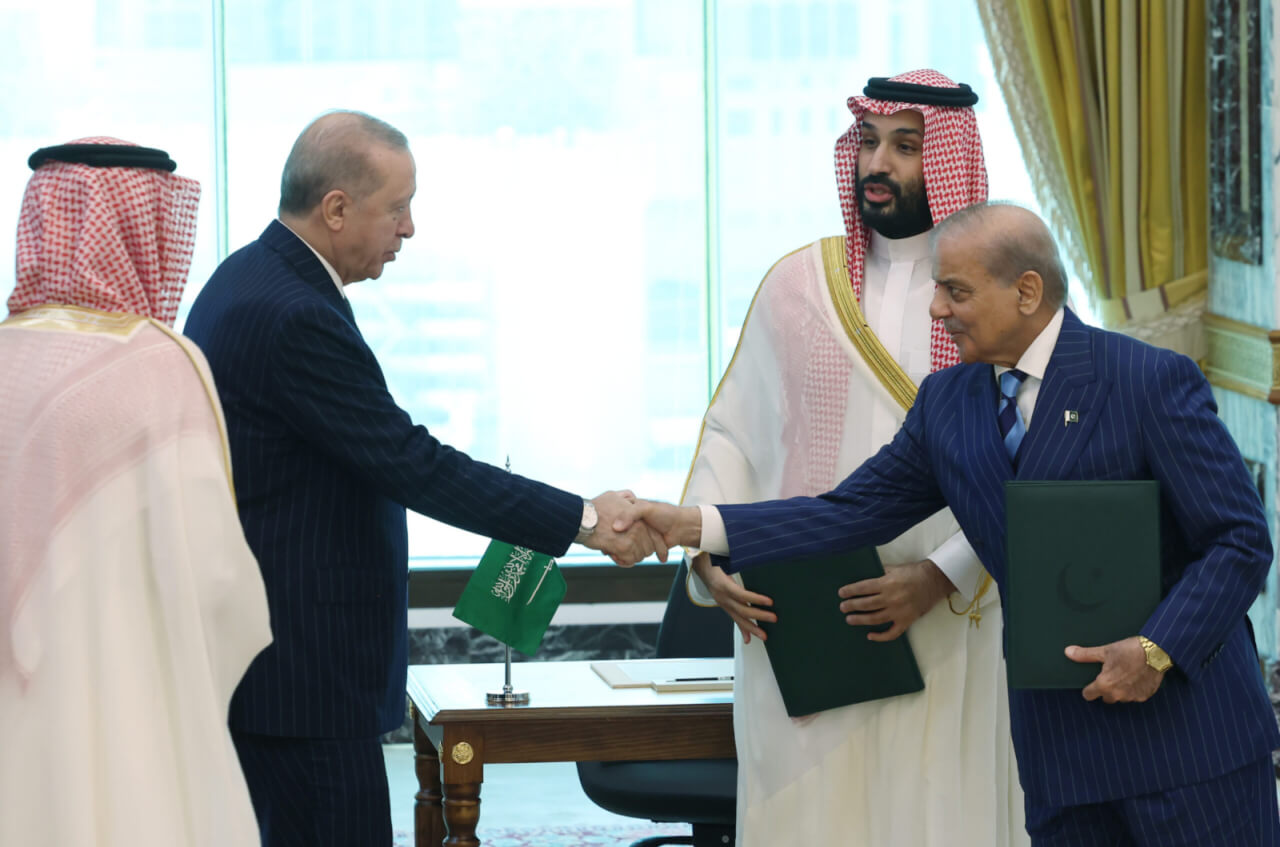
This is precisely why middle powers are becoming more visible in contemporary mediation ecosystems. Countries such as Qatar, Türkiye, Norway, and others have increasingly occupied spaces that larger powers often cannot navigate as effectively. Their comparative advantage is not necessarily coercive power, but flexibility. They can maintain communication channels across political divides, engage with actors that others avoid, and operate with a degree of diplomatic adaptability that more heavily constrained powers often lack. This does not mean middle powers are neutral in any absolute sense. No mediator is ever entirely free from strategic interests or political positioning. But perception matters. In mediation, perceived impartiality and credibility are often as important as actual capability.
The Rise of the “Trusted Mediator”
On May 6, at the Carter School for Peace and Conflict Resolution, we hosted H.E. Dr. Mohammed bin Abdulaziz Al-Khulaifi, Minister of State of Qatar, for a discussion on international mediation and peacemaking. One observation from the Minister captured this changing reality particularly well. As he noted, today it is increasingly the conflicting parties themselves that approach mediators. That insight reflects a deeper transformation in international diplomacy. It suggests that legitimacy is no longer automatically conferred by institutional status or geopolitical influence. Instead, legitimacy is increasingly earned through sustained engagement, discretion, and the ability to build confidence over time. Trust, as the Minister emphasized, has become the central currency of mediation. Without trust, access is limited, dialogue remains shallow, and agreements become fragile. With trust, even highly entrenched conflicts can begin to move toward negotiation. However, trust in mediation is not built overnight. It depends on several interrelated factors: consistency of engagement, willingness to sustain dialogue during politically difficult moments, confidentiality, understanding the conflict environment in depth, and demonstrating that mediation is not simply transactional diplomacy.
Mediation Beyond the Agreement
Another important point raised during the discussion concerned the sustainability of agreements. Too often, mediation is treated as a singular diplomatic achievement, the moment parties sign an agreement. In reality, however, agreements are only the beginning of a much longer and more uncertain process. Many peace processes collapse not because negotiations fail, but because implementation mechanisms remain weak, trust deteriorates after signature, or broader political realities are left unaddressed. This is why successful mediation increasingly requires long-term engagement beyond the deal itself.
The Minister highlighted several dimensions that matter here: understanding the social and political texture of the conflict, selecting appropriate mediation settings, sequencing commitments carefully, and maintaining follow-up mechanisms after agreements are reached. These are not technical details. They are central to whether peace processes survive beyond the symbolic moment of diplomatic breakthrough. In this sense, contemporary mediation is becoming less event-driven and more ecosystem-driven. The old image of diplomacy as a single negotiation table producing a grand bargain is becoming less common. Instead, mediation today often involves multiple tracks, iterative dialogue, informal engagement channels, humanitarian diplomacy, and continuous confidence-building measures operating simultaneously.
From Power to Relational Influence
This transformation also changes how we think about influence in international politics. Traditionally, influence was associated primarily with military capability, economic leverage, or institutional authority. Increasingly, however, influence is tied to access and relational credibility.
- Who can speak to all sides?
- Who can maintain communication when formal diplomacy collapses?
- Who can convene actors that fundamentally distrust one another?
These questions are becoming more important than ever. In fragmented geopolitical environments, the ability to sustain dialogue may itself become a strategic form of power. This is where middle powers are likely to remain significant actors in the coming years. Their role is not necessarily to replace traditional diplomacy, but to supplement and adapt it to new realities. What we are witnessing today is therefore not simply a rise in the number of mediation initiatives. It is a transformation in the politics of mediation itself. Power alone no longer guarantees influence. Institutional authority alone no longer guarantees legitimacy.
Trust as the New Strategic Currency
What we are witnessing today is therefore not simply a rise in the number of mediation initiatives. It is a deeper transformation in the politics of mediation itself. Power alone no longer guarantees influence. Institutional authority alone no longer guarantees legitimacy.
In a fragmented world, trust is increasingly becoming the decisive strategic asset. This has profound implications for the future of international diplomacy. It suggests that the effectiveness of mediation will depend less on the ability to impose outcomes and more on the ability to sustain relationships, maintain access across divides, and remain credible in environments defined by uncertainty and polarization. In many ways, the future of peacemaking may belong not necessarily to the strongest actors, but to those capable of building and preserving confidence among parties that fundamentally distrust one another. This is also why middle powers are likely to remain central to the evolving mediation landscape. Their growing role reflects not only geopolitical shifts, but also the changing operational logic of conflict resolution itself. Flexibility, discretion, continuity, and relational credibility are becoming increasingly valuable diplomatic resources.
At the same time, this transformation should not be romanticized. Trust-based mediation is slower, more fragile, and often politically exposed. It requires patience, sustained engagement, and the recognition that peace processes rarely move in linear ways. Agreements alone are no longer sufficient. What increasingly matters is the ability to sustain dialogue before, during, and long after formal negotiations conclude. Perhaps this is the central lesson emerging from today’s conflict environment: peace cannot simply be imposed through power. Increasingly, it has to be built through relationships that conflicting parties themselves consider credible enough to trust.