Israel-US war on Iran caused massive destruction to Iran militarily, and the stated objective was to overthrow the Iranian Revolutionary Guard Regime (IRGC), but despite efforts of the US, the Iranian regime remained intact, and it got stronger after the elimination of top Iranian leaders, particularly Ayatollah Ali Khamenei. In fact, the US wanted an exit after completing its military objectives, but its political objective of regime change remained unachieved.
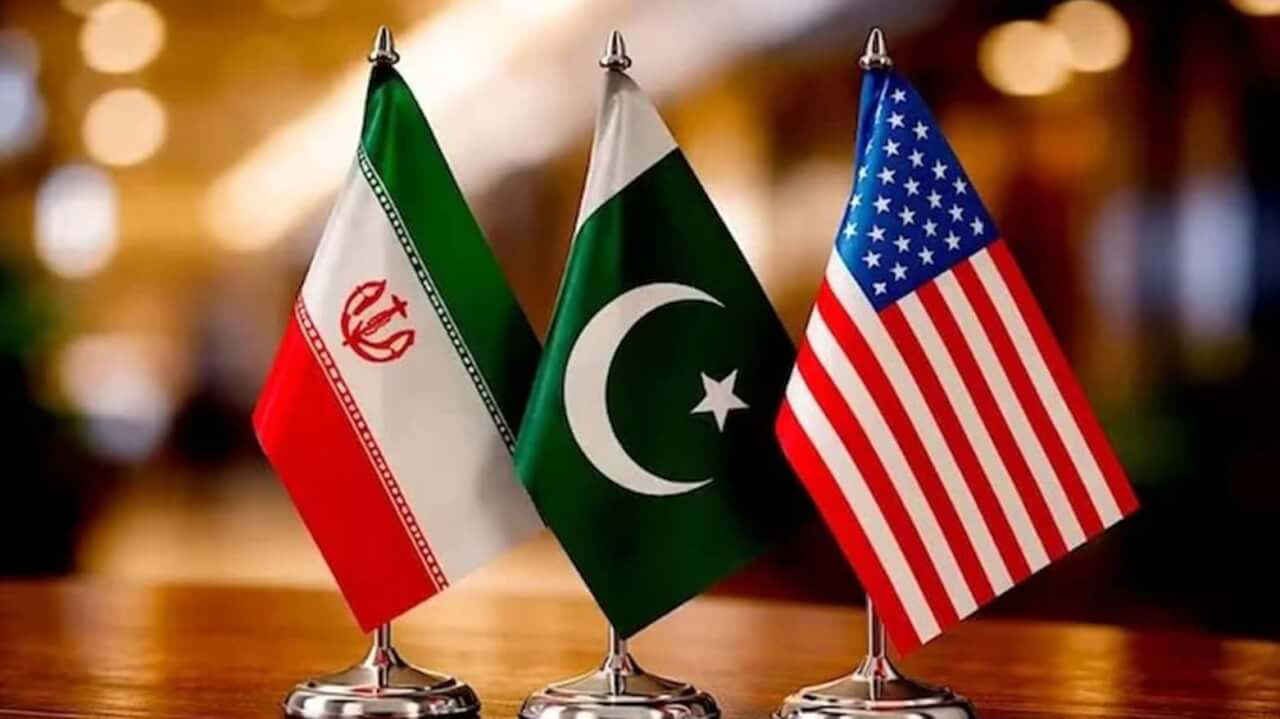
US President Trump realized that they had nothing left to attack but civilian infrastructure; they were waiting for a positive nod from Iran. Here comes the role of Pakistan when Pakistani Prime Minister Shahbaz Sharif and Chief of Defence Forces (CDF), Syed Asim Munir, stepped in and convinced President Trump to trust Pakistan’s role as a facilitator. In the same way, the Iranian leadership was approached by the Pakistani PM, and CDF and being a neutral neighbour offered good offices to the Iranian leadership. Both parties agreed and decided to meet in Islamabad for negotiations. U.S. Vice President J.D. Vance, along with Jared Kushner and Steve Witkoff, travelled to Pakistan as part of Trump’s designated team.
The Iranian delegation sought security assurances and decided to travel to Pakistan. It was after 1979 that the leaders of both countries met face to face. Media created hype around a breakthrough, but it was already known that such a complex relationship would not make negotiations succeed so easily. Among many, the following points were prominent.
- Iran won’t enrich uranium as it is unacceptable to the US and Israel. Israel sees Iranian potential nukes as an existential threat.
- Iran expressed a desire to charge tolls for the transit of vessels through the Strait of Hormuz (SoH). The US did not accept this, as there have been many calls to President Trump. The US did not accept this demand, but some sources claim the US desired to jointly control SoH. The Trump Administration realizes control of Iran over SoH would earn it billions of dollars a year, so resuscitation of the Iranian economy does not suit the US at the moment.
- Iran’s demand for unfreezing Iranian assets and lifting of economic sanctions was considered as possible by the US delegation.
- Iran’s demand that the US vacate military bases in the region is another demand that remains unlikely for the US. In such a challenging environment, the tough demands make these negotiations unsuccessful, as no agreement was reached.
An interesting fact is that the ceasefire, which has been in place for two weeks, is still holding, although fragile, and no escalation has occurred. International media is now guessing that Trump may visit Pakistan for the second round of talks. Although it seems quite serious that, in such a case, a President of the US may visit Pakistan, his approach to negotiations seems so coercive that it can be vividly recalled, as when the Ukrainian President visited the Oval Office and was coerced into signing the peace deal with Russia. President Trump could not achieve that. But there is an element of success, as the US has nothing to target in Iran. Secondly, all NATO allies are quietly watching, and the US President is objecting to their behaviour. Under such circumstances, the US may show some flexibility, and the chances of agreeing to some demands are high.
Pakistan facilitated the first round of talks, and the 2nd round is imminent. War intensity has come down, and both sides are reluctant to return to the same level of escalation. War has already damaged all Gulf states, including Bahrain, the Kingdom of Saudi Arabia, Qatar and the UAE. Their energy exports have been seriously decimated, and infrastructure has been badly hit. Therefore, the region yearns for peace. The ball is in the US court, as President Trump, who initiated the war, has the power to end the war. A prolonged war does not serve the interests of the US; therefore, all efforts are being put into bringing this war to an end.