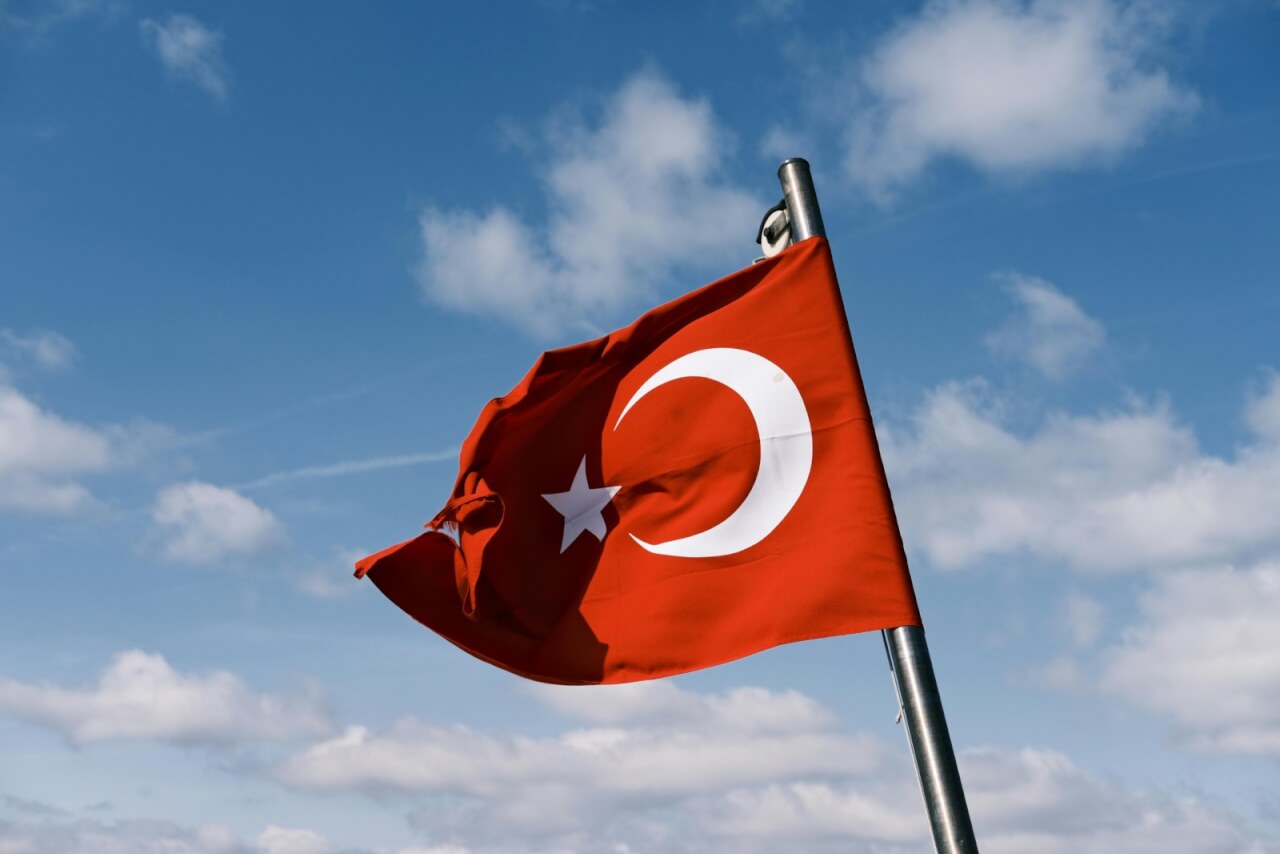
The most contagious force in Türkiye over recent years has not been inflation. A creeping, chronic scepticism that dulls investment appetite, nudges young people toward departure lounges, freezes corporate risk-taking and, quietly but steadily, weakens diplomatic confidence and national morale. Yet, the numbers — and the view from outside — tell a more nuanced story.
By the end of 2025, Türkiye’s goods exports will be approaching $270bn. Services exports are nearing $100bn, more than $60bn of which derive from tourism. Defence exports have surpassed $6bn, supported by an ecosystem that now supplies over 180 countries. Two decades ago, citing such figures would not have been considered optimism; it would have been dismissed as fantasy. However, this is not a rose-coloured picture. Let us be honest: Structural faultlines remain in the medium term. Inflation remains stubbornly in double digits, and price stability is fragile. Income inequality has widened, placing the middle class under pressure. The quality and equity of education remain uneven. Confidence in judicial independence and institutional predictability needs strengthening. High-tech exports still account for only a modest share of total output. Productivity growth is subdued. Brain drain persists. Earthquake vulnerability and climate stress impose high long-term costs. Our neighbourhood remains geopolitically combustible. These are not marginal issues. They are structural. But the greater danger lies not in their existence — it lies in the erosion of collective self-belief.
From Defence Capability to Civilian Innovation
Türkiye’s achievements in defence are not merely military milestones; they signal an accumulation of engineering competence. Drones, naval platforms, electronic warfare systems, indigenous engine projects — these are not symbolic victories but proof of technological depth. Yes, gaps remain — particularly in advanced air defence and certain high-end systems once withheld from us. But Türkiye no longer waits passively; it designs, manufactures and exports. By 2030, defence exports could plausibly reach $10bn. The true strategic test, however, is diffusion — transferring this engineering capability into civilian industries and leveraging it as an instrument of geopolitical and economic influence. In the software engineering, gaming and fintech fields, Turkish entrepreneurs operate from Peru to Iceland, from China to Canada, from Germany to Morocco. Their expansion is not the product of subsidy alone, but of adaptability, resilience and creative problem-solving. Türkiye is no longer merely exporting commodities. It becomes a country that is exporting intellect. From London, I witness daily the quiet success of Turkish founders building globally competitive enterprises.
A Logistics Powerhouse in Waiting
Türkiye sits at the crossroads of three continents. Within a four-hour flight radius lie 1.5bn people and close to $30tn in economic output — alongside significant natural resource corridors. The Middle Corridor, Trans-Caspian routes, Belt and Road connectivity, Black Sea–Mediterranean linkages — by 2030, roughly 40 per cent of global trade is expected to concentrate along the Asia–Europe axis. Türkiye is not adjacent to this axis. It is embedded within it. Geography, when paired with strategy, becomes an advantage. For business, this is not abstract geopolitics. It is an opportunity.
Water, Agriculture and the Blue Economy
In an age of climate volatility, water and food security are strategic assets. Türkiye is among Europe’s largest agricultural producers, the world leader in hazelnuts, and a significant exporter of flour, pasta and fresh produce. With modern irrigation, digital agriculture and productivity reforms, Türkiye could become a regional food security hub by 2030. Surrounded by seas on three sides, the country’s blue economy remains underdeveloped relative to its potential. Black Sea energy discoveries, Eastern Mediterranean dynamics and expanding port capacity offer strategic leverage. The green transition is equally unfinished business — and equally promising.
The Entrepreneurial Temperament
From Madagascar to Canada, Germany, and Dubai, Turkish contractors, software engineers, indıstrialists and financiers are thriving across the globe. Turkish entrepreneurs are flexible, bold, and crisis-hardened. For Turkish enterpreneurs the constraint is not potential. But entrepreneurs need trust and institutional depth. Removing uncertainty accelerates this entrepreneurial energy.
Toward 2030: A Leap Is Possible
Over the next four years, if Türkiye can reinforce the predictability of the rule of law, elevate educational standards, secure long-term energy and water strategies, and increase high-tech exports toward a 10 per cent share, then the country will not merely stabilise. The country will advance decisively. Pessimism is not a strategy; it is fatigue. Optimism, properly understood, is not naïve exuberance. It is the disciplined recognition of capacity — and the resolve to institutionalise it. Amid the noise, I see something unmistakable: Good things are happening in Türkiye. If Türkiye rebuilds trust, unleashes its potential, and strengthens its institutions, the trajectory will follow.