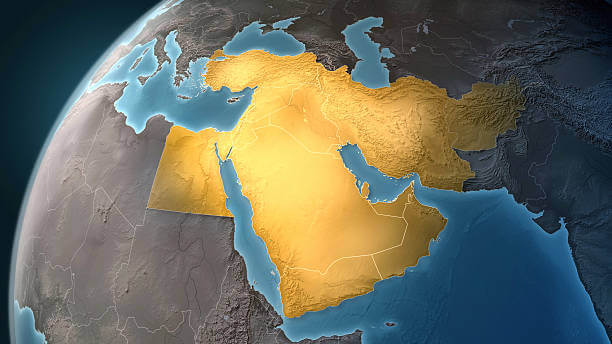
I am not writing from academic distance, nor from the comfort of abstract theory. I write as someone who has spent more than four decades inside the machinery of diplomacy, energy, and security—at tables stretching from Washington to Brussels, from Moscow to Beijing—often representing Türkiye, sometimes international institutions, always observing how power actually moves. That is why I cannot read recent developments—and those likely to intensify as we approach 2026—as a series of unrelated crises. What I see instead is something far more deliberate: a tightening, multi-layered arc of pressure forming around Türkiye. This arc is emerging at a particularly delicate moment—when domestic fragilities are visible, when Ankara is pushing hard for a “terror-free Türkiye,” and when some external actors appear to read this convergence as a strategic opening rather than a stabilisation effort. Gaza made this arc visible, but it will not end there.
Gaza: the first link, the clearest signal
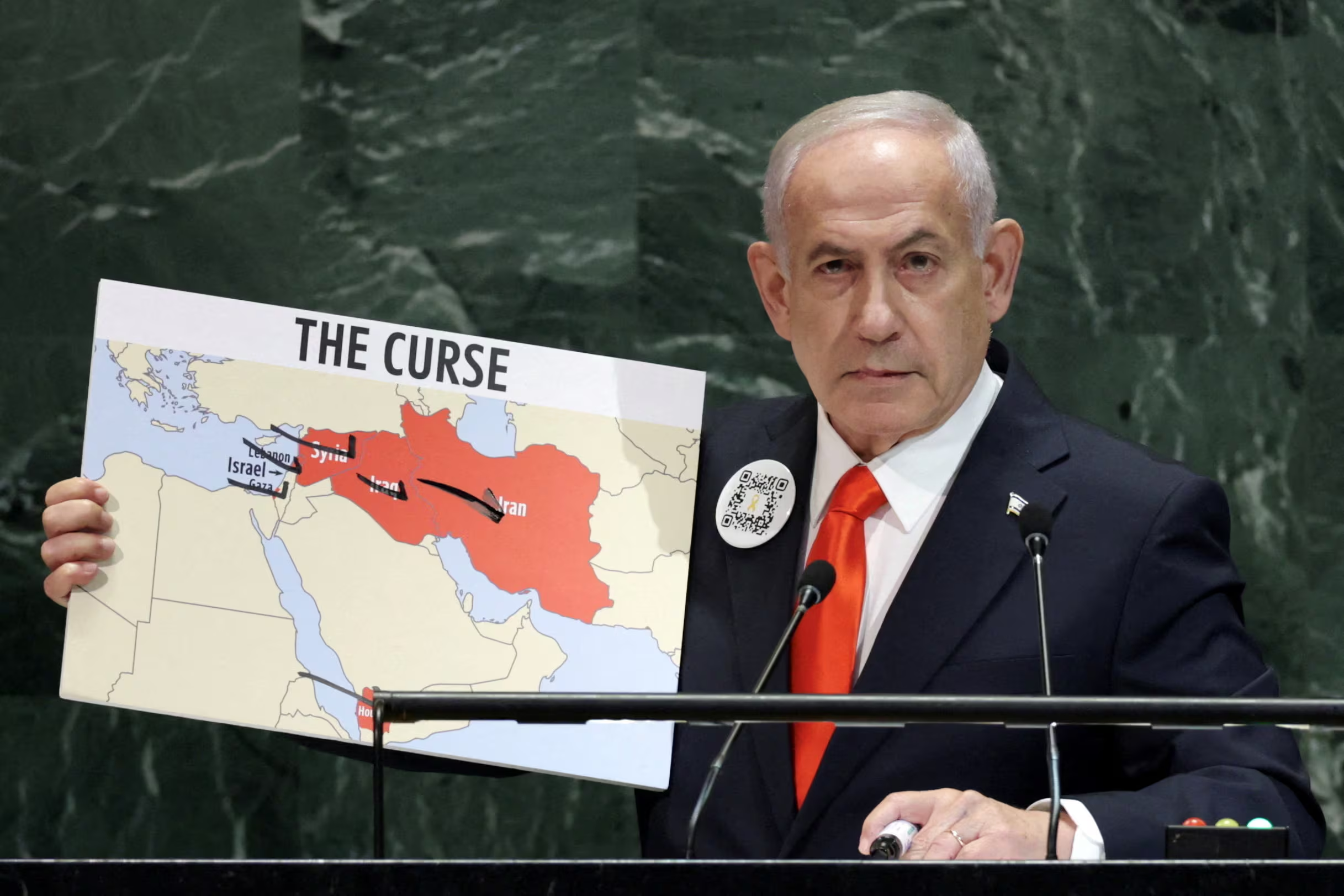
Türkiye’s systematic exclusion from discussions on Gaza’s post-war order—whether around governance models or the idea of an international stabilisation force—was no procedural mishap. Israel’s explicit veto, and Washington’s decision to accept it in practice, amounted to an unmistakable message to Ankara: you are not wanted at this table. That message was reinforced by a Gaza-focused meeting convened in Doha by the US Central Command, where roughly 45 countries were invited—without Türkiye. This was not an oversight. It was a choice. Israeli media were unusually blunt: there would be no Turkish soldier in Gaza.
The issue is not Türkiye’s capacity. It is how its intentions are now framed. A Türkiye that refuses to label Hamas a terrorist organisation, insists that occupation must end before governance can begin, and has chosen to challenge Israel through legal and diplomatic channels, is increasingly seen in Tel Aviv not as an indispensable interlocutor, but as an adversarial actor. Gaza, then, was not an anomaly. It was the opening move.
The Aegean and the Eastern Mediterranean: forcing a defensive posture
The second link lies in the Aegean and the Eastern Mediterranean. The militarisation of Greek islands—long contested by Ankara as incompatible with earlier arrangements—has ceased to be episodic. It has hardened into a permanent posture. American bases, French weapons systems, and Israeli-origin intelligence and missile capabilities now intersect across the theatre. Greece’s acquisition of F-35s, following Türkiye’s removal from the programme, is not merely a procurement story. It is a deliberate signal aimed at reshaping air-power psychology and deterrence balances. The objective is transparent: to lock Türkiye into a defensive mindset in the Aegean, narrow its room for manoeuvre in the Eastern Mediterranean, and reduce it from a rule-shaper to a reactive actor.
Cyprus: from frozen dispute to forward platform
Cyprus constitutes the third link—and no longer a dormant one. Decisions to loosen restrictions on arms-related cooperation with the Greek Cypriot administration, efforts to draw it closer to NATO frameworks, and the growing presence of Israeli systems on the island point in a single direction: Cyprus is being repositioned, de facto, as a forward strategic platform. Equally telling is the renewed push to revive political talks that should have been settled by the rejection of the Annan Plan. When old files are reopened without corresponding changes in incentives, it is usually because someone wishes to control timing rather than resolve substance. This is where a seemingly technical development acquires strategic weight: the Greek Cypriot administration is set to assume the rotating presidency of the EU Council. Anyone familiar with Brussels knows this role is not ceremonial. It sets agendas, accelerates dossiers, and quietly reshapes coalitions. Ankara should expect this platform to be used to institutionalise constraints on Türkiye—political, legal, and financial.
Diplomatic drift: from Central Asia to Washington
The pressure is not only military. It is diplomatic—and accelerating. Central Asian republics are drawing closer to the Greek Cypriot side, often with EU and US funding in the background. Several have opened embassies in southern Cyprus without consulting Ankara. This is not administrative housekeeping; it is a strategic signal. Balancing against China and Russia is rational for these states. What is notable is the route this balancing increasingly takes—one that marginalises Türkiye. The collective reception of Central Asian leaders at the White House should not be mistaken for a courtesy photograph. It was a message: this is the new hub; align accordingly. Seen in this light, renewed focus on the Zangezur corridor—at a moment when Iran and Russia are relatively weakened—takes on more profound meaning. If connectivity is structured under effective American oversight, a new power geometry is emerging in the South Caucasus. Türkiye risks being treated not as an architect of this geometry, but as a peripheral participant. Beyond this lies another unresolved question: if the war in Ukraine ends, what will the Black Sea balance look like—and where will Türkiye stand? Western pressure is straining Ankara’s relationship with Moscow, while relations with Beijing increasingly carry a familiar ultimatum: with us, or against us.
A new variable: the Israel–Azerbaijan axis
Another layer has quietly solidified. The relationship between Israel and Azerbaijan has moved beyond tactical coordination toward something approaching strategic partnership—spanning energy, defence, intelligence, and technology. Türkiye’s bond with Azerbaijan is unquestioned. But Israel’s growing influence via Baku—extending toward Iran, the Caucasus, and Central Asia—inevitably erodes Ankara’s ambition to remain the primary reference point across this space. This is not a rivalry with Azerbaijan; it is recognition that Türkiye’s strategic environment is becoming more crowded and less forgiving.
The southern front: Libya, Egypt, Lebanon, Syria
As the arc of pressure extends southward, it sharpens. The recent aircraft incident that killed members of a Libyan military delegation may yet prove accidental. But if evidence of assassination emerges, it should be read as an attempt to fracture Türkiye–Libya ties and destabilise a theatre where Ankara has invested heavily. Egypt, despite tentative signs of rapprochement, remains structurally closer to the Israel–Greece–Greek Cypriot alignment than many in Ankara wish to believe. Lebanon is being pushed to take sides in the Eastern Mediterranean, with its maritime agreement with the Greek Cypriot administration as the clearest marker. Syria, meanwhile, remains too fragile—and too constrained—to assert its rights meaningfully in the Mediterranean.
The “neo-Ottoman” narrative: a quiet but potent constraint
At this point, Türkiye must also look inward. Across many former Ottoman territories, Ankara’s recent moves in the Balkans, the Caucasus, the Eastern Mediterranean, and Africa are not always read as a partnership. They are increasingly framed as an attempt to revive historical spheres of influence—a “neo-Ottoman” ambition dressed in contemporary language. Whether fair or not is secondary. In geopolitics, perception often outruns intention. From Libya to Somalia, from sub-Saharan Africa to Albania and onward to Central Asia, Türkiye’s rapid and highly visible posture generates admiration—but also caution, and in some capitals, unease. Even when Ankara is substantively correct, it is losing ground in the battle of narratives. That, in turn, makes it easier for others to market a simple idea: Türkiye must be balanced.
Protest is not a strategy
Taken together, these layers point to a hard truth. Türkiye is not merely being excluded. It is being nudged aside, misread, and at times deliberately reframed. In such an environment, diplomatic notes, condemnations, and rhetorical escalation are insufficient. What Türkiye requires is something more demanding: credible deterrence paired with the political will to rebuild its role as a rule-shaper. This means deploying diplomatic, economic, military, and intelligence instruments with greater selectivity and refinement—not simply to display power, but to restore initiative and re-engineer perception.
The task is difficult. Türkiye is being tested simultaneously in Gaza, squeezed in the Aegean, constrained in Cyprus, marginalised in parts of Central Asia, and pressured across the Caspian and the Balkans. Yet retreat in this geography always carries a higher cost later. Vacuums do not remain empty. Others fill them—and reclaiming lost ground is rarely easy. Gaza was only the beginning. The real question now is stark: will Türkiye watch this arc tighten—or will it recalibrate, regain initiative, and rebuild its strategic centre of gravity? This is not a theoretical debate. It is a strategic necessity. Türkiye possesses the economic depth, military capability, and political reach to do so. Success, however, will depend on reducing internal fragility, speaking with one voice, and activating strategic reason with speed—before others lock in a new map without it.