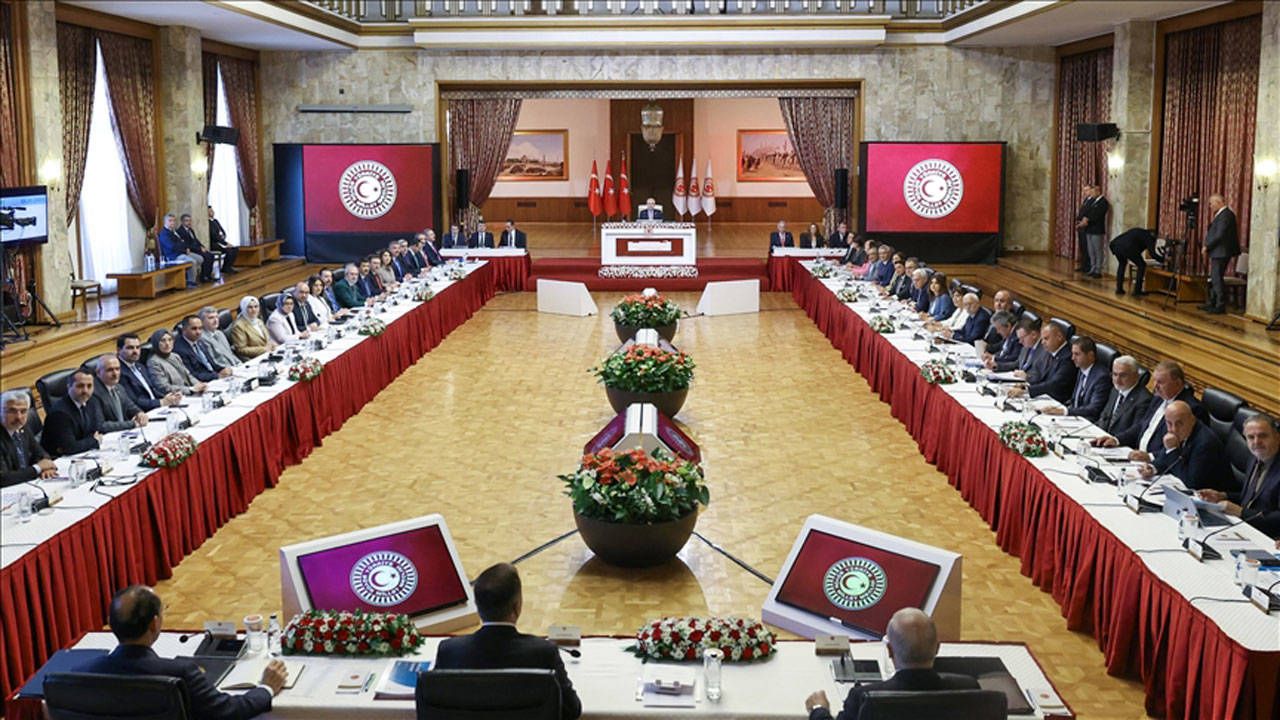
Resolving ethnic-based issues requires a multidimensional and sustained strategy. The initial response of any state to a disruption of public order is to combat it through security measures. However, security-focused strategies alone are insufficient; effective solutions should not only address the security aspects of the issue but also assess it in all its dimensions. From this perspective, it is essential to distinguish the nature of the relationship between terrorist methods and wider ethno-social grievances. The Kurdish issue and the PKK problem in Türkiye are among the country’s most complex and sensitive matters. Although numerous ideological arguments have been presented in the literature regarding the solution to these problems, they remain open to misinterpretation. Once the cause-and-effect relationship between PKK terrorism and the Kurdish issue is accurately determined, it will be easier to establish a framework for a solution. This brief assessment discusses how the main framework of Türkiye’s solution perspective should be regarding PKK terrorism and the broader Kurdish issue.
The root cause of most ethnic conflicts lies in the failure to build an inclusive nation. Ethnic problems arise due to factors such as political underrepresentation and exclusion of ethnic groups, pressures toward cultural assimilation, economic inequalities, harsh security policies, and interventions by external actors. Once ethnic groups become politicized, a struggle based on nationalism in their relations with the state becomes inevitable. While not all ethnic groups are secessionist, some choose armed conflict as a means to achieve independence or greater autonomy. The state’s response to ethnic nationalist groups that claim to attain secessionist goals by using terrorism as a method is to neutralize them by force. Armed conflict between the state and politicized ethnic group(s) makes the solution all the more difficult. Furthermore, third-party actors are likely to manipulate the issue in their own interests by providing external support to terrorist groups.
Ethnic issues around the world manifest in different forms and characteristics. While definitive solutions may not always be possible, it is possible to mitigate these conflicts. An approach that recognizes differences without absolutizing them, making room for cultural diversity while building a common political identity, has been successful in achieving balance. For example, in Spain, several factors contributed to the end of ETA violence, including counterterrorism actions, civil society activism, internal political changes within ETA, and limited international support. Similarly, the Northern Ireland peace process demonstrates how a multifaceted approach can succeed. Diplomatic cooperation between Britain and Ireland, Sinn Féin’s shift toward politics, and British intelligence efforts collectively weakened the IRA and reduced support for violence, thereby increasing the demand for peace. Additionally, the EU’s economic and political backing, the US’s mediating role, civil society, and religious advocacy for peace each played essential roles in persuading the IRA to disarm.
The ideal solution to an ethnic problem depends primarily on addressing the security and identity concerns of both the state and the ethnic group. Therefore, a solution can only be achieved within a framework where the state does not have security concerns and the identity needs of the politicized ethnic group are met. In Türkiye, two significant obstacles complicate this process: the first is the linkage created between issues related to the Kurds in general and the PKK and its leader, which is a fragile option for meeting the state’s security needs. The second is the removal of restrictions on cultural rights, which should be recognized as part of a democratic state while fighting terrorism. These obstacle makes it difficult for the state to meet the identity needs of Türkiye’s Kurdish population.
The fragility of these processes is evident at such points of contention, making both parties reluctant to take necessary steps. The first step to overcoming this situation and paving the way for a solution is for the state to neutralize the PKK to meet its security needs. The Kurdish issue is not an issue dependent on PKK terrorism; rather, the PKK is an issue dependent on the Kurdish issue. PKK terrorism has consolidated itself based on the Kurdish issue and has continuously drawn sustenance from it. In this context, the state’s security measures should be based on an understanding that enables the resolution of the Kurdish issue, because the problem to be solved is the Kurdish issue. The second crucial step is to extend cultural rights throughout society to meet the Kurdish population’s needs for identity and cultural expression. Thus, all political actors with grievances will be able to pursue their demands and seek solutions through political means rather than through terrorism and violence.
Ultimately, establishing a balance between democratic equality, cultural recognition, and a shared vision for the future serves as the fundamental principle for resolving ethnic issues. The solution must be insulated from daily political debates and the influence of extreme rhetoric. In this context, it is crucial to enact appropriate constitutional amendments that are inclusive and pluralistic, opening up channels for political participation. This framework is achievable through the establishment of a fair system grounded in social consensus and mutual understanding, in which fundamental rights and freedoms are equally guaranteed to all citizens. Once cultural rights reach a satisfactory level, identity-based politics and violence will lose both justification and mass support A community that feels its identity is secure and can freely exercise its cultural rights will cease to support the terrorist organization. The Kurdish issue and the PKK terrorism will then cease to pose a threat to Türkiye’s national security and stability.