Abstract
This article examines how South American Regional Development Banks (RDBs) sustain and reconfigure the idea of regional integration in times of political fragmentation and the decline of state-led regionalism. Combining constructivist and historical institutionalist perspectives, it argues that RDBs form an “intermediate stratum” of regional institutionalism that preserves the meanings and practices of integration through technical, financial, and bureaucratic routines. These institutions embody a form of regional identity expressed not through political discourse but through developmental cooperation and operational continuity. The analysis identifies mechanisms of institutional persistence that enable RDBs to adapt to shifting political and global contexts while maintaining a South American identity. It concludes that integration in the region endures as an institutionalized practice of cooperation and shared development, even when its political narrative weakens.
Keywords
Regional integration, South America, Regional Development Banks, institutional identity, historical institutionalism.
Introduction
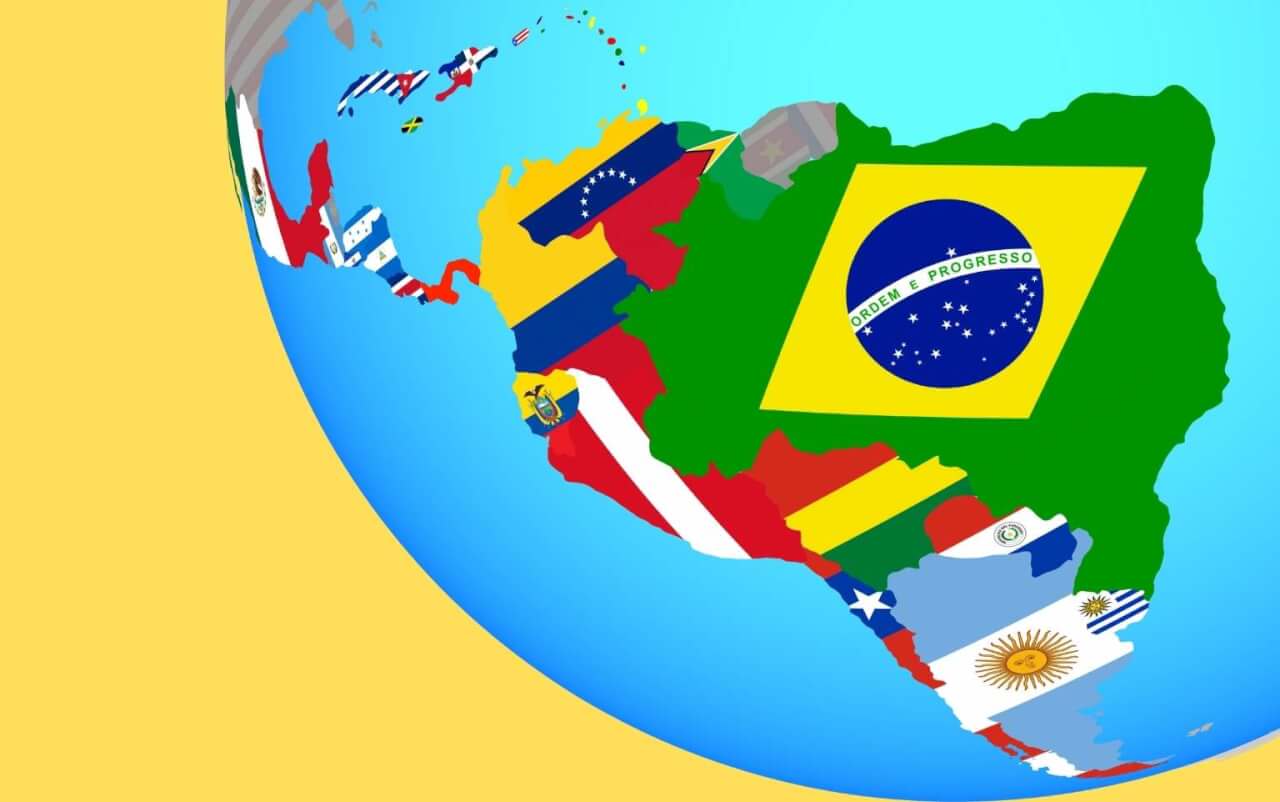
In recent decades, South American regionalism has experienced recurrent cycles of expansion and retreat. Political projects that once sought to articulate a shared regional vision, such as Union of South American Nations (UNASUR), the Bolivarian Alliance of the People of ours America (ALBA), or Southern Common Market (MERCOSUR’s) broader political dimensions, have lost momentum, giving way to a fragmented landscape of ad-hoc cooperation and pragmatic regionalism. Scholars have linked this fragmentation to broader global trends, including the rise of multipolarity, the decline of traditional multilateral institutions, and the resurgence of nationalist politics within the region (Nolte, 2024; Quiliconi & Salgado Espinoza, 2017; Briceño-Ruiz & Morales, 2017).
The weakening of state-led regional projects, coupled with the global crisis of multilateralism and the return of nationalist agendas, has led many observers to question whether South America’s regional integration has entered a terminal phase. Yet, amid the erosion of regional political discourse, several institutions have persisted, operating below the surface of diplomatic visibility. Among these, the region’s Regional Development Banks (RDBs), notably the Development Bank of Latin America (CAF), the Financial Fund for the Development of the River Plate Basin (FONPLATA), and the Central American Bank for Economic Integration (CABEI), remain active and adaptive, sustaining networks of cooperation and financing that bind South American countries together. Their persistence suggests a form of “intermediate stratum of regionalism,” where integration occurs through technical and institutional mechanisms rather than high-profile political agreements (Sanahuja, 2023).
This article argues that RDBs constitute an intermediate stratum of regional institutionalism: a layer of durable, technocratic institutions that preserve and reconfigure the meanings and practices of integration even when political regionalism declines. Functioning at the intersection between the national and the regional level, these banks channel resources, expertise, and developmental narratives that reproduce a sense of regional identity anchored in cooperation, interdependence, and shared development. In doing so, they operationalize what Acharya (2012) describes as “regional ontologies,” wherein institutions not only implement policies but also produce social meanings and normative frameworks that define what the region is and how it relates internally and externally. Their endurance suggests that integration in South America has not disappeared; rather, it has migrated into more institutionalized, depoliticized, and technical forms.
The central research questions guiding this policy article are: do South American RDB express and sustain a form of regional identity or integration? If so, how? The analysis explores the mechanisms through which these institutions maintain continuity and adapt to shifting political and economic environments. Recent research emphasizes that these mechanisms include not only formal financial operations but also the dissemination of regional development narratives, cross-border knowledge networks, and policy standardization (Long & Schulz, 2025; Finnemore & Sikkink, 2001). The core hypothesis is that RDBs act simultaneously as financial instruments and as regional spaces where the meanings of “South American integration” are reproduced and reshaped. Through their day-to-day practices (project design, co-financing mechanisms, and policy discourse on sustainable and inclusive development) they sustain the idea of a South American integration even in the absence of explicit political coordination.
Theoretically, this paper combines constructivist perspectives on regionalism with insights from historical institutionalism. From a constructivist standpoint, regions are not merely spatial configurations or aggregations of states, but communities of meaning (Acharya, 2012; Katzenstein, 2005) built through shared practices, norms, and narratives. Regional institutions, in this sense, serve as repositories of collective identity and as arenas where social meanings are negotiated and reproduced. Constructivist approaches also highlight the performative aspect of regionalism: the practices of these banks actively shape member states’ perceptions of interdependence, generating legitimacy for regional policies (Wendt, 1999).
Complementing this view, historical institutionalism provides analytical tools to explain how institutions persist and evolve through time despite external shocks or political discontinuities (Thelen, 2004; Mahoney & Thelen, 2010; Long & Schulz, 2025). Rather than vanishing, institutions often adapt incrementally, reconfiguring their goals and instruments while preserving underlying structures and routines. This dual theoretical lens enables an understanding of how regional integration in South America endures through institutional persistence and gradual transformation rather than through grand political projects.
Empirically, the article focuses on three RDBs with distinct origins and trajectories: the Central American Bank for Economic Integration (CABEI), founded in 1960 as a subregional institution and later expanded its operations to South America; the Development Bank of Latin America (CAF), originally created in 1968 as a subregional initiative among Andean countries; the and the Financial Fund for the Development of the River Plate Basin (FONPLATA), established in 1974 to promote physical integration among southern cone economies. Despite their different ideological contexts and founding logics, these banks share a common feature: they have survived the political cycles that created them. Over time, they have adapted to changing regional and global agendas, incorporating new frameworks such as climate finance, gender-sensitive development, and digital infrastructure projects (CAF, 2021; CABEI, 2020) while maintaining their regional scope and cooperative ethos.
Methodologically, the study adopts a qualitative approach seeking to trace how ideas, identities, and practices associated with regional integration have been embedded and transformed within institutional routines over time. The analysis situates the three RDBs within broader regional and systemic contexts: the shifting balance of global financial power, the rise of South-South cooperation, and the emergence of new development paradigms around sustainability and resilience. In doing so, it highlights how institutions in South America leverage endogenous capacities while engaging selectively with global governance agendas (Briceño-Ruiz & Morales, 2017).
The paper is structured as follows. The first section reviews the theoretical foundations linking regional identity, institutional persistence, and integration, outlining how constructivist and historical-institutionalist frameworks intersect in the study of South American regionalism. The second section examines the evolution and role of RDBs as intermediary institutions in the architecture of regional development governance, focusing on their adaptation mechanisms and enduring regional narratives. The third section discusses the advantages and tensions of this form of institutional persistence: continuity, legitimacy, and technical credibility on one hand, versus depoliticization and fragmentation on the other. Finally, the conclusion reflects on what the persistence of integration through financial institutions reveals about the evolving nature of regionalism and Latin America’s agency in a changing international order.
Theoretical Foundations: Regional Identity, Institutional Persistence, and Integration
Understanding South American regionalism requires moving beyond purely formal or geopolitical definitions of regions. From a constructivist perspective, a region is not merely a geographic aggregation of states but a social and normative space shaped by shared meanings, practices, and narratives (Acharya, 2012; Katzenstein, 2005). Regional identity emerges through ongoing processes of interaction, negotiation, and collective interpretation among actors, including states, bureaucracies, and transnational networks. In this sense, regions are not only socially constructed arenas but also dynamic fields where historical experiences, developmental challenges, and external pressures converge to shape collective self-understanding (Briceño-Ruiz & Morales, 2017).
Norms and expectations guide behavior, creating a sense of belonging and shared purpose that can outlast particular governments or policy cycles. This is particularly visible in South America, where periods of political turbulence or economic crises often coexist with persistent forms of cross-border institutional cooperation, mediated by technical and financial actors rather than purely political bodies (Carvalho Neves & Pasquariello Mariano, 2022).
Regional identity, however, is not a fixed or automatic product of shared culture or geography; it is continually reproduced and contested within institutional frameworks. For instance, RDBs exemplify how institutions serve as repositories and transmitters of collective meaning. By embedding cooperative practices, technical standards, and policy discourses within their operations, these banks contribute to the stabilization of regional identity, even when political projects such as UNASUR or broader MERCOSUR’s experience decline or fragmentation. Moreover, institutional documents and policy reports from CAF and CABEI show deliberate efforts to align project design with narratives of sustainable development, regional resilience, and social inclusion, highlighting how identity and technical activity are mutually reinforcing (CAF, 2021; CABEI, 2020).
Historical Institutionalism provides complementary analytical tools to explain how such institutions endure and adapt over time (Thelen, 2004; Mahoney & Thelen, 2010; Long & Schulz, 2025). Institutions are not static; they evolve through both intentional design and incremental adjustments that allow them to survive amid shifting political, economic, and social conditions. Four mechanisms are particularly relevant in understanding institutional persistence: layering, where new rules or practices are introduced alongside existing structures without dismantling them; conversion, which involves redirecting existing institutional capacities toward new goals or agendas; drift, where the external environment changes in ways that alter the effects of existing rules; and displacement, the replacement of older institutions with new ones under specific conditions of crisis or opportunity.
These mechanisms illustrate how institutions like RDBs can maintain continuity while adapting their objectives, instruments, and discourses to changing contexts. For example, CAF has layered green finance instruments onto its traditional infrastructure lending, while CABEI has converted its originally Central American mandate into broader South American development programs, demonstrating both layering and conversion in practice. Crucially, they also reveal that institutional endurance is not purely technical; it is deeply intertwined with the reproduction of social meaning and regional narratives.
The intersection of constructivist and historical institutionalist perspectives is particularly fruitful in the South American context. Constructivism highlights the social and ideational dimensions of regional identity, showing how cooperation, trust, and shared developmental visions are produced and maintained. Historical Institutionalism, in turn, explains the durability and evolution of the institutional forms through which these identities are enacted and reproduced. This dual perspective enables scholars to account for the constitutive and normative influence of institutions: their ability to shape regional norms, expectations, and identities even when political headlines suggest stagnation or fragmentation (Finnemore & Sikkink, 2001; Sanahuja, 2023). Together, these approaches illuminate the dual role of RDBs: as instruments of development and as arenas for sustaining regional identity, embedding norms, and shaping expectations about what constitutes “South American integration.”
By conceptualizing RDBs within this dual theoretical lens, we can understand them as part of an intermediate stratum of regional institutionalism. This stratum mediates between state-led political projects and global financial governance, simultaneously providing technical expertise, operational continuity, and spaces for the reproduction of regional meanings. It also helps explain why regionalism in South America persists in technical and developmental forms even when overt political coordination falters, suggesting that institutionalized practices can outlive the political cycles that originally spawned them (Briceño-Ruiz & Morales, 2017; Malamud & Gardini, 2012). Such institutions reveal that regionalism is not solely a political aspiration but a layered, ongoing process, maintained through institutional practice and adaptive capacity even in times of political uncertainty or fragmentation.
Moreover, studying RDBs as part of the intermediate stratum of regional institutionalization allows for a renewed understanding of South America’s agency in the international order. These institutions operate in a space between intergovernmental diplomacy and global financial governance, mediating between the region’s historical aspirations for autonomy and the structural constraints of global capitalism. They embody what can be understood as technocratic regionalism, a form of integration that resonates with broader traditions of technocratic internationalism, understood as a programmatic intellectual orientation that combines cross-border cooperation with expert-based governance (Nolte, 2024). In this mode of integration, regional coordination is sustained primarily through professional expertise, bureaucratic routines, and developmental logics rather than through political will or ideological consensus. This form of institutionalized integration provides continuity, legitimacy, and operational resilience, while also entailing specific tensions and paradoxes. As Malamud and Gardini (2012) note, technocratic regionalism can inadvertently depoliticize integration, creating institutions that are technically effective but politically thin. The depoliticization of integration, the functional fragmentation among institutions, and the predominance of technical discourse risk diluting the collective political vision that once animated South American regionalism.
RDBs: the Intermediate Stratum of Regionalism
South American RDBs operate at the intersection of national priorities and global financial structures, forming an intermediate stratum of regional institutionalism. These institutions mediate between political aspirations for regional integration and the technical demands of development financing, sustaining practices, norms, and discourses that reinforce a sense of regional identity. They also act as conduits for South-South cooperation, linking domestic policy objectives with broader regional and global agendas, such as the Sustainable Development Goals (SDGs) and climate finance frameworks (Sanahuja, 2023; Briceño-Ruiz & Morales, 2017).
Empirically, the analysis focuses on CAF, FONPLATA, and CABEI as institutions whose contemporary roles cannot be understood without reference to their historically embedded mandates. Rather than merely differing in scale or membership, each bank emerged from a distinct phase of Latin American regionalism that shaped its institutional identity and development rationale. CAF reflects the legacy of 1960s developmentalism and Andean planning, privileging regional infrastructure, productive integration, and state-led coordination. FONPLATA embodies a territorially grounded logic of cooperation centered on shared river basins and physical connectivity in the Southern Cone, linking integration to concrete spatial and environmental challenges. CABEI, originally conceived as a subregional instrument for Central America, illustrates how development finance institutions can be gradually reoriented beyond their initial geographic scope, adapting to successive waves of regional reconfiguration.
These historically rooted institutional logics continue to structure how each bank defines development priorities, frames regional cooperation, and adapts to new agendas. In fact, despite their differing founding contexts, these banks share a remarkable capacity for institutional adaptation and continuity, as evidenced by their ability to co-finance large-scale infrastructure, social, and environmental projects while maintaining long-term strategic plans aligned with regional development agendas (CAF, 2021; FONPLATA, 2020; CABEI, 2020).
RDBs employ a variety of mechanisms to maintain relevance and operational stability in changing environments. Layering can be observed in the gradual incorporation of digital infrastructure projects and climate-resilient initiatives alongside traditional transport and energy programs, without discarding their original mandates (CAF, 2024; FONPLATA, 2025). Conversion occurs when institutional resources and structures are redirected toward emerging regional priorities, such as climate finance or social inclusion programs. For instance, CABEI has converted part of its financing portfolio to support renewable energy projects in South America, aligning its initially Central American mandate with regional environmental goals (CABEI, 2025). Drift is evident in how global economic or environmental shifts alter the effects of existing policies, prompting RDBs to adjust financing strategies or co-funding arrangements. FONPLATA, for example, adapted its water management and rural development projects in response to climate change projections and regional drought events, illustrating drift in practice (FONPLATA, 2025). These mechanisms illustrate the dynamic interplay between institutional stability and adaptability, allowing RDBs to sustain their regional missions over decades.
Beyond their technical and operational functions, RDBs also serve as spaces for discursive reproduction of the South American idea of integration. CAF’s annual reports frequently emphasize regional interdependence, highlighting cross-border trade facilitation and shared infrastructural corridors as means of promoting collective development (CAF, 2021). FONPLATA similarly frames river basin projects as mechanisms for social cohesion and multilateral cooperation across southern cone countries, embedding narratives of mutual responsibility and regional solidarity in their operational discourse (FONPLATA, 2020). Their reports, project documents, and policy guidelines articulate a vision of regional cooperation that transcends electoral cycles and political fragmentation. CABEI’s publications further illustrate the use of technical language to reinforce normative ideas of shared prosperity and South American interconnectedness, demonstrating the discursive dimension of institutionalized integration (CABEI, 2020). By framing development challenges and responses in terms of shared regional interests, these institutions cultivate an enduring narrative of interdependence and mutual responsibility. This discursive dimension complements the banks financial role, ensuring that integration is not only operational but also socially and ideationally embedded.
In brief, studying RDBs as intermediary institutions highlights a key feature of South American regionalism: its persistence through institutional practice rather than political consensus alone. While intergovernmental projects may rise and fall, RDBs continue to mediate regional collaboration, provide technical expertise, and anchor collective identity in concrete, functional arrangements. This perspective resonates with the concept of technocratic regionalism in which bureaucratic expertise and institutional routines maintain continuity and identity even in the absence of political cohesion (Malamud & Gardini, 2012; Long & Schulz, 2025). This perspective reframes integration not as a product of political will but as an ongoing institutional achievement, maintained through expertise, routines, and adaptive capacity.
In sum, RDBs exemplify how institutionalized development finance can simultaneously produce material outcomes such as roads, energy grids, and water systems, while also reinforcing ideational structures including shared understandings of development priorities, regionally embedded policy agendas, and normative expectations about appropriate modes of cooperation that sustain a sense of South American regional belonging and coordination.
Advantages and Tensions of Institutional Persistence in South America: continuity vs. depoliticization
The endurance of South American RDBs as intermediate institutions generates both strategic advantages and inherent tensions. On the one hand, their continuity provides stability in a region often marked by political volatility and shifting government priorities (Carvalho Neves & Pasquariello Mariano, 2022). By maintaining operational routines, standardized financing mechanisms, and technical expertise, RDBs enhance legitimacy among member states and international partners. CAF, for instance, has consistently coordinated multi-country infrastructure projects across South America, demonstrating both institutional memory and cross-border operational capacity (CAF, 2021). Their ability to pool resources, coordinate cross-border projects, and implement long-term development strategies allows them to function as reliable instruments of regional cooperation, even when formal political integration is stalled.
Another advantage lies in their technical credibility. These banks operate according to professional norms, evidence-based practices, and risk management protocols that often surpass short-term political agendas (Mendez & Houghton, 2020). This orientation enables them to mobilize funds for complex initiatives, such as renewable energy programs in Central and South America (CABEI, 2022), river-basin infrastructure and climate adaptation in FONPLATA’s mandate area (FONPLATA, 2025), and multi-sectoral development projects by CAF (CAF, 2024). Their technocratic approach facilitates engagement with multilateral institutions, private investors, and South-South cooperation networks, expanding the scope and reach of regional development interventions.
However, this form of institutional persistence also entails tensions and limitations. A key challenge is the depoliticization of integration: by focusing predominantly on technical and operational functions, RDBs risk detaching regional cooperation from broader political, social, and equity-oriented ambitions (Finnemore & Sikkink, 2001). While they preserve integration in functional terms, they may inadvertently dilute the transformative potential of collective regional projects. For example, overlapping mandates between CAF and FONPLATA in financing infrastructure projects in the Southern Cone can create strategic competition and coordination challenges. Additionally, the coexistence of multiple banks with similar regional scopes may generate redundancy and fragmented policy agendas, complicating unified strategic planning.
These tensions illustrate the paradox of technocratic regionalism. RDBs successfully maintain the memory, practice, and institutional legitimacy of regional cooperation, yet their bureaucratic design and operational focus can constrain visionary or politically ambitious forms of integration (Sanahuja, 2023; Long & Schulz, 2025). Nonetheless, by sustaining continuity, expertise, and discourse, these banks create a resilient layer of regionalism that adapts to changing political, economic, and environmental contexts. Their ability to integrate sustainability, social inclusion, and climate resilience into regional development programs exemplifies this adaptive capacity, demonstrating how technical innovation can reinforce, rather than replace, regional identity (CAF, 2024; FONPLATA, 2025). Overall, RDBs offer South America a durable, if depoliticized, pathway for integration, highlighting the interplay between institutional persistence, operational legitimacy, and the reproduction of regional meaning.
Conclusion
This article has examined South American RDBs as a durable layer of institutionalized regionalism, operating below the surface of high-profile political initiatives. By focusing on CAF, FONPLATA, and CABEI, the study highlights how these institutions combine financial capacity, technical expertise, and developmental discourse to sustain regional cooperation despite fluctuating political agendas and global pressures.
The analysis demonstrates that RDBs function as an intermediate stratum of regional governance, bridging national priorities and global development frameworks. They translate abstract principles of South-South cooperation into actionable programs, from CAF’s infrastructure projects to FONPLATA’s river-basin initiatives, and CABEI’s regional investment funds in energy and climate resilience. They preserve and reproduce a sense of regional identity through everyday practices, project design, and co-financing mechanisms, even in contexts where formal political integration is weakened. Their operations exemplify how institutional routines and technical expertise can serve as vessels for collective regional meaning, sustaining the social construction of South American integration.
Their endurance exemplifies the capacity of institutions to adapt incrementally to shifting environments through mechanisms such as layering, conversion, and drift while maintaining underlying structures and routines that embody a vision of South American integration. For example, CAF’s integration of green infrastructure and climate finance, CABEI’s support for cross-border disaster risk management, and FONPLATA’s expansion of social development lending demonstrate how incremental adaptation preserves relevance while embedding new regional priorities (CAF, 2024; FONPLATA, 2025; CABEI, 2022).
At the same time, the persistence of RDBs illustrates the paradoxes of technocratic regionalism. While they provide continuity, legitimacy, and operational resilience, these institutions operate in a depoliticized space that may limit the transformative ambitions of integration, particularly regarding social equity, political solidarity, and collective bargaining in global forums. The coexistence of multiple institutions with overlapping mandates can generate functional fragmentation, highlighting the tension between efficiency and political coherence. Nevertheless, such redundancy can also create adaptive flexibility, allowing the region to experiment with alternative development strategies across different subregional contexts.
Ultimately, the study argues that South American integration has not disappeared; it has transformed. Through the steady operation of RDBs, the region maintains a resilient platform for cooperation, where technical expertise, institutional memory, and shared developmental narratives converge to support sustainable growth, infrastructure development, and social inclusion. Understanding this intermediate stratum deepens our comprehension of Latin America’s agency in the international order and provides a lens to study how institutions in the Global South navigate the complexities of integration, political volatility, and global governance. RDBs exemplify how institutionalized regionalism can endure and adapt even when political momentum falters, demonstrating that South American integration is less a linear political project than a layered, resilient, and technically mediated process, capable of sustaining regional identity, collaboration, and developmental ambitions across decades.
In sum, this article argues that South American integration has not vanished but transformed. Through the steady operation of its RDB, the region maintains a form of institutionalized integration that preserves the memory and practice of cooperation while adapting to the challenges of the twenty-first century. Understanding this phenomenon not only sheds light on the resilience of South American regionalism but also contributes to broader debates on how institutions in the Global South navigate and reshape the crisis of the international order.
References
Acharya, A. (2012). The Making of Southeast Asia: International Relations of a Region. Cornell University Press. https://pure.ewha.ac.kr/en/publications/the-making-of-southeast-asia-international-relations-of-a-region/
Briceño-Ruiz, J., & Morales, I. (Eds.). (2017). Post-Hegemonic Regionalism in the Americas: Toward a Pacific–Atlantic Divide? Routledge.
https://books.google.com.ar/books?hl=es&lr=&id=IQn0DQAAQBAJ&oi=fnd&pg=PT18&ots=g0renZGSSr&sig=CtNnhvKIkQfjdLmxq48vUEfxMEI&redir_esc=y#v=onepage&q&f=false
Finnemore, M., & Sikkink, K. (2001). Taking Stock: The Constructivist Research Program in International Relations and Comparative Politics. Annual Review of Political Science, 4(1), 391–416.
https://www.annualreviews.org/content/journals/10.1146/annurev.polisci.4.1.391
Katzenstein, P. J. (2005). A World of Regions: Asia and Europe in the American Imperium. Cornell University Press.
https://www.degruyterbrill.com/document/doi/10.7591/9781501700385/html
Long, T., & Schulz, C. A. (2025). Critical junctures in International Relations: antecedents, contingency, and change in world politics. European Journal of International Relations, 31(4), 889-913.
https://journals.sagepub.com/doi/full/10.1177/13540661251379629
Mahoney, J., & Thelen, K. (Eds.). (2010). Explaining Institutional Change: Ambiguity, Agency, and Power. Cambridge University Press.
https://d1wqtxts1xzle7.cloudfront.net/31058055/Falleti%282010%29Mahoney_ThelenCh2_EvolutionHealthCareReformsBrazil1964-1988-libre.pdf?1392201231=&response-content-disposition=inline%3B+filename%3DInfiltrating_the_State_The_Evolution_of.pdf&Expires=1768575225&Signature=S6oqA7~ZAB3FvSt320uJyGVQFHE79oHkYmC6ly~y30UWXUCTiq9vpBYMbpt3gw5JyujKJGi-LNNqCzjWN4Xj8P77XMOuq9aM5sMYQ9KknkZjbVbEu7TQN91OCjVg2P~lnrNKM7vgicqvtPFBWF7ALq-wxklNGb~VPf8rXdhvIvNpH6PTy6hRaQe5lcNVCBMFeOxBb~acSL1LugF24~cKyksOn1XGDJM77BQ0GVx1yYkBpLqoFh9Ctaws0KrwG5KC0y-AOvsl2MQ7hPXNDAi8XTsIEvTbLqaBa7ur31ghUxJSRZU9WHu~1kHwy8A0Zpgud9LZeQoWefMqOTaY3VWg2Q__&Key-Pair-Id=APKAJLOHF5GGSLRBV4ZA
Malamud, A., & Gardini, G. L. (2012). Has Regionalism Peaked? The Latin American Quagmire and its Lessons. The International Spectator, 47(1), 116–133.
https://www.tandfonline.com/doi/abs/10.1080/03932729.2012.655013
Mendez, A., & Houghton, D. P. (2020). Sustainable banking: the role of multilateral development banks as norm entrepreneurs. Sustainability, 12(3), 972.
https://www.mdpi.com/2071-1050/12/3/972
Nolte, D. (2024). Reintegrando el funcionalismo al estudio del regionalismo latinoamericano: perspectivas y limitaciones. En E. Vieira-Posada & L. F. Vargas Alzate (Eds.), La integración regional ante nuevas perspectivas de cambio. Ediciones Universidad Cooperativa de Colombia, 31-55.
https://www.researchgate.net/profile/Detlef-Nolte/publication/389131175_Reintegrando_el_funcionalismo_al_estudio_del_regionalismo_latinoamericano_perspectivas_y_limitaciones/links/67b60159207c0c20fa8de2e8/Reintegrando-el-funcionalismo-al-estudio-del-regionalismo-latinoamericano-perspectivas-y-limitaciones.pdf
Carvalho Neves, B. C., & Pasquariello Mariano, K. L. (2022). South-American regionalism and the turn towards disintegration: Some reflections. Foro Internacional, 62(1), 137–177.
https://www.scielo.org.mx/scielo.php?pid=S0185-013X2022000100137&script=sci_abstract&tlng=en
Quiliconi, C., & Salgado Espinoza, R. (2017). Latin American integration: regionalism à la carte in a multipolar world? Colombia Internacional, (92), 15–41.
https://journals.openedition.org/colombiaint/8221
Sanahuja, J. A. (2023). Despolitización y reconstrucción de consensos: iniciativas para el retorno del regionalismo y la integración en América Latina. En J. A. Sanahuja & P. Stefanoni (Eds.), América Latina en el interregno: política, economía e inserción internacional. Informe anual 2023–2024. Fundación Carolina, 39-58.
https://docta.ucm.es/rest/api/core/bitstreams/0bda8d61-5328-471f-87e9-6da9f6aae1b6/content
Thelen, K. (2004). How Institutions Evolve: The Political Economy of Skills in Germany, Britain, the United States, and Japan. Cambridge University Press.
https://www.researchgate.net/profile/Kathleen-Thelen-2/publication/37155345_How_Institutions_Evolve_The_Political_Economy_of_Skills_in_Germany_Britain_the_United_States_and_Japan/links/0f3175319c3d4c78da000000/How-Institutions-Evolve-The-Political-Economy-of-Skills-in-Germany-Britain-the-United-States-and-Japan.pdf
Wendt, A. (1999). Social Theory of International Politics. Cambridge University Press.
https://www.vrue.de/VRUe_2000_074_Wendt_Social.pdf