There are moments in history when energy ceases to be merely an economic commodity and becomes a defining pillar of geopolitical order. We are living through one such moment. The emerging map stretching from the Caspian basin to the Eastern Mediterranean, from the Black Sea to the Horn of Africa, is no longer fragmented; it is evolving into an interconnected system. Within this system, Turkey is not simply a transit country. It has the potential to become a centre capable of shaping and directing energy flows. Yet, there is a critical reality that cannot be ignored: Turkey also faces a significant energy deficit. It imports roughly 94 per cent of its oil and more than 95 per cent of its natural gas. This transforms energy from a purely economic issue into a matter of national security. Turkey’s energy strategy, therefore, cannot be limited to strengthening its transit role; it must also diversify supply and reduce external dependency.
This transformation cannot be explained by reserves alone. Pipelines, LNG infrastructure, maritime chokepoints, financing models, and, perhaps most importantly, political normalisation processes are shaping a new energy architecture. If stability, co-operation and strategic coordination can be achieved, a multi-layered system centred on Turkey could emerge—linking producers, transit routes and end markets in ways not previously possible.
Europe’s post-Russia energy order seeks alternatives
Since 2022, the European Union has taken decisive steps to reduce its dependence on Russian gas. LNG—largely from the US—has helped fill part of the gap, but at a cost: higher prices, volatile spot markets and infrastructure constraints. For a continent consuming around 400 bcm of gas annually, pipeline supply remains strategically and economically indispensable. This has refocused attention on Turkey’s neighbourhood. The Caspian, the Middle East and the Eastern Mediterranean offer relatively proximate and underutilised gas resources. The key question is no longer whether the gas exists, but whether it can be delivered reliably, competitively and sustainably.
At the heart of this evolving architecture stands Azerbaijan—already the most tangible and reliable supplier linking the Caspian to Europe. Through the Southern Gas Corridor, Azerbaijani gas has become a cornerstone of Europe’s diversification strategy and Turkey’s ambition to become an energy hub.
Current flows of around 10–12 bcm annually to Turkiye, and additional volumes to Europe, are only the beginning. The system—built around TANAP and TAP—offers scalable infrastructure. With upstream expansion in Azerbaijan and additional volumes potentially fed in from Turkmenistan, capacity could rise well beyond current levels.
More importantly, Azerbaijan is not just a supplier; it is a connector. Its geographic and political positioning enables it to act as a bridge between Central Asian resources, Turkish infrastructure and European markets. As such, Azerbaijan forms the backbone of any realistic, expandable and commercially viable east–west gas corridor.
Caspian gas: via Iran or across the Caspian?
Turkmenistan holds around 13.6 trillion cubic metres of natural gas reserves, yet most of its exports currently flow to China. Recent, limited gas swap arrangements via Iran into Turkiye may signal the early stages of a broader corridor. Volumes remain modest, but the geopolitical implications are significant: infrastructure and political pathways are being tested.
Two scenarios could reshape the outlook. The first runs through Iran. With some 34 trillion cubic metres of reserves, Iran could become a major supplier if sanctions ease and regional tensions subside. Even partial reintegration into global markets could lift flows to Turkey well beyond today’s roughly 10 bcm per year. The second is the long-discussed Trans-Caspian pipeline, linking Turkmen gas directly to Azerbaijan and onward via the Southern Gas Corridor. In this configuration, Azerbaijan’s role becomes even more central—as both transit country and system integrator. Expanding capacity from 16 bcm to over 30 bcm would not fully replace Russian gas, but it would significantly strengthen Europe’s supply resilience.
Azerbaijan’s role is also expanding geographically. Beyond supplying Turkiye and Europe, new possibilities are emerging for southbound flows. Initial, limited deliveries via Turkiye into Syria suggest the outlines of a north–south corridor. If scaled, this could extend further into Iraq and eventually connect with Eastern Mediterranean and even Gulf gas systems. In such a scenario, Azerbaijani gas—combined with other regional sources—could flow through Turkey in multiple directions, reinforcing its position as a distribution and trading hub rather than a simple transit route.
Iraqi oil: the strategic return of Kirkuk–Ceyhan
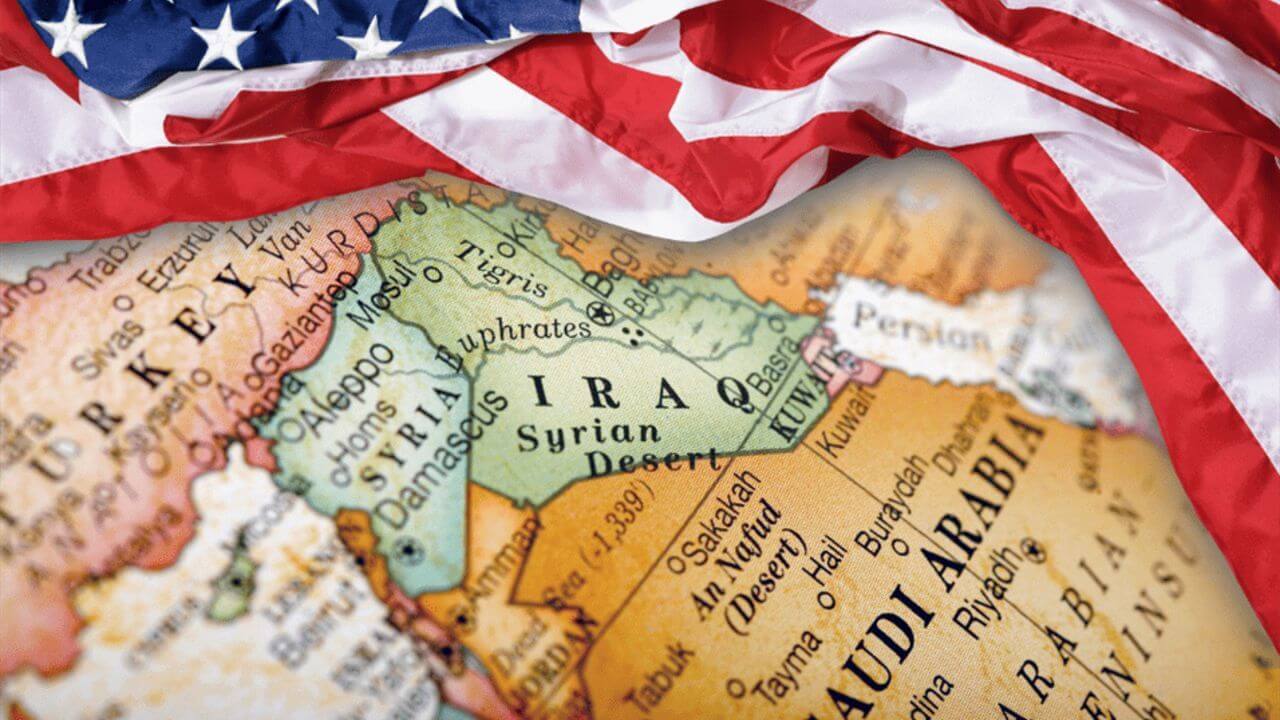
Iraq produces roughly 4.5m barrels of oil per day, most of it exported via Basra. Yet northern fields around Kirkuk remain strategically important for Turkiye. The Kirkuk–Ceyhan pipeline, with a theoretical capacity of 1m b/d, has long operated below potential due to political and technical disruptions. Restoring full capacity would significantly strengthen Turkey’s role as a Mediterranean energy terminal. Additional infrastructure linking Basra to the north could further increase volumes reaching global markets via Ceyhan.
Eastern Mediterranean: more than reserves, a contest of sovereignty
The Eastern Mediterranean is estimated to hold 2–3 trillion cubic metres of gas. Discoveries such as Leviathan, Tamar and Zohr have elevated the region’s importance, yet much of this gas remains undeveloped. The primary obstacles are political, not technical. Co-operation frameworks excluding Turkey, such as the EastMed project, face economic and technical challenges, including high costs and deepwater complexities. By contrast, a route via Turkiye offers a shorter and more commercially viable alternative. For Europe, Eastern Mediterranean gas is not a full substitute but a complementary source. For Turkiye—and indirectly for Azerbaijan as part of an integrated corridor—the region represents an opportunity to expand supply diversity and market reach.
Cyprus has become increasingly central to the Eastern Mediterranean equation. It is not merely an energy zone but a geopolitical pivot at the heart of maritime jurisdiction disputes. Any compromise on Turkey’s and the Turkish Cypriots’ rights would entail not only economic but strategic losses. Energy and sovereignty are deeply intertwined in the region. Turkiye’s policy must therefore remain both balanced and firm.
The Black Sea: a new energy frontier
Turkiye’s Sakarya gas field, with estimated reserves of 710 bcm, marks a turning point. Planned production of 10–15 bcm annually could make a meaningful contribution to a country consuming around 55 bcm per year. Romania’s Neptun Deep project and Ukraine’s offshore potential suggest the Black Sea could emerge as a regional energy hub. Integration with Caspian flows—particularly Azerbaijani and potentially Turkmen gas—would create a more resilient and diversified system. Meanwhile, Russian gas continues to flow through Blue Stream and TurkStream, underlining Turkey’s multi-source supply structure.
Somalia and Africa: the southern dimension
Turkiye’s offshore exploration in Somalia represents the southern leg of this emerging architecture. While proven reserves remain uncertain, geological prospects are promising. More importantly, Somalia’s proximity to the Bab el-Mandeb Strait—through which 6–7m barrels of oil pass daily—gives it strategic significance. Exploration is only the first step. Production will require partnerships with major international energy companies, as Turkiye’s national operator alone lacks the financial and technical capacity to deliver large-scale results. Turkey’s presence in Somalia is therefore not only about hydrocarbons, but about positioning itself within critical global energy routes.
Conclusion
Recent developments point to a clear conclusion: in today’s energy landscape, it is not only resource ownership that matters, but control over flows. Crises in Iran and the Gulf have demonstrated how the disruption of a single chokepoint can reverberate across the global economy. For Turkiye, the central question is where it positions itself within this system. Early moves in Somalia, a calibrated strategy in the Eastern Mediterranean, the growing centrality of Azerbaijan, and a pivotal role in Caspian–Iran–Black Sea corridors could together elevate Turkiye into a key actor in global energy flows. The Eastern Mediterranean, Africa and the Gulf should no longer be viewed in isolation, but as components of a single, integrated geopolitical energy system. Otherwise, Turkiye risks remaining what it has long been: a bridge used by others, rather than a centre shaping the system itself.