Some policy debates become trapped not because they produce the wrong answers, but because they begin with the wrong question. For nearly three decades, Türkiye’s strategic conversation has revolved around a familiar dilemma: Should the country anchor itself more firmly in the West, or should it embrace the Eurasian vision championed by Russia and, increasingly, China?
The real strategic challenge confronting Türkiye is not choosing between the Atlantic and Eurasia. It is determining whether it can emerge as an autonomous centre of gravity in an increasingly fragmented international system. The twenty-first century will not reward countries that merely choose sides. It will reward those capable of shaping the game itself.
The Age of Strategic Multipolarity
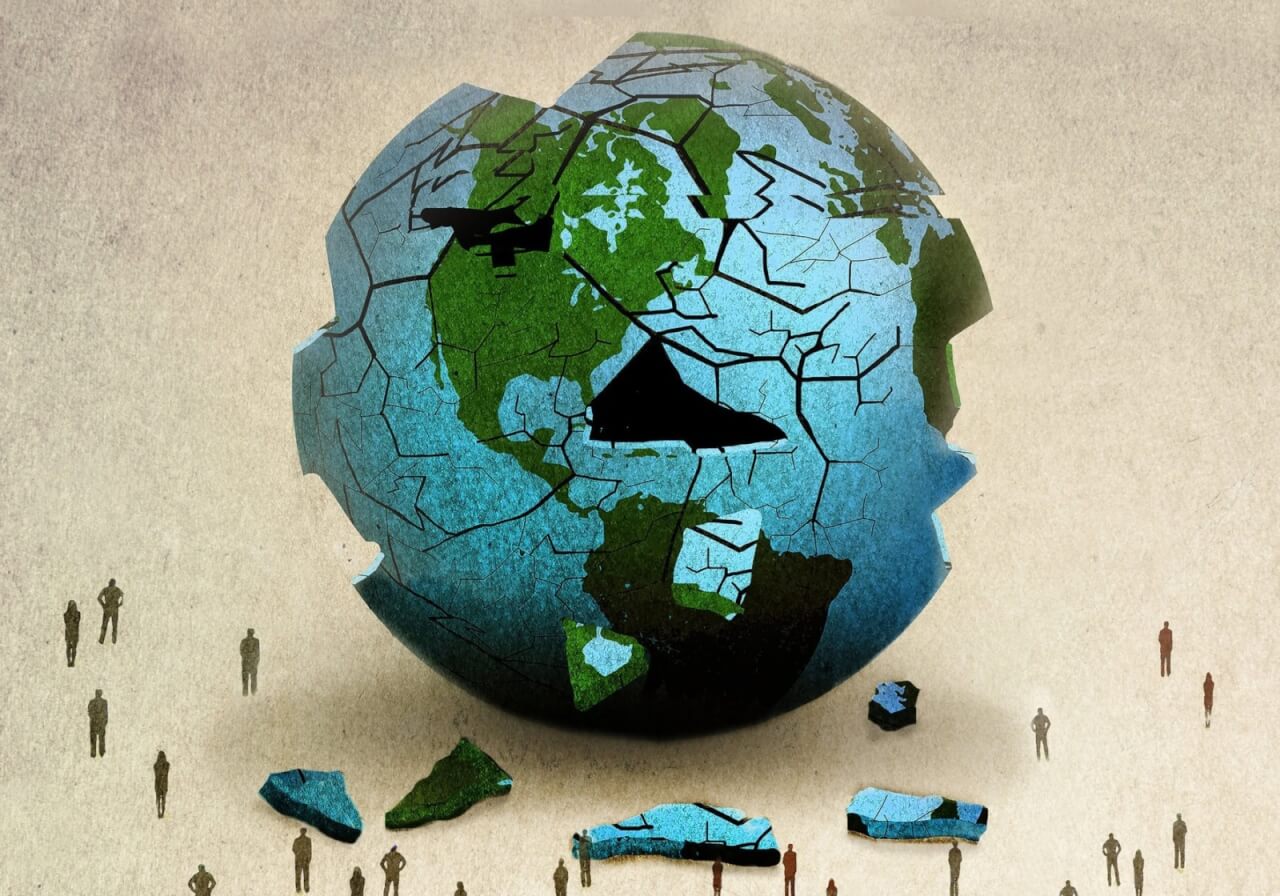
The post-Cold War order is steadily giving way to something more fluid, less predictable and considerably more complex. The United States remains the world’s pre-eminent military, financial and technological power, yet it no longer possesses the uncontested authority to define the global agenda. China has engineered perhaps the most remarkable industrial transformation in modern history and is rapidly converting economic weight into geopolitical influence. India is quietly emerging as a major strategic actor. The Gulf states are transforming hydrocarbon wealth into technological, financial and diplomatic capital. Africa, driven by demographics and critical minerals, is becoming one of the principal theatres of global competition.
This is neither a unipolar nor a bipolar world. It is a world of multiple power centres, overlapping alliances and shifting coalitions. Countries increasingly compete in one domain while cooperating in another. The United States and China are strategic rivals but remain deeply economically interdependent. India participates simultaneously in the Quad and BRICS. Saudi Arabia relies on American security guarantees while coordinating oil production with Russia and expanding infrastructure partnerships with China. The United Arab Emirates has built productive relationships with Washington, London, Beijing and New Delhi without allowing any one of them to define its strategic identity. The language of international politics is no longer ideological loyalty. It is strategic flexibility.
A Conversation in Moscow
This debate is more than an academic exercise for me. During more than four decades in diplomacy, international organisations and the global energy industry, I have discussed Türkiye’s strategic future with policymakers across Washington, Brussels, Beijing, London, Paris and Moscow. Most recently, lengthy conversations in Moscow with two of Russia’s foremost strategic thinkers—Sergey Karaganov and Dmitri Trenin—once again returned to the same proposition. Türkiye’s future, they argued, ultimately lies in Eurasia rather than the Atlantic community.
From Moscow’s perspective, the argument is entirely rational. Russian Eurasianism is not simply a geopolitical theory; it is a national strategy designed to secure Russia’s security interests, regional influence and great-power status. But this observation also reveals a more important truth. Every major power writes its own strategic narrative. American Atlanticism serves American interests. China’s Belt and Road Initiative serves Chinese interests. Europe’s pursuit of strategic autonomy reflects European priorities. Russian Eurasianism naturally advances Russia’s geopolitical objectives. Why, then, should Türkiye define its future through concepts designed by others?
That’s where I respectfully part company with my Russian colleagues. They view Türkiye from Moscow. I view Türkiye from Ankara, and Ankara’s geopolitical reality is fundamentally different.
Great Powers Write Their Own Strategic Story
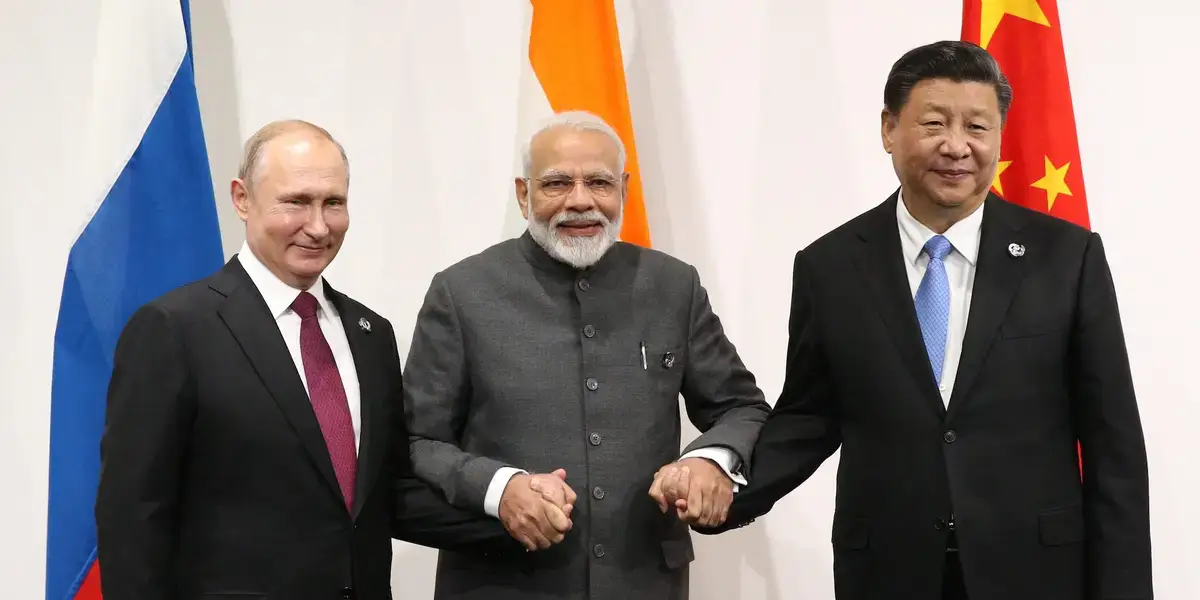
The history of geopolitics offers an important lesson. Halford Mackinder’s Heartland Theory reflected Britain’s strategic anxieties. Nicholas Spykman’s Rimland concept underpinned America’s post-war containment strategy. Henry Kissinger’s balance-of-power diplomacy served American statecraft. Zbigniew Brzezinski’s The Grand Chessboard sought to preserve US primacy across Eurasia. Xi Jinping’s vision of a “Community of Shared Future” and the Belt and Road Initiative reflects China’s ambition to reshape the international economic order. None of these doctrines was universal.
Each was rooted in national interest. Türkiye’s strategic weakness has been different. Too often, we search for ourselves in strategies written by others instead of writing our own. Great powers do not become footnotes in someone else’s geopolitical narrative. They write their own manifesto. Türkiye does not fit into anyone else’s box. Türkiye’s strategic identity has never been reducible to a single geography. It is a NATO ally and a founding member of the OECD. It is deeply integrated into European manufacturing through the Customs Union and conducts much of its trade with Europe. Yet its energy security cannot be conceived without Russia, Azerbaijan, Iraq, Central Asia and the Eastern Mediterranean.
The Black Sea remains central to European security. The Turkic world is becoming increasingly significant both economically and strategically. China has become one of Türkiye’s largest trading partners. The Gulf provides indispensable long-term investment capital. Africa represents one of the great growth frontiers of the coming decades. Defining Türkiye solely through Europe is therefore incomplete. Defining it solely through Eurasia is equally misleading. Türkiye’s geography is not a contradiction. It is a strategic asset.
From Geopolitics to Geoeconomics
The defining transformation of our age is not that economics has replaced geopolitics. Rather, economics has become geopolitics. Semiconductor production, artificial intelligence, digital infrastructure, critical minerals, energy corridors, ports and data centres now shape strategic influence as profoundly as aircraft carriers once did.
Foreign policy can no longer be separated from industrial policy. Capital follows confidence. Innovation follows predictability. Talent follows opportunity.
The countries that will dominate the coming decades will not simply possess military strength. They will attract investment, ideas, entrepreneurs, scientists and global supply chains. State capacity has become a strategic asset. Türkiye therefore needs neither a new ideological identity nor another geopolitical label.
It needs a grand strategy. I would define that strategy as one of Strategic Centrality. This is not neutrality. Nor non-alignment, nor opportunistic balancing. It means preserving Türkiye’s Western institutional anchors while expanding its strategic reach across Asia, the Middle East, Africa and the wider Indo-Pacific. It means maintaining security cooperation with NATO while deepening economic engagement with China.
Strengthening relations with the Turkic world without distancing Türkiye from Europe. Working with Russia where interests converge while defending national interests where they diverge. Attracting Gulf capital while reinforcing the rule of law at home. The objective is simple. To remain dependent on no one. Yet indispensable to many. That is what genuine strategic autonomy looks like.
The Second Century Requires a New Statecraft
Mustafa Kemal Atatürk secured Türkiye’s political independence without allowing the young Republic to become captive to any great power. Decades later, Turgut Özal demonstrated that economic openness, entrepreneurship and integration into global markets could substantially expand Türkiye’s international influence. Türkiye’s second century demands a synthesis of those two traditions that includes strategic independence, economic openness, institutional excellence, technological competitiveness and geoeconomic ambition. This is not about replacing one axis with another. It is about creating a new centre of strategic gravity.
The Wrong Question
Years ago, Sergey Karaganov remarked to me that Türkiye’s future lay in Eurasia. My answer remains unchanged. Türkiye’s future certainly lies in Eurasia. But not only in Eurasia. It also lies in Europe, in the Black Sea, the Mediterranean, the Caucasus, the Middle East and in the Turkic world.
Increasingly, along the emerging economic corridors connecting Europe with the Indo-Pacific. Türkiye’s geography is not one-directional. It is a unique strategic intersection. The question facing the Republic in its second century is therefore no longer whether it belongs to the West or to Eurasia. The real question is whether Türkiye will continue searching for its place on maps designed by others, or whether it will acquire the confidence, institutional strength and strategic vision to help draw the map itself.
That, ultimately, is the measure of statecraft in the twenty-first century. The nations that will shape the future will not be those that merely align with competing power centres. They will be those that become centres of attraction in their own right. And that should be Türkiye’s defining strategic ambition.