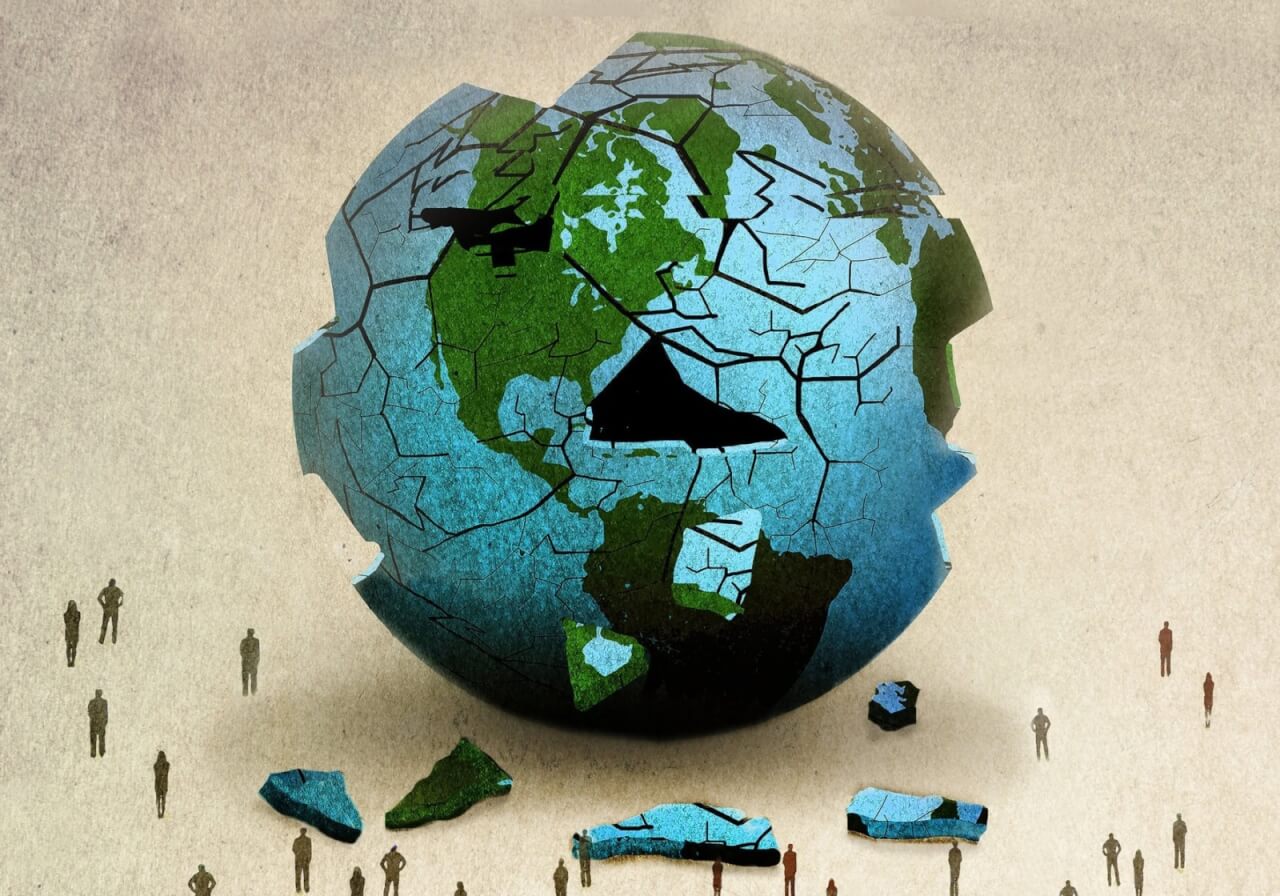
“… A new global political and economic order is emerging as a result of new economic realities. We cannot change these economic realities. But if we respond to them in the wrong way, we risk a backlash that will lead to one of the following situations: a dysfunctional global system or a global order that is clearly not what we want. ” Nobel Prize winner Joseph Stiglitz.
Our world is in search of rapid change and balance, not only in the midst of new economic conflicts of interest, but also in the midst of an era of economic and political great power rivalries. After the collapse of the Soviet Union, the rival of the Western system in the Cold War, the victory of liberal democratic governance and a free market economy in their country, which was celebrated by the Western community and called the “end of history” by Francis Fukuyama, was ironically refuted by history.
The story apparently continues, with Fukuyama seeing a new “historical confrontation” unfolding over the “China Model”: between the United States and its Western partners on the one hand, and China and Russia on the other. Today, we are witnessing a new systemic competition between the United States, which is losing its old-world power, and China, whose self-confidence is increasing. In the first half of the 21st century, we are still faced with two superpowers: the USA and China. Although the EU and Japan are economic powers, they are not military powers. In contrast, Russia is a military power but not an economic power.
We are also observing an indecisive European Union between these two superpowers, unable to demonstrate its economic power. The most important question here is where and what role the European Union will undertake in this emerging order. Will it continue to live together with the USA and will it oscillate indecisively between both blocs, or will the European Union create a more independent strategy while using its economic power in a more competitive international environment?
Where do we stand in the process of globalisation?
Although the consequences of the US and Trump’s claims to the world order remain unclear for now, there are a number of important factors that will clearly have negative effects on our lives in the coming years. We are in the first half of the 21st century. We are trying to look ahead and move on by adding new and more complex problems to the important political and economic problems of the 20th century. We live in an interconnected world that is getting closer every day with the help of rapidly developing communication technology.
Globalization is bringing economies closer together. It is making them more dependent on each other. The world economy is in the process of transitioning to a single market. It is becoming increasingly difficult to carry out independent economic policies. There has always been a global economy and global markets. What is new is that almost every country is now part of this process. We are more vulnerable to external shocks, and all of us can be directly affected by political and economic crises anywhere in the world.
Income distribution differences between industrialized and developing countries, which have been on the agenda of the global economy for a long time, have emerged and deepened with the globalization process. Currently, the richest 10% of the global population has 52% of the income. What about the poorest half of the global population? They earn only 8%. On average, an individual from the top 10% earns USD 122,100 per year, while an individual from the bottom half earns only USD 3,920.
I think the situation in most developing countries is unlikely to improve overall in the next few decades. On the one hand, industrialized countries increase their welfare levels, on the other hand, a significant part of developing countries cannot get rid of the quagmire of underdevelopment. Another important development is the differentiation of income distribution between countries. On the one hand, the trend towards luxury consumption is increasing rapidly; on the other hand, people are struggling with the problem of hunger.
To briefly summarize the problems we face as global citizens today:
Population Explosion
In 1900, the world population was estimated at 1.6 billion people. As a result of the population explosion after the Second World War, this figure is currently around 6 billion and will reach 9 billion by the middle of the 21st century. Population growth varies between continents. At the beginning of the 21st century, 60% of the world’s population is in Asia, 19% in Africa, 9% in Europe, 8% in Latin America, 5% in North America and 1% live in Oceania. According to Statista estimates, by 2050, the number of Africans will double, the number of Asians will increase by one and a half times, the number of people living in Latin America and North America will increase slightly, while only the number of Europeans will decrease.
In addition to these developments, enormous advances in health in many parts of the world and the consequent expansion of health services have accelerated the expansion of ageing societies, especially in Europe and Japan. For example, today 40% of the German population is over 60 years old.
Rapidly Increasing Domestic and International Migrations
Another visible consequence of this rapid population growth is the mass exodus from rural areas to cities. London emerged after the Industrial Revolution; Paris and New York emerged in the 19th century; Shanghai, New Mexico, Beijing, Cairo, Bangkok, Mumbai, Istanbul, Islamabad and many other megacities have hundreds of millions of inhabitants. On the one hand, there is incredible wealth and incredible living conditions, and on the other, poverty and misery that is truly shameful for humanity.
The result is that previously unknown diseases such as AIDS (HIV), mad cow disease (BSE) and avian influenza (SARS), COVID, as well as diseases that we thought had been eradicated, such as cholera and typhoid, are on the rise again. In short, the masses that emerged as a result of the population explosion and that could not be absorbed by national economies have become a major problem for humanity.
One of the most fundamental problems of the century we live in is the illegal migration of masses under the pressure of poverty and unemployment between continents, especially to the developed countries of North America and Europe. We follow the developments in this regard in the news every day. We see the illegal migration of people, including children and women, from Mexico to the USA and the EU via Türkiye and the Mediterranean, and these people embark on a journey of hope and despair, at the risk of death. We observe that people are forced to migrate not only for economic reasons, but also due to civil wars and religious conflicts. Today, the streets of European countries are filled with asylum seekers who came illegally from Africa, the Middle East, and the Far East. Another issue is raising the working age instead of employing migrant workers to try to find a solution to the problem. If no action is taken against asylum seekers from underdeveloped countries, there may be restrictions on the free movement of labour.
Climate Change, Destruction of Nature and Environmental Pollution
The main goal of all countries is faster growth and more production and consumption. The industrialization process is expanding rapidly from central countries to peripheral countries. The most negative impact of this is climate change and global warming, which we have seen in recent years.
Two important effects of this development are discussed. One of them is the opening of the world’s glacial regions to human habitation, and the other is the rise in the water level of the oceans due to the melting of the ice caps at the North and South Poles, leading to floods. Humans cannot prevent natural disasters such as earthquakes and volcanic eruptions, but it is certain that the human factor plays a decisive role in global warming.
The gaps in the atmosphere caused by carbon dioxide and methane gases resulting from oil, gas and coal consumption and the destruction of forests contribute significantly to global warming. In addition to the measures to be taken by individual countries, the solution to this problem should be addressed at the global level and acted on together.
Consequences of Globalization in Technological and Economic Fields
In March 1991, the National Science Foundation privatized the Internet, not realizing its consequences and the extent of its power. The Internet has contributed greatly to increased productivity, the ability of people and businesses to reach beyond national borders, the formation of an international intellectual community, and the integration of international markets.
Developments in communication technology have shortened the distances between countries. Today, we can follow the events on dozens of TV channels, especially the BBC and CNN, from a small TV station in the most remote corner of the world. We can follow newspapers and magazines on a daily basis. Thanks to mobile phones, millions of people across countries and continents can communicate with each other, and we can instantly access all kinds of information and scientific research.
It is not possible to stop the developments in communication technology; it has become a part of our lives. However, I think it is useful to consider the negative aspects of this development. Recent international wiretapping incidents, false information flows, perception operations based on propaganda and ideology, the elimination or alteration of information, and the seizure of visual and written media by a few private organizations in various countries have led to an oligopoly.
The media has lost its impartiality to a great extent and has been turned into a political propaganda tool. Beyond all this, people’s private lives can be monitored, and their conversations can be listened to at any time and from anywhere. Unlawful interventions in individual freedoms and terrorist activities through information technologies are the most important problems that will not fall off the agenda in the coming years.
The Technology War Gains Momentum
The conflict between the United States and China is taking place in the technological field. Both countries want to win the technological race and take full advantage of the 4th Industrial Revolution in the digital age, where artificial intelligence will play an important role. China wants to catch up with the United States in the field of advanced technology.
On the other hand, the USA wants to hinder China’s rapidly increasing economic and technological development. The development of new transformative technologies such as 5G and artificial intelligence will continue to be a critical source of tension between the USA and China. Currently, the USA and China dominate digital technology. It does not seem possible for other countries, including the EU, to compete with these two countries in the field of advanced technology policies. Since EU countries cannot produce their own technologies internationally, they have become dependent on the USA and China and have entered the political fields of these countries.
In the coming years, technological development, scientific research and education, which are the driving forces of capitalism, will come to the fore. In order to increase your competitiveness in international markets and expand your market share, you need to intensify research and development activities and increase their share in national income.
This requires the establishment of universities and research centers with international education and advanced equipment. The important thing is not the number of universities in your country, but their quality and ability to compete with international research institutions. The three basic conditions that determine competition – innovation, entrepreneurship and management – can only be achieved with well-trained human resources.
‘Wild Capitalism’ and Financial Crises
One of Marx’s most important predictions is the economic and financial crises that may arise in the capitalist process. The recent 2008 financial crisis was caused by excessive liberalization and overconfidence in the market mechanism. Overconfidence in the optimal distribution of resources by markets played an important role.
The Chairman of the US Federal Reserve did not take any initiative to prevent extraordinary developments in the financial markets. With the emergence of the crisis, bank bailouts from the state budget came to the fore to prevent panic in the economy. Central banks increased the supply of money to the markets to prevent a credit crisis. While everything was going well, neo-classical and monetarist economists argued that the market economy does not make mistakes, that mistakes are the result of wrong decisions of people and institutions, and that the ‘hidden hand’ will correct all mistakes.
They are in favor of minimizing the role of the state in the economy. Interestingly, when crises arise, they encourage the state to intervene in the markets and prevent bankrupt companies and bailout the banks. In this case, we are faced with ‘Keynesian’ economists who want the state to play an active role in the economy. If economists think that the crisis will last a long time and deepen, Karl Marx is called to help.
One of Marx’s five theses was “the law of increasing concentration and the contradiction of industry.” Less efficient firms would be put out of business by these conditions. As a result, industry would become increasingly centralized, and economic power would be increasingly concentrated in the hands of a few. Today, the owners of globally operating multinational corporations such as Elon Musk, Bill Gates and Zuckerberg not only dominate economic life in the United States, but also shape political and policy issues on a global level and make proposals.
Loss of Function of International Institutions
The World Bank and IMF, which were among the international organizations established after the Second World War, lost their founding purpose after the recent crises and had to be disbanded or restructured in order to adapt them to today’s conditions. In addition, it has become necessary to change the structure of the UN organization and the Security Council and to redefine their areas of responsibility.
As a result of globalization, the economic and political problems of our world have become more complex. The ability and skills of the political leaders of the G-7 countries, especially the USA, to overcome these problems in this period of the 21st century are extremely limited compared to the leaders after the Second World War. For example, Winston Churchill, Charles De Gaulle, Konrad Adenauer, Ernst Reuter, Helmut Schmidt, Willy Brandt and Margaret Thatcher.
In other words, the political charisma and leadership behavior of elected leaders today is no more than that of mediocre provincial politicians. How to solve today’s very serious problems with a generation of politicians who prioritize the interests of their own countries and seek short-term solutions is also a matter of debate. In short, we are looking for a class of politicians who should have the skills described by Max Weber in his book ‘Politics as a Profession’ published in 1919.
New Global Challenge: The Uncertainty of Trump’s Policies
One of the most discussed issues in the global context in recent days is the global problems that Donald Trump’s re-election as US President will pose. Germany’s well-known think tank SWP (Stiftung Wissenschaft und Politik) asked experts from 19 European countries for their opinions on two issues: 1. What positive and negative consequences does your government anticipate during Trump’s second term in office? 2. Which sectors will be most affected? As a result of the research, three areas of concern stand out most commonly: democracy, defence, trade and wider economic relations.
The fear that democracy will be dismantled by democratic means is a primary concern in many European capitals. Some experts also say that a second Trump presidency would be welcomed by the far-right, right-wing populist and/or nationalist-conservative part of their political spectrum. Nevertheless, Europeans express concerns not only about domestic politics (the encouragement of autocratic powers), but also about the international order and the credibility of Western states acting together on the international stage.
In the field of defense, the United States is perceived as irreplaceable in terms of its military support for Ukraine and its role in guaranteeing Europe’s defense. There is concern that financial and military aid will end and Trump may declare a ceasefire in Ukraine against Kyiv’s will (and potentially against European interests). Trump also repeats the increase in the contribution of NATO member countries to the budget.
Experts on trade and broader economic relations predict disruptions in transatlantic relations, including Washington’s tariff wars against European countries, possible unilateral decisions and practices to expand technology controls against China (Financial Sanctions, Export and Investment Controls).
In the current century, our future will be determined by the economic competition between the USA and China in the economic, political and military fields, as well as developments in the field of technology. Only a united and independent Europe can create a balance of power between the USA, China and Russia. If European heads of state and governments continue to adopt a wait-and-see approach and fail to develop their own common strategy towards the US, security, prosperity and social harmony in Europe will be jeopardised in the future, and it will suffer more severely from the shortcomings and mistakes of “America First” policy under Trump’s leadership. A balance of power between the United States, China and Russia can be achieved only with a united and independent Europe that is strong economically, politically and in terms of security policy.
Note: This paper was published by the İKV in January 2025 in Turkish. This new version has been revised and updated.