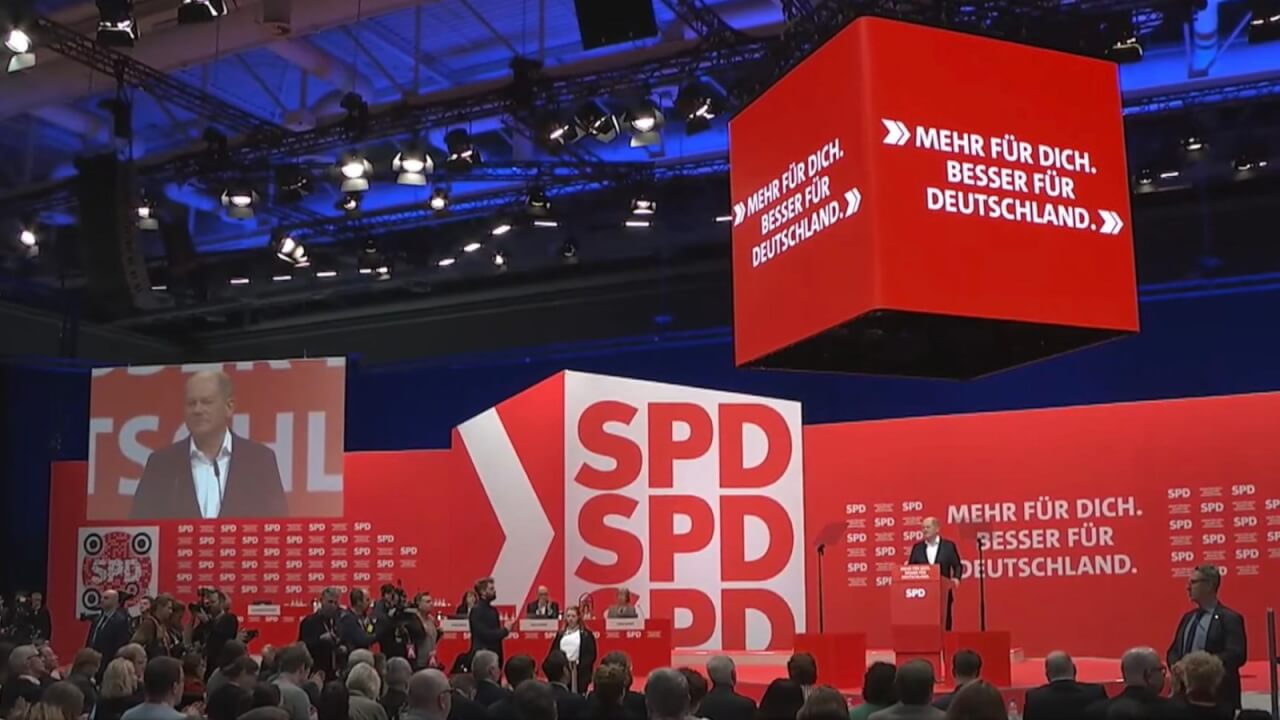
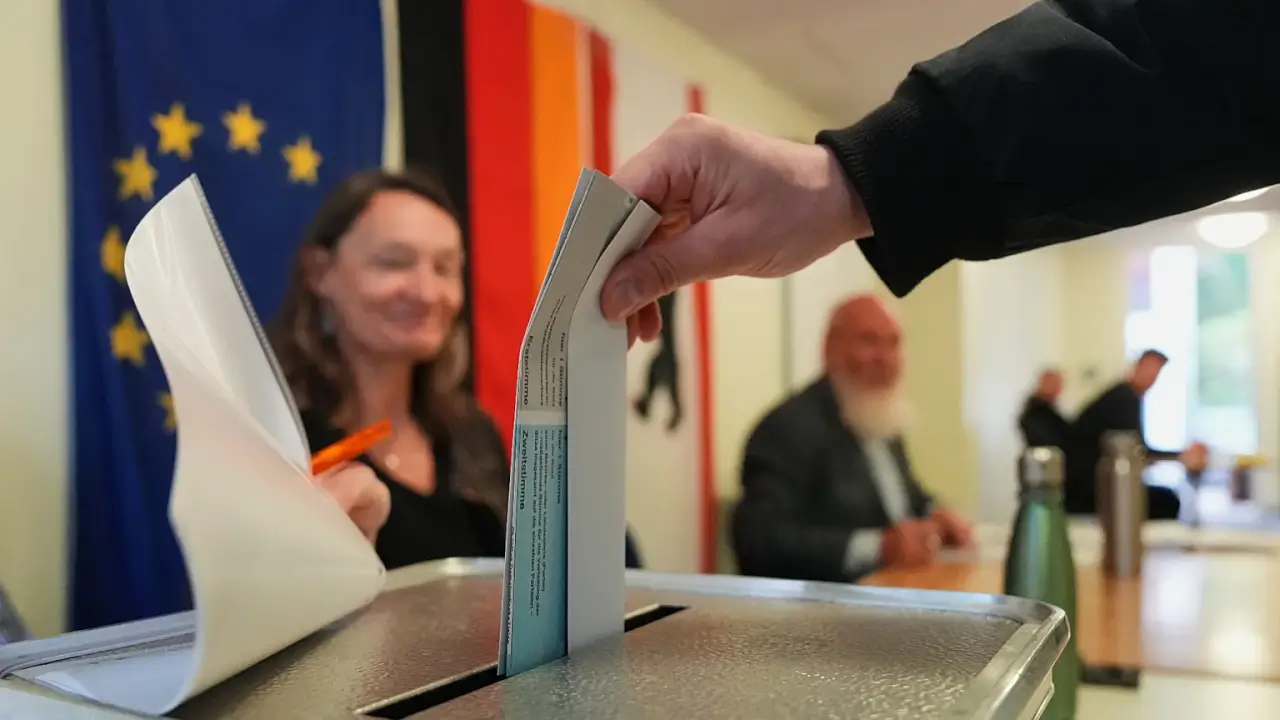
On 20 September 2026, elections were held in two German federal states: Mecklenburg-Vorpommern and Berlin. According to the results, the AfD came first in Mecklenburg-Vorpommern with around 38% of the vote, just ahead of the SPD with 35.4%. The Left Party became the strongest force in Berlin. It got around 25% of the vote. It was well ahead of the CDU and the SPD. The SPD only got 12.1 %. The city of Berlin used to be known as the capital of the SPD, as represented by Ernst Reuter and Willy Brandt in the “Rotes Rathaus”. The AfD won its highest vote share ever, more than double its vote in 2021. The results of all these elections show us that the far right and the left are on the rise in Germany, and that center and system parties such as the CDU, SPD and FDP have been losing their weight in Mecklenburg-Vorpommern.
This was evident not only in the last federal elections, but also in the shocking election defeats suffered by the German Social Democratic Party in the states of Baden-Württemberg, Rheinland-Pfalz, and Sachsen-Anhalt in early 2026. All these could have far-reaching consequences for the SPD, giving the impression that Germany’s oldest and most historical party is losing its ground and support among voters in the country.
Moreover, 21st German Bundestag election was held in February 2025. The CDU was ahead of the AfD in second place with 22.6% of the vote; the AfD received 20.8% of the vote. They were followed by the SPD (16.4%), which is the lowest vote share the SPD has received in the general elections since 1949. It is obvious that the SPD is currently experiencing a crisis of its recent electoral failures. Interestingly, the day after the election, there seems to be no clear idea of how the SPD should regain its power. Criticism of the party leadership is expected to begin in the coming days and will be voiced more and more loudly every day.
Let us start our analysis with the historical role of the SPD. The SPD was founded in 1875 when the General German Workers’ League, led by Ferdinand Lassalle, joined forces with the Social Democratic Workers’ Party, led by August Bebel and Wilhelm Liebknecht. In 1890, the party took the name of today’s Social Democratic Party of Germany.
The party’s early history was marked by incessant and fierce internal strife between revisionists and orthodox Marxists, as well as the German government and its chancellor, Otto von Bismarck. This period was characterised by relentless pressure and the declaration of a state of emergency. The leaders and members of the SPD eventually split into two main groups, with one group leaving to form a new party. Revisionists have put forward the idea that social and economic justice for the working class can be achieved through democratic elections and institutions, rather than through violent class struggle and revolution. Leaders of this movement included Ferdinand Lassalle and Eduard Bernstein. However, orthodox Marxists said that free elections and equal rights would not create a truly socialist society. They also believed that the ruling class would never give up power without a struggle.
In the late 19th century, German elites saw the socialist party as a threat to the security and stability of the newly unified empire. For this reason, the party was officially banned from 1878 to 1890. Over time, the reformists, who adhered to the Marxist ideology and thought of coming to power through revolution, separated under the presidency of Karl Liebknecht and Rosa Luxemburg in the Spartacus group, and the reformists, who thought of coming to power through democracy and elections, Friedrich Ebert (1871-1925), who was the President of the Weimar Republic from 1919 to 1925, is considered the founding leader of today’s SPD.
After the Second World War. SPD members who fled the Nazi regime began to return to their countries. Among them, Kurt Schumacher and Ernst Reuter made important contributions to the return of the SPD to political life. With the Bad Godesberg Program in 1959, the SPD was able to restructure itself by accepting the market economy, move away from Marxist principles and return to real politics. Thanks to this structural change, the SPD achieved great success in transforming from a Marxist party to a Social Democratic party.
Now, we will analyse the SPD’s unsuccessful results in the last elections under two main headings. The first is the short-term problems faced by the SPD and their failure to fulfil voter expectations for the future.
According to the results of the recent survey of opinions about the SPD, (1) voters think that the SPD is no longer on the side of the working people today; (2) they believe that the SPD promised a lot in the last general elections, but very few of these promises have been fulfilled (3) the SPD is more interested in those who receive basic income benefits than in hardworking but low-earning people; (4) the SPD has been in power for so long that it can no longer distinguish between the interests of the country and the interests of the party.
The SPD lost votes in the elections for four important reasons that have affected the party’s voter potential over the last few decades. However, there are also challenges based on global and economic changes that have resulted from globalisation.
Firstly, the famous sociologist Ralf Dahrendorf announced the end of the “Social Democracy” movement in 1989. In the late 20th first half of the 21st centuries, I think that as a result of globalization and the technological revolutions , the class structure in societies, has changed in a radical way. The main reason for this claim is the trade unions and social organizations in which the workers were organized, which were the main driving force of the Social Democracy movement time, and the Socialist and Social Democratic Parties were their political representatives in the parliaments.
However, over time, these powerful trade unions and social organizations began to lose their traditional roles and powers in the political and economic life.
After the 1984/85 strikes during the Margaret Thatcher era, the number of members decreased with the closure of coal mines, and that the classical worker identity changed with economic and technological developments, and that they enrolled blue- and white-collar workers and educated workers as members. As a result of this transformation, radical and demonstrative labour unions in the squares are trying to conclude their contracts at the table. Their expectations and demands are entirely different from those of classical workers. I think it is important to win by training high-level blue- and white-collar workers, who are trained by the digital technology revolution with AI as members of trade unions, with the ideology of social democracy.
Secondly, after 1968 and the 70s, the SPD was the strongest period in Germany. Such as Ernst Reuter, Willy Brandt, Helmut Schmidt, Herbert Wehner, leaders from the world war played a very important role in the expansion of the social democracy movement and the party’s stay in power for a long time. At the same time, they had a very strong party leaders and cadres who were trained from the grassroots and functionalized the ideology of the SPD. Another feature is that they have always had fierce ideological debates within the party, but they have always adopted a common culture of consensus. The social democratic movement is currently facing significant challenges, primarily concerning its leadership and the team surrounding them. The voters are closely observing the speeches of these leaders and party programs making predictions about the future, which is having a strong influence on the voters.
Thirdly, as a student who experienced the 1968 student protests in Germany, I determined that the most dynamic driving force of the German Social Democratic movement in the 1960s and after was student and youth organizations. In particular, JUSOS (the Young Socialists in the SPD), which was launched in 1914 and was a member of German university students, was influential on student movements in universities. In the digital age we live in, students express their social criticism through social media, using it as a platform to voice their opinions and engage in discourse with their peers and the wider world. For this reason, the influence of youth opposition in society and universities has decreased, turning into a passive movement.
Fourthly, another problem is the state of the German economy, which is in recession and is not expected to grow by more than 1.1 % in 2026 and 2027. In times of economic crisis, German voters have often turned to right-wing extremist parties for solutions. A good example of this is the support given to Hitler’s party during the Great Depression in 1929/30, as well as the recent rise of the AfD. The first goal of the current coalition government is to strengthen the growth potential of the economy and increase the welfare of all citizens. To achieve these goals, the German government has prioritized investments, structural reforms and consolidation. A major reform package is expected to be implemented in at least one area in the coming weeks. However, structural reforms are necessary to ensure a sustainable recovery: reducing bureaucracy, deregulation, tax cuts for companies, better infrastructure and lower energy costs. This economic situation is known to the SPD leadership and needs to be acted on quickly.
Conclusion
The SPD was established 131 years ago, in 1895. During this time, the SPD fought a long and arduous struggle against the established aristocracy, the Otto von Bismarck administration and the Hitler regime. After the Second World War, they made significant contributions to the reconstruction and democratic structuring of Germany. Furthermore, they consistently collaborated with prominent and charismatic statesmen, as well as highly skilled and competent cadres, both during their periods in office and while in opposition. They adapted to developments and changes over time. I believe that the SPD, which has experienced such prolonged economic and political struggles, will once again become successful under strong leadership and new, promising, and updated reform programs.