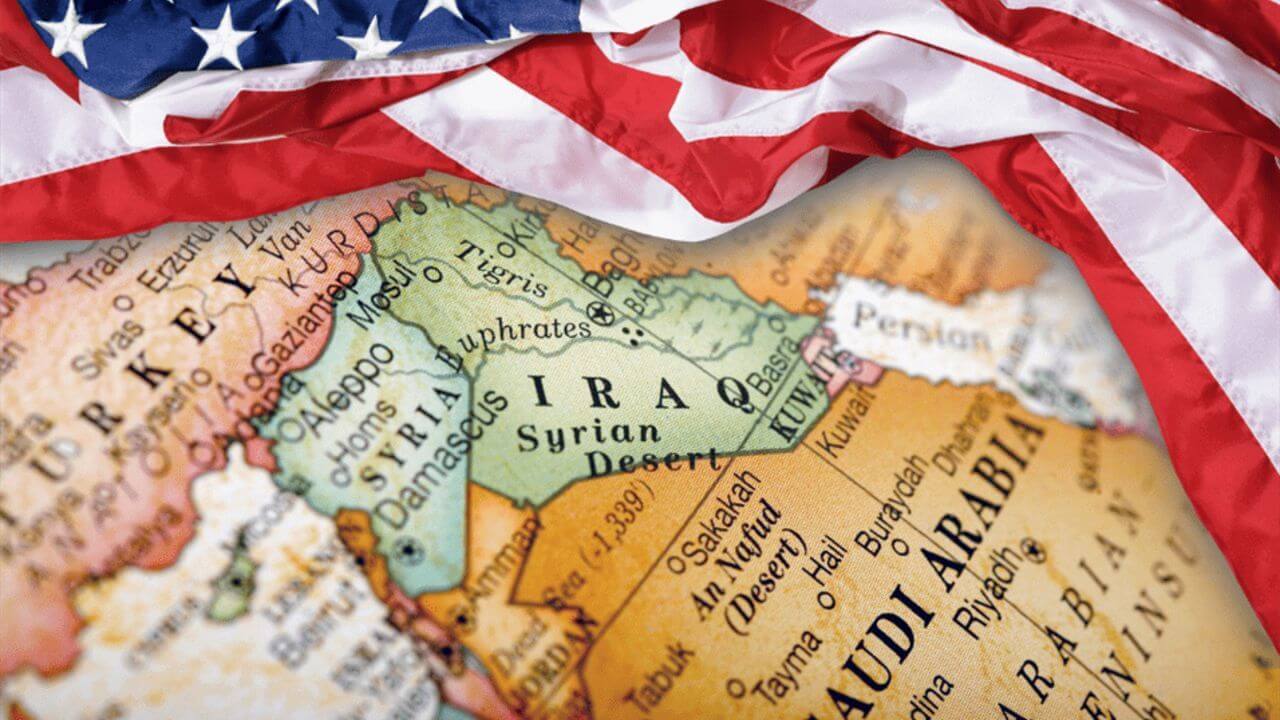
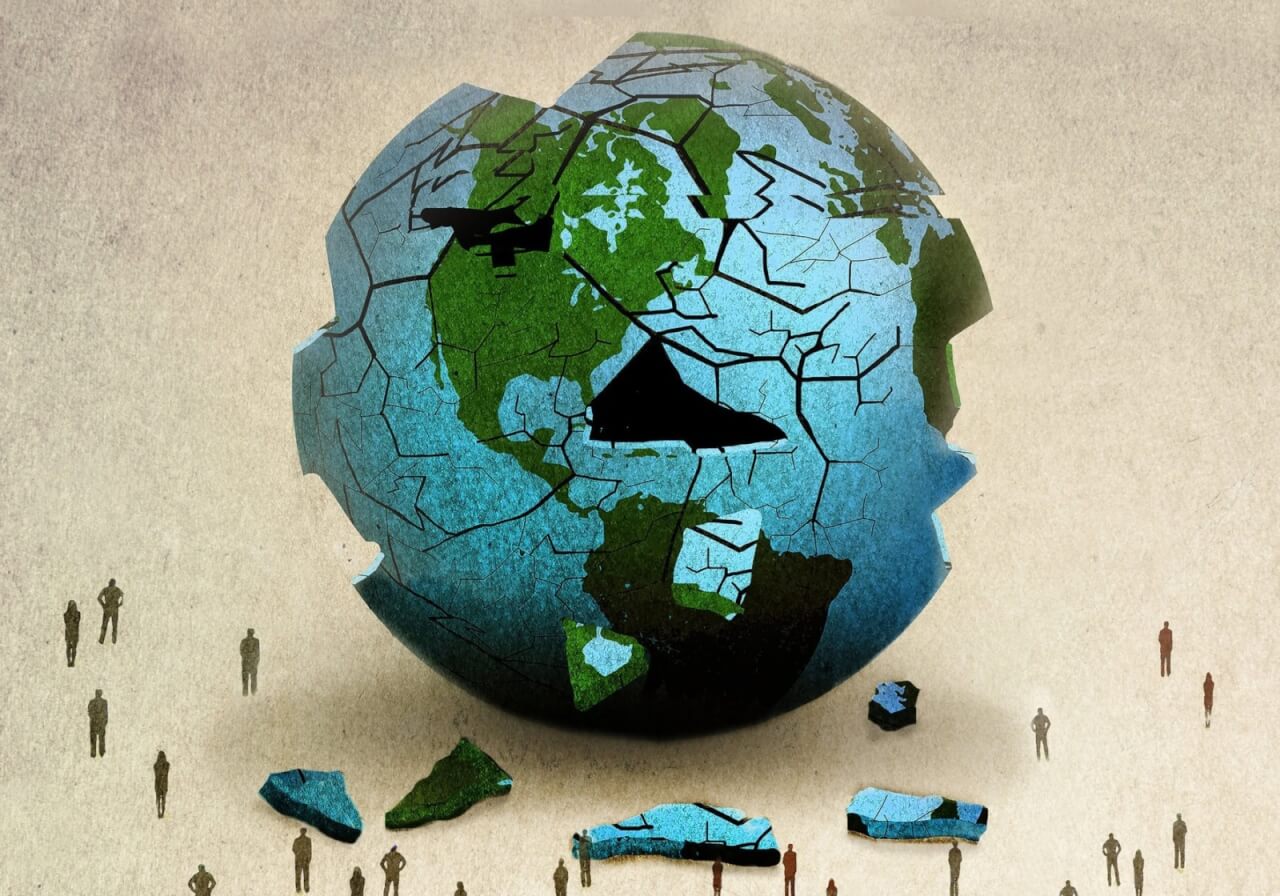
Twenty-five years after the attacks of 11 September 2001, it is tempting to ask how the United States changed the Middle East. For much of the past quarter-century, that was the obvious question. Afghanistan and Iraq, the war on terror, democracy promotion, the Arab uprisings, the campaign against ISIS and the long confrontation with Iran all placed American power at the centre of the region’s transformation. Yet in 2026, the more revealing question may run in the opposite direction. How has the Middle East begun to change the United States, and how far is a region once treated largely as an object of American strategy becoming an autonomous source of change in the international system?
The symbolism of the moment is difficult to miss. Twenty-five years after 9/11 and more than two decades after the invasion of Iraq, the United States has completed its military withdrawal from Iraq. Washington has not disappeared from the Middle East, nor is there much analytical value in declaring a neat post-American era. The United States remains the most consequential external military actor in the region and retains deep security relationships with Israel and the Gulf monarchies. But the political meaning of American power has changed. Iraq demonstrated the extraordinary ability of the United States to remove a regime, while also demonstrating the limits of translating military superiority into a durable political order. The wars that followed, and most recently the conflict with Iran, have sharpened a lesson that regional governments had already begun to absorb. American power may remain indispensable, but dependence on it can also create vulnerability.
The latest regional war has made this contradiction more visible. Israel has increasingly shown that it is capable not only of acting within the existing regional order but also of changing the conditions under which that order operates through unilateral military action. Whatever one’s judgement of the security arguments offered in support of those actions, their cumulative effect has been to deepen uncertainty across the region. The war with Iran has in turn exposed the vulnerability of Gulf states whose political economy depends upon stability, predictable maritime access and confidence in a security architecture historically centred on Washington. For Riyadh, Abu Dhabi, Doha and other capitals, the conclusion is not necessarily that the United States has become irrelevant. It is more subtle. No external security guarantee can fully protect them from the economic and political costs of a regional war. The disruption around the Strait of Hormuz has again underlined how quickly a conflict that begins as a security crisis can become an energy and trade crisis with consequences far beyond the Gulf. That is precisely why the regional response is increasingly about diversification, not abandonment.
From American Protection to Regional Insurance
The Makkah Joint Defence Agreement between Saudi Arabia, Türkiye and Pakistan should be read in this context. Signed in August, the agreement establishes a collective defence commitment under which an armed attack against one signatory is treated as an attack against all three. Its importance, however, should not be exaggerated into the claim that a new Middle Eastern NATO has suddenly emerged. Türkiye remains a NATO member, Saudi Arabia has built its security architecture around close ties with the United States, and Pakistan has priorities extending well beyond the Middle East. The significance of Makkah lies elsewhere. It is a form of regional insurance, an attempt by middle powers to create additional options in an environment in which no single security relationship appears sufficient.
This is why the agreement is better understood not as the birth certificate of a post-American Middle East, but as an insurance policy for an increasingly uncertain American Middle East. They can continue to cooperate closely with the United States while investing in relationships that reduce the costs of overdependence. If one security relationship proves insufficient, others should exist. If one export route is threatened, another should be available. If one external power is unable or unwilling to provide the expected protection, regional actors should possess enough diplomatic, military and economic capacity to adjust. The Makkah framework matters because it reflects a wider instinct among regional middle powers to shape the environment around them rather than simply react to decisions taken elsewhere.
The same logic is increasingly visible in energy and infrastructure. The Strait of Hormuz has again demonstrated that a narrow maritime passage can connect a regional confrontation directly to the global economy. Saudi Arabia’s east-west infrastructure, the UAE’s access to Fujairah, prospective Iraqi routes through Türkiye and the Mediterranean, and wider plans involving ports, pipelines, railways and development corridors should therefore be understood as more than commercial projects. They are part of a wider search for strategic resilience. When states seek multiple routes to global markets, they are pursuing the same objective as when they diversify diplomatic and security partnerships. They are trying to reduce the political price of dependence.
The Middle East remains deeply fragmented. Türkiye, Saudi Arabia, Israel, Iran and the Gulf monarchies have overlapping but often competing ambitions, and agreements that appear impressive on paper may prove difficult to operationalise in a real crisis. Yet the direction of travel matters. Regional middle powers increasingly want to participate in writing the rules of the system in which they operate. Strategic autonomy in the Middle East, if it develops at all, is unlikely to arrive through a dramatic rupture with the United States. It is more likely to emerge gradually through overlapping security arrangements, alternative corridors, diversified partnerships and a stronger insistence on regional ownership.
When the Middle East Begins to Shape America
There is an irony here that captures how much has changed since 2001. After 9/11, American policymakers debated how Washington could remake the Middle East. In 2026, instability in the Middle East is increasingly capable of reshaping political calculations inside the United States itself. The pathway is straightforward. Conflict in the Gulf disrupts production or maritime transport, tighter supply lifts crude and refined-product prices, transportation and household costs rise, and a geopolitical confrontation thousands of kilometres away becomes a domestic political problem. That connection is especially important ahead of the 2026 midterm elections. Fuel prices and cost-of-living concerns have become politically salient as the Iran war has constrained access through Hormuz and tightened global energy markets. In that sense, what happens in the Gulf no longer remains comfortably within the category of foreign policy.
This does not mean that the Middle East will determine the outcome of the November elections. American elections are shaped by domestic economic conditions, partisan mobilisation, immigration, social questions and the performance of the administration. But energy remains one of the clearest channels through which events in the Middle East enter everyday American life. If voters encounter the Iran war not primarily through television images or maps of the Gulf but through petrol stations, airline prices, transport costs and renewed inflationary pressure, the traditional distinction between foreign and domestic politics becomes increasingly difficult to sustain. The road from Hormuz to an American ballot box can be surprisingly short. Recent polling already suggests that the cost of living has become one of the most politically damaging issues for the administration as the midterms approach.
That reversal may be the most important story of the twenty-five years since 9/11. Washington still shapes the Middle East in profound ways, but the relationship is no longer one-directional. Regional states are hedging, building alternative arrangements and searching for greater room for manoeuvre. Energy corridors are becoming instruments of national security. Middle powers are experimenting with forms of regional ownership. Wars that begin in the Gulf can alter the economic mood of societies thousands of kilometres away and enter the calculations of American voters and politicians. Even the United States, despite the scale of its military and economic power, cannot insulate itself from these dynamics.
The Middle East of 2026 is therefore not simply a geography left behind by the age of American intervention, nor has it become a coherent post-American order. It is something less tidy and more consequential, a region in which external powers remain essential but regional actors increasingly insist on generating their own options. Twenty-five years after 9/11, perhaps the greatest change is not that America has ceased to influence the Middle East. It is that the Middle East has acquired more ways of influencing America and, through energy, security, infrastructure and the actions of increasingly assertive middle powers, the wider international system as well. Twenty-five years ago, the central question was what America would do to the region. Today, we also must ask what the region is doing to America, and what that tells us about a world in which power increasingly travels in more than one direction.