On 8 July, as NATO leaders gathered in Ankara, the ceasefire between the United States and Iran collapsed, with Washington launching renewed strikes as the meeting was underway. The conflict involving Iran that began on 28 February was expected to remain limited in duration and was widely described as a “short-term excursion,” yet, more than six months later—after an April ceasefire, a June memorandum of understanding, and its collapse—the conflict remains unresolved. For Washington, the conflict has become a sustained drain on attention, assets, and Alliance coherence, raising difficult questions about burden sharing and the credibility of U.S. deterrence commitments across the Middle East.
The conflict’s prolongation and intensification, with regionalization still unfolding, have called into question whether NATO’s Southern neighborhood framework—and, by extension, the U.S. force posture underpinning it—is sufficient for the current security environment. The Alliance designed instruments for a flank, but it is increasingly confronting what might better be understood as a frontier.
The Iran conflict suggests that NATO’s Southern neighborhood is no longer merely a region requiring dialogue and resilience building; it has increasingly become an operational security environment with implications for Allied territory, deterrence credibility, and strategic cohesion. This is increasingly tied to energy security and maritime chokepoints on which U.S. and European economies both depend.
At present, the conflict continues to affect the wider regional security environment, with global energy prices experiencing significant volatility following disruptions around the Strait of Hormuz. Over that time, the conflict has regionalized with Iranian attacks affecting several countries across the region and creating wider security pressures for NATO partners and allies.
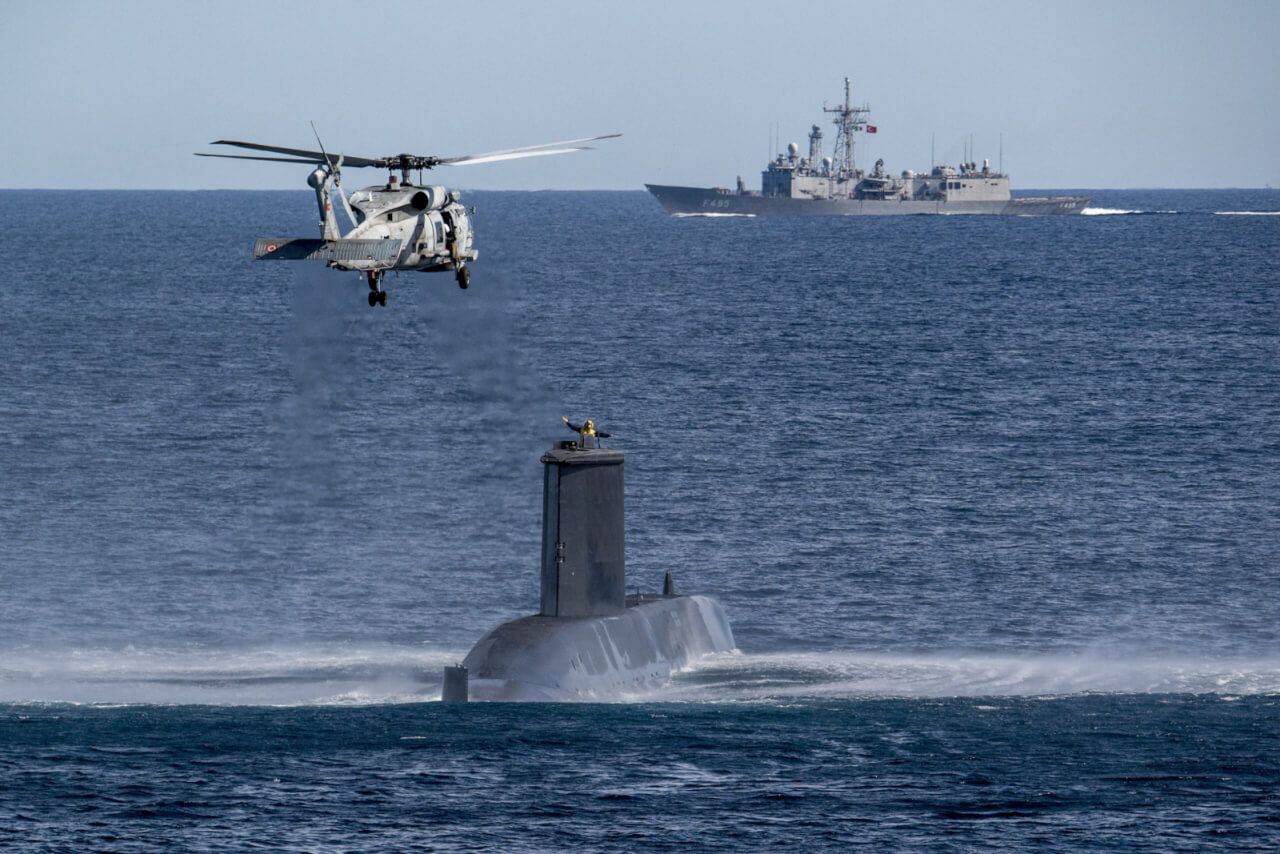
In March 2026, NATO air defense systems intercepted several ballistic missiles in Turkish airspace, prompting the Alliance to deploy an additional Patriot battery to Adana—an indication of how instability in the Southern neighborhood can have direct consequences for Allied territory. Türkiye, with the longest border and deepest exposure to the conflict of any ally, has effectively become NATO’s forward-most stakeholder in the war.
Additionally, attempts to strike the joint U.S.-UK military base at Diego Garcia in the Indian Ocean, which lies around 4,000 km from Iran, have added concerns over the geographical reach of regional missile capabilities. The targeting of a base central to American power projection into the Middle East and Indian Ocean is a direct signal that the risk has expanded well beyond the Gulf.
Moreover, the continued conflict has highlighted differences among Allies over the appropriate level and form of involvement, including debates over maritime security and freedom of navigation in the Strait of Hormuz.
From Tactical Victory to Strategic Uncertainty
The conflict’s resumption was not surprising, as this was not the first time a decisive military victory proved to be a prelude rather than a finale, especially in the Middle East. Although the Twelve-Day War of June 2025 was widely portrayed as an Israeli-American military victory over Iran, with its air defenses, proxy network, and regional architecture weakened, in reality it was not a conclusive win. Previous conflicts in NATO’s volatile Southern neighborhood demonstrate that military outcomes do not necessarily translate into sustainable settlements, as resolving military tensions without addressing political concerns tends to produce their sequels by creating the conditions for renewed confrontation. What appears to be a military outcome, therefore, can generate a much more complicated strategic environment in its aftermath.
This pattern recurs across the region’s modern history: the 1973 Yom Kippur War was in part a continuation of the unresolved tensions left in the aftermath of the 1967 Six-Day War, and the 2006 Lebanon War was shaped in part by the regional power dynamics that followed Israel’s 1982 military campaign. Consequently, the Twelve-Day War can be understood as the first round of a far more complex confrontation that remains unresolved—one that, as the Patriot deployment to Adana and the strike on Diego Garcia have shown, carries direct consequences for Allied territory and deterrence credibility, demanding NATO’s further attention.
The conflict also points to a broader challenge. The security environment in NATO’s Southern neighborhood has always been difficult. However, the divisions exposed by the conflict, with differing assessments among Allies about the level of involvement, suggest that NATO continues to face difficult questions about how to translate its 360-degree approach into practice.
Understandably, the Alliance is strongly focused on its Eastern flank due to the persistent need to address the threat posed by Russia. However, Russia’s expansion of its foothold in the wider Mediterranean and its exploitation of the fragility of states in North Africa, the Sahel, and the Middle East—particularly Libya—illustrates how developments across the Southern neighborhood can intersect with NATO’s wider security concerns. A Russian foothold on NATO’s Southern maritime border is no less a U.S. strategic problem than one on its eastern land border; it simply receives less sustained attention.
The Evolution of NATO’s Southern Flank Policy
NATO’s shift toward the Southern flank was gradual and has evolved in response to changing security conditions. The Southern flank’s importance for counterterrorism led NATO to recognize it as a priority as early as the 1990s, and established channels for dialogue and cooperation with regional countries, including the Mediterranean Dialogue in 1994 with Algeria, Egypt, Israel, Jordan, Mauritania, Morocco, and Tunisia, and the Istanbul Cooperation Initiative in 2004 with Bahrain, Kuwait, Qatar, and the United Arab Emirates. These initiatives created important channels of political dialogue and practical cooperation, although their level of institutionalization remained limited. The Strategic Direction-South Hub, opened in Naples in 2017, was designed to improve mutual understanding of the regional dynamics, although its potential has arguably remained underdeveloped.
The strategic importance of the Southern neighborhood has increased significantly since Russia’s invasion of Ukraine in 2022. At the Madrid Summit the same year, NATO identified Russia as “the most significant and direct threat” to its security, with “distinct threats from all strategic directions.” The 2022 Strategic Concept gave greater prominence to the South, although the Alliance’s strategic attention—shaped in large part by U.S. and European focus on Ukraine—remained heavily concentrated on Ukraine and the East.
At the 2023 Vilnius summit, allies tasked an independent group of experts with producing concrete recommendations on the Southern flank. The report included recommendations on the organizational structure, appointing a special envoy, strengthening dialogue and cooperation with regional actors, combating misinformation, and expanding NATO’s capacity. While the recommendations were comprehensive in scope, their implementation has been gradual.
The Washington Summit in 2024 adopted NATO’s first dedicated action plan for the Southern neighborhood, which added a special representative and a liaison office in Amman, adding to already existing instruments for cooperation such as the Defense Capacity Building Initiative, the Hub for the South and the NATO-ICI Regional Centre in Kuwait. This represented an important institutional step, as it demonstrated the will to adapt a more strategic, result-oriented approach to the region.
Yet despite this genuine step forward, the relatively limited space dedicated to the Southern neighborhood in the wider Summit Declaration suggested that the region remained less prominent than other strategic priorities. That imbalance suggests the region has, in practice, remained a secondary concern—a gap the ongoing Iran war has made impossible to ignore. Additionally, the absence of North African and Middle Eastern countries at the 2025 Hague Summit highlights a remaining gap and a missed opportunity to fulfill the Alliance’s commitment to translate its ‘360-degree vision of security’ approach into deeper regional engagement.
Developments since then indicate that NATO’s engagement is continuing to evolve. The February 2026 meeting of senior Allied officials in Istanbul—itself a marker of Türkiye’s growing convening role on Southern flank issues—reaffirmed NATO’s 360-degree security commitment to its Southern flank. NATO’s Special Representative for the Southern Neighborhood, Javier Colomina, convened NATO’s first Southern Neighborhood Security Dialogue of Senior Officials on 27 May 2025 and produced a Partners’ Agenda on regional security, counterterrorism, cyber defense, maritime security, countering misinformation, and climate change.
The region was also on the agenda for the NATO Foreign Ministers’ conference in Helsingborg in May 2026. The Ankara summit in July 2026 subsequently launched new flagship projects with Gulf partners in areas including maritime security, countering uncrewed aerial systems (UAS), chemical, biological, radiological, and nuclear (CBRN) defense, and counterterrorism.
These institutional developments, however, were conceived before the emergence of the current interstate conflict and its wider regionalization. The question now is whether they can evolve at sufficient scale to address an increasingly critical security environment. The conflict, therefore, provides a useful test of whether NATO’s existing mechanisms are sufficient to adapt to a more volatile security environment.
NATO designed many of its Southern instruments for a flank: a security environment in which instability could often be addressed through resilience building, dialogue, and crisis management. However, the current environment requires these instruments to be complemented by greater strategic presence, sustained investment, and stronger policy coherence.
Toward A More Coherent Southern Strategy
Until now, members have often responded through a combination of national, bilateral, and Allied initiatives, reflecting different assessments of the risks and appropriate forms of engagement. This points to a broader question about how NATO can develop greater strategic coherence in responding to security challenges originating or affecting its Southern neighborhood while preserving the flexibility of each Allied member. The fact that NATO members’ involvement in the current crisis has varied, has exposed strains in Allied coherence, with implications for the credibility of NATO’s deterrence power.
The growing importance of the Southern neighborhood is undeniable, as seen in various strategies and steps taken to strengthen NATO’s position in the region. Yet, this raises an important question: Why does NATO continue to have such a limited institutional presence as an Alliance in its Southern neighborhood? The answer has become more important as regional actors increasingly question the credibility, predictability, and sufficiency of traditional U.S. security guarantees. Fluctuations in U.S. policy toward Iran have contributed to these doubts, forcing regional actors to develop alternative forms of collective defense, including the Makkah Joint Defense Agreement concluded by Saudi Arabia, Pakistan, and Türkiye on 7 August 2026. The fact that Türkiye, NATO’s second largest military, has felt it necessary to join a parallel collective defense arrangement is itself evidence of an institutional gap that NATO needs to address.
The 2026 NATO Summit, held on 7–8 July in Ankara, offered an opportunity to further develop the Alliance’s approach to the South. The Ankara Summit Declaration reaffirmed NATO’s 360-degree approach and addressed the wider regional security environment, including Iran and freedom of navigation in the Strait of Hormuz. However, the Summit’s emphasis remained on defense investments, Ukraine, and broader Alliance capabilities. This should not be understood as a failure to address the South. Rather, it highlights the challenge of balancing multiple strategic priorities within the Alliance. While trying to strengthen its Eastern and Southern dimensions simultaneously, NATO faces the difficult task of ensuring that developments in one direction do not come at the expense of the other.
Looking ahead, NATO could further upgrade its institutional presence in the South. For Washington specifically, this is not just a NATO matter. The unresolved instability in the Alliance’s Southern neighborhood has already drawn direct American military engagement and is likely to continue to do so.
The Istanbul meeting in February and subsequent engagements demonstrate that there is political will for deeper cooperation. The Alliance could therefore consider whether its Southern strategy requires additional resources, institutional mechanisms, and greater political coordination with, and deeper cooperation with regional countries.
The challenge is not merely to create another institutional initiative, but to ensure that the Southern neighborhood receives sustained political attention, resources, and mechanisms that can adapt to its growing strategic importance. The South may no longer fit comfortably within the traditional conception of a flank. For NATO, recognizing the South as an increasingly consequential security frontier could be a crucial step toward developing a genuinely coherent 360-degree strategy.