Part I of VIII — The Story of a Great Historical Transformation, Not a Single Nation
From the buried cities of the Silk Roads to the imperial capitals of Eurasia, the history of the Turks is far greater, more complex and more fascinating than the search for a common bloodline. Its real significance lies not in claiming the civilisations of others, but in understanding how Turkic peoples crossed continents, embraced different faiths, built states, absorbed influences and transformed the world around them. To tell that story properly, we must first challenge some of our most cherished assumptions.
A sentence in Kashgar that never left me
What if the greatest weakness in our understanding of Turkish history is not that we have forgotten our past, but that we have tried too hard to make it belong exclusively to us?
I have spent much of my professional life travelling across the territories once traversed by merchants, warriors, pilgrims, diplomats and scholars along the Silk Roads. From Beijing to Central Asia, from Anatolia to the Balkans, I have repeatedly encountered fragments of a history that is at once familiar and surprisingly elusive.
Yet one of the most memorable observations I heard came not from a celebrated historian, but from a museum guide during my travels to Kashgar and Turfan, in what is now China’s Xinjiang Uyghur Autonomous Region.
“The history of the ancient Turks has yet to be written,” he told me.
It was an extraordinary statement.
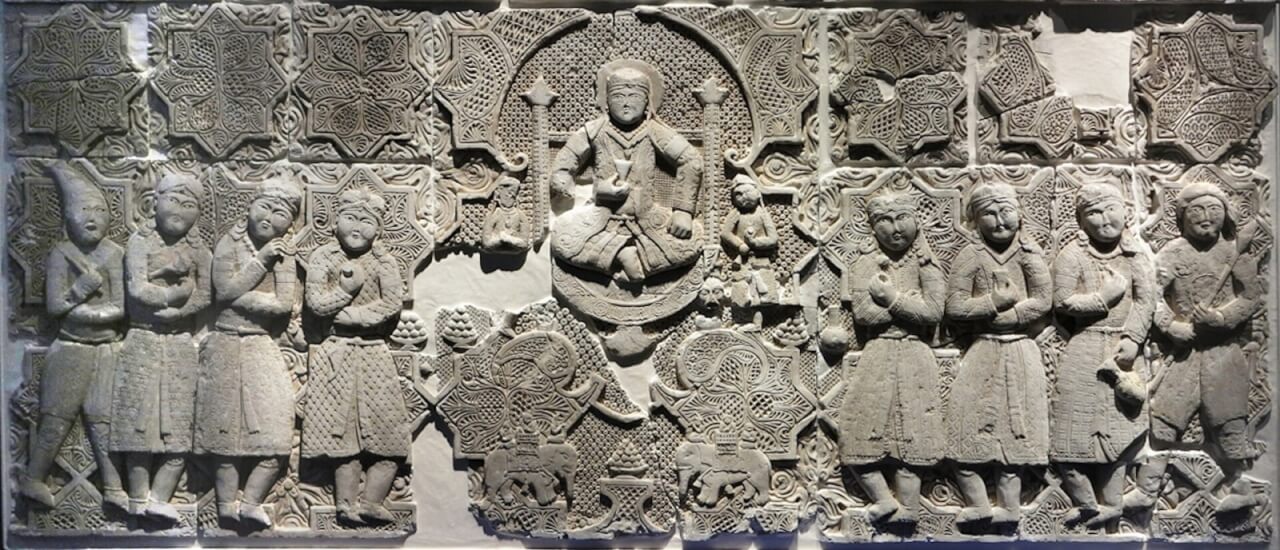
We were standing in a region where successive civilisations had left traces beneath the desert, where Buddhist manuscripts, Islamic architecture, ancient settlements and the languages of the Silk Roads testified to centuries of human movement and cultural exchange.
The guide spoke of buried cities, unexplored tombs and inscriptions awaiting further investigation. He believed that research into the region’s Turkic past deserved far greater attention and that Turkish scholars should look beyond the celebrated Orkhon inscriptions.
He was also critical of what he regarded as insufficient opportunities for archaeological research under the Chinese authorities. That was his assessment, not a conclusion I could independently verify.
What interested me most was his suggestion that such investigations should be pursued through international scientific cooperation, rather than framed as a political contest over historical ownership.
His words stayed with me.
Not because I accepted the literal proposition that Turkish history had never been written. That would be absurd.
But because they raised a more unsettling question:
Have we written the history of the Turks as it actually unfolded, or have we too often written the history we wanted to inherit?
A great history, but not yet a sufficiently connected one
We should begin by acknowledging an essential fact: Turkish and Turkic history have been studied extensively and often brilliantly.
Fuat Köprülü transformed the study of Turkish social and institutional history. Zeki Velidi Togan contributed substantially to Central Asian and Turkic historical scholarship. Bahaeddin Ögel examined early Turkic culture and mythology. Halil İnalcık revolutionised Ottoman historiography. Talat Tekin made fundamental contributions to Old Turkic linguistics. Ahmet Taşağıl and numerous other scholars have deepened our understanding of early Turkic states and their Chinese sources.
Beyond Türkiye, generations of researchers working in Chinese, Russian, Hungarian, German, British, American and Central Asian institutions have produced an immense body of scholarship.
Their achievements cannot simply be dismissed because a comprehensive popular synthesis remains difficult to find.
The problem is different.
Too often, we study the history of the steppe separately from that of the cities; the pre-Islamic centuries separately from the Islamic period; Central Asia separately from Anatolia; and the Ottoman Empire separately from the societies and civilisations with which it interacted.
We teach the Göktürks, Uyghurs, Karakhanids, Seljuks and Ottomans as successive chapters of a national story. Yet the connections among them were rarely as simple or linear as a schoolbook timeline might suggest.
The Turkic world did not develop along a single road from Mongolia to Anatolia.
It expanded, contracted, fragmented, recombined and transformed across multiple regions, often simultaneously.
Some Turkic-speaking peoples became Muslim. Others remained Buddhist, adopted Christianity or preserved indigenous religious traditions. Some established nomadic confederations. Others built cities, cultivated sophisticated literary cultures or governed empires whose populations were overwhelmingly non-Turkic.
That is not a weakness in the historical narrative.
It is precisely what makes the narrative extraordinary.
The dangerous temptation to claim everyone
There is, however, a recurring temptation in popular historical writing: the desire to demonstrate the greatness of the Turks by discovering Turkish origins almost everywhere.
The Sumerians, Hittites, Urartians, Native Americans, Incas, Hungarians, Bulgarians, Greeks, Kurds and Ashkenazi Jews have all appeared in speculative narratives linking them to supposed Turkish ancestry.
Some of these arguments contain fragments of genuine historical contact. Others rely on superficial linguistic similarities, selective readings of ancient texts or unsupported genealogical claims.
They cannot be treated as equally credible.
Tatars, Bashkirs, Chuvash, Sakha and Tuvans, for example, speak languages belonging to the Turkic family. That linguistic relationship is firmly established, although each community has its own distinctive history and identity.
Hungarian, by contrast, belongs to the Uralic language family, despite significant early contacts with Turkic-speaking peoples and the presence of Turkic loanwords.
The early Bulgars had important connections with the Eurasian steppe and Turkic linguistic traditions. Yet modern Bulgarian society emerged through a much longer process involving Slavic languages, Balkan populations, Christianity and changing political institutions.
Kurdish belongs to the Iranian branch of the Indo-European language family. Centuries of coexistence, intermarriage, trade and shared political history with Turks do not make Kurds ethnically Turkish.
Nor does the profound cultural exchange between Turks and Greeks erase the separate histories and identities of either people.
The Khazar hypothesis concerning Ashkenazi Jewish ancestry has generated scholarly debate, but claims that Ashkenazim as a whole descend predominantly from the Khazars are not supported by the mainstream genetic and historical evidence.
As for the Sumerians, Hittites and Urartians, their known languages and archaeological records do not establish them as Turkic peoples.
They are nevertheless part of the historical inheritance of the lands that constitute modern Türkiye.
And that distinction matters enormously.
We do not have to prove that every civilisation in Anatolia was Turkish in order to recognise Anatolia’s entire historical inheritance as part of our own responsibility to understand and preserve.
Historical connection is not ethnic identity. Cultural influence is not biological descent. Political domination is not proof of shared ancestry.
A civilisation does not become greater by appropriating the achievements of others.
It becomes greater in our understanding when we can explain how it interacted with them.
Timur, Bayezid and the politics of memory
Consider Timur.
In Uzbekistan, Timur occupies a central place in national historical memory. Samarkand celebrates his imperial legacy, architectural patronage and association with a powerful Eurasian state.
In Türkiye, Timur is often remembered rather differently.
His defeat of Ottoman Sultan Bayezid I at the Battle of Ankara in 1402 disrupted Ottoman political consolidation and initiated the period commonly known as the Ottoman Interregnum.
The same ruler can therefore appear as a symbol of imperial greatness in one national narrative and as the architect of catastrophe in another.
Neither perspective alone is sufficient.
Timur’s empire was shaped by the Turco-Mongol political world and deeply influenced by Persianate administrative and cultural traditions. Its history cannot be reduced to the modern national identity of any single successor state.
This is one of the central difficulties of writing a shared Turkic history.
The past did not know the national borders we have subsequently drawn across it.
Nor did historical rulers organise their identities according to the categories found on modern passports.
When we project today’s political loyalties backwards, we risk turning history into a competition for ownership.
What exactly do we mean by Turkish history?
Before attempting a grand synthesis, we must distinguish several related but different subjects.
There is the history of Turkic languages, whose branches spread across an immense Eurasian territory.
There is the history of communities that identified themselves as Turks or were described by others using related names.
There is the history of states founded or governed by Turkic-speaking elites and dynasties.
There is the social, economic, religious and cultural history of Turkic-speaking populations.
And there is the history of modern Türkiye, whose emergence involved the transformation of Ottoman institutions, Anatolian societies and a much broader historical inheritance.
These histories overlap, but they are not interchangeable.
A dynasty could have Turkic origins while governing predominantly Persian-, Arabic- or Slavic-speaking populations. A community could adopt a Turkic language while preserving elements of an earlier cultural identity. A state could develop institutions inherited from peoples with whom its rulers shared no common ancestry.
Modern Turkish citizenship, moreover, is a political and legal identity, not a genealogical test.
This distinction should liberate rather than diminish our historical imagination.
It allows us to recognise the remarkable continuity of Turkic languages and traditions without pretending that Turkic peoples remained unchanged across fifteen centuries.
It also allows us to understand the Seljuks, Ottomans and other Turkic-connected polities as participants in a wider human story, rather than as isolated expressions of an unchanging national essence.
The history we should now write
The next great synthesis of Turkic history should be neither a nationalist celebration nor an exercise in historical self-denial.
It should draw on archaeology, historical linguistics, epigraphy, manuscript studies, environmental history and, where appropriate, carefully interpreted ancient DNA research.
Chinese dynastic chronicles, Arabic and Persian histories, Byzantine accounts, Armenian and Georgian sources, Russian archives, Ottoman documents and Central Asian oral traditions must be examined alongside one another.
No single source tradition should be allowed to monopolise the narrative.
Nor should modern political boundaries determine which discoveries are considered relevant.
Such a project would benefit from cooperation among scholars in Türkiye, China, Mongolia, Uzbekistan, Kazakhstan, Kyrgyzstan, Azerbaijan, Russia, Iran, Europe and elsewhere.
Its purpose should not be to prove that the Turks were everywhere.
It should be to understand where Turkic-speaking peoples actually lived, how they moved, whom they encountered, what they created and how they themselves changed.
The distinction is fundamental.
A history too great to be imprisoned by ancestry
I return, finally, to that museum guide in Kashgar.
Perhaps he was right in a sense neither of us fully articulated at the time.
The history of the Turks has certainly been written. It fills libraries, archives, archaeological reports and scholarly journals across the world.
But its greatest story may still await a synthesis capable of connecting those discoveries without forcing them into a predetermined national narrative.
We should not be afraid of the possibility that our ancestors were diverse, that their identities changed, or that many of their greatest achievements emerged through collaboration with other peoples.
That is not an embarrassment to be concealed.
It is the very substance of history.
The Turks did not need to be the ancestors of every great civilisation to become one of the great historical forces of Eurasia.
Their significance lies in the extraordinary transformations they experienced and helped bring about.
The true grandeur of Turkish history is not that the Turks remained the same wherever they went. It is that they helped change the world—and were themselves changed by it.
That is the history worth writing.
And it leads naturally to the next question in this eight-part journey: Where did the earliest Turkic-speaking communities emerge, when did the name “Turk” enter the historical record, and what can language, archaeology and genetics genuinely tell us about their origins?
Next: Part II — Before the Göktürks: Searching for the Origins of the Turkic World.