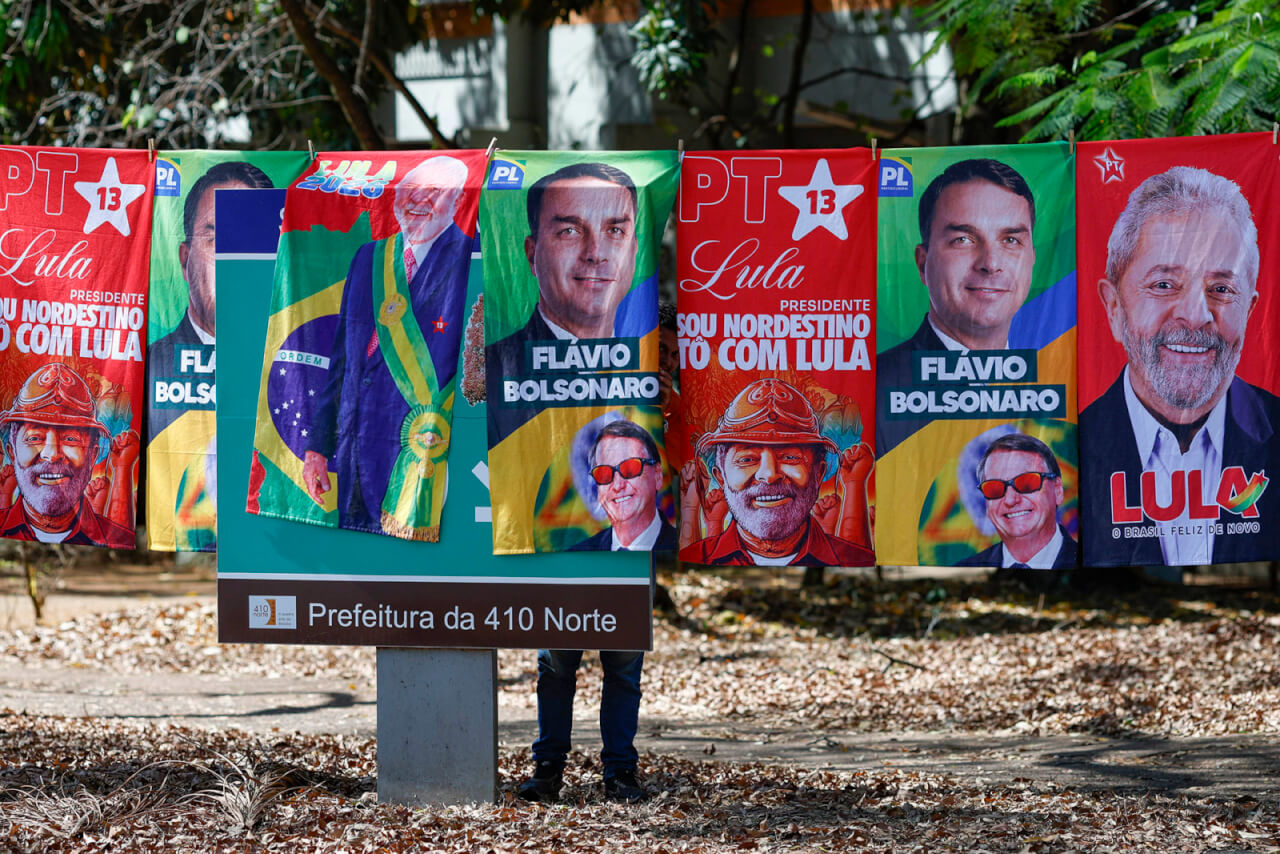
This week, one of the most controversial elections in Brazilian history took place. The atmosphere was so tense that the U.S. Embassy in Brazil suspended consular services just a few days before the election, citing a threatening environment. However, according to some, this statement indicates that the U.S. openly supported opposition candidate Flávio Bolsonaro by portraying the Lula administration as inadequate at best. The first round of the election has concluded, with Bolsonaro securing 47.03% of the total vote, while incumbent President Lula received 45.16%. Consequently, the election has proceeded to a runoff to be held on October 25, 2026. Although the outcome of the runoff remains uncertain at this time, Bolsonaro appears to be the favorite. If elected, governments aligned with the U.S. will be established across Latin America.
Before addressing the allegations of U.S. interference, it is crucial to outline the parties involved in this critically important election. On one side is Luiz Inácio Lula da Silva (Lula) of the Workers’ Party. His political career began with the ABC Steelworkers’ Union. He first ran for president in the 1990s but lost the election to Fernando Henrique Cardoso, a renowned sociologist and former finance minister who ended the closed economy program and integrated Brazil into the neoliberal economic system, twice. On the other side there is Flávio Bolsonaro, the son of Brazil’s former president, Jair Bolsonaro. The Bolsonarismo movement is best understood through its emphasis on family values rooted in Evangelical Christianity. Because of this commitment, Bolsonarismo is closely aligned with the United States and, in particular, with President Trump. Jair Bolsonaro is currently in prison for orchestrating a coup attempt against Lula, who was elected president following the 2022 election. His supporters held rallies across the country, particularly in Brasília, where Bolsonaro supporters stormed the Congress and the Supreme Court.
Trump is known for his support of Jair Bolsonaro. Since Bolsonaro’s arrest, he has openly opposed his prison sentence and demanded that the Lula administration drop the charges, while Lula has not wavered in his stance. In September 2025, following Jair Bolsonaro’s conviction in September 2025, President Trump imposed sanctions on members of the Brazilian judiciary.
Trump’s stance toward the current government is also clear. He has been constantly trying to weaken the Lula administration. As a result, as the elections approach, the crises with the U.S. are becoming even more pronounced. In July 2026, Trump increased tariffs on Brazilian imports by 25 percent, which put pressure on the Brazilian economy. Furthermore, also in the summer of 2026, Trump and Argentine President Milei became embroiled in a diplomatic crisis with Brazil. Immediately after Flávio Bolsonaro announced his candidacy, Javier Milei met with the far-right leader in Brazil. Lula interpreted this move as interference in Brazil’s internal affairs and summoned the Argentine ambassador to demand an explanation. It is no secret that Trump and Milei went to great lengths to help Bolsonaro win the election. Consequently, the Brazilian left viewed Milei as Trump’s representative in Latin America and vehemently accused the Trump administration of interfering in the Brazilian elections. According to a Reuters report, Brazilian intelligence officials briefed a French and German delegation in September on possible interference in the elections by foreign powers such as the United States and Russia. The officials stated that U.S. interference ranged “from legal battles to openly acknowledged interference.”
It is widely known that the Trump Doctrine—also known as the Donroe Doctrine—focuses primarily on the Americas and places this region at the center of U.S. interests. The ousting of Venezuelan leader Maduro in early 2026, the relationships Maduro established with Milei to form a consortium with right-wing leaders in South America, and the meetings Milei held, as well as the tariff wars he initiated with various countries across the Americas—including Canada, Mexico, and Brazil… All of this demonstrates that Trump has a vision for the Americas and seeks to control the Western Hemisphere by acting more assertively and creating a pro-U.S. environment to facilitate the flow of U.S. capital. The Brazilian elections, set to take place just before the U.S. midterm elections, are of utmost importance in this context. Trump needs a new victory in South America and openly supports “Bolsonarismo”—a movement he aims to carry forward to a new generation through the presidency of the leader’s son, Flavio. Consequently, a victory for Bolsonaro’s son will be touted as a victory for Trump.
Trump’s policies were by no means well-received by the Brazilian left. Now, more than ever, the second round of the election holds special significance for both Brazilians and the world.