One of diplomacy’s oldest truths remains one of its most misunderstood: nations do not have permanent friends or permanent enemies. They have permanent interests. Yet much of today’s public debate still assumes that international politics resembles a football match where one team’s gain automatically becomes another’s loss. Whenever two countries move closer together, observers immediately conclude that a third country must be losing influence. This logic may have worked during the Cold War. It no longer explains the world we live in.
Today, Türkiye appears to face new strategic alignments across almost every front simultaneously. The United States is expanding its military footprint in Greece. Israel and the Republic of Cyprus are institutionalising cooperation in energy and security. India is increasing its presence in the Eastern Mediterranean. Several Central Asian republics have strengthened relations with the Republic of Cyprus. European actors are redesigning supply chains. Chinese investment has become more selective.
Policy analysts interpret these developments as evidence that Türkiye is becoming isolated. I argue the opposite: Türkiye is experiencing what every pivotal middle power experiences when the international system itself is being rewritten.
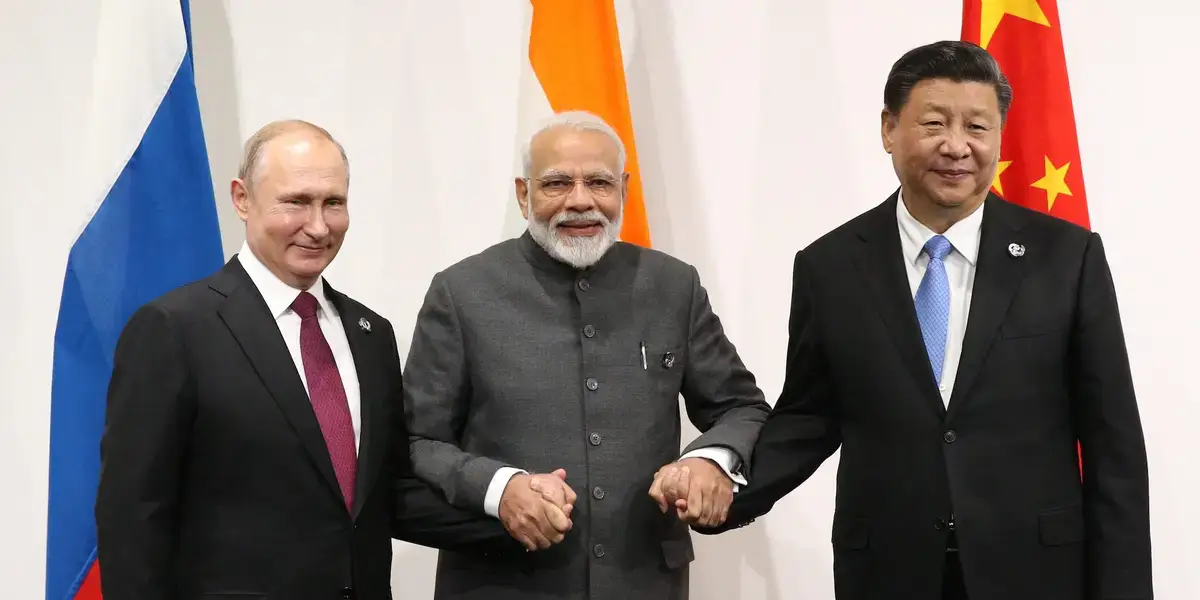
The defining characteristic of the twenty-first century is not confrontation but diversification. Countries no longer choose a single strategic partner but instead construct portfolios of partnerships. India purchases discounted Russian oil while simultaneously expanding defense cooperation with Washington. Saudi Arabia remains a critical American security partner while becoming one of China’s largest economic collaborators. The European Union seeks strategic autonomy while depending on American security guarantees and expanding trade with Asia. Even rivals remain deeply interconnected economically. The era of exclusive alliances is giving way to overlapping networks. The language of blocs is increasingly obsolete.
Geography Makes Türkiye Both Valuable and Vulnerable
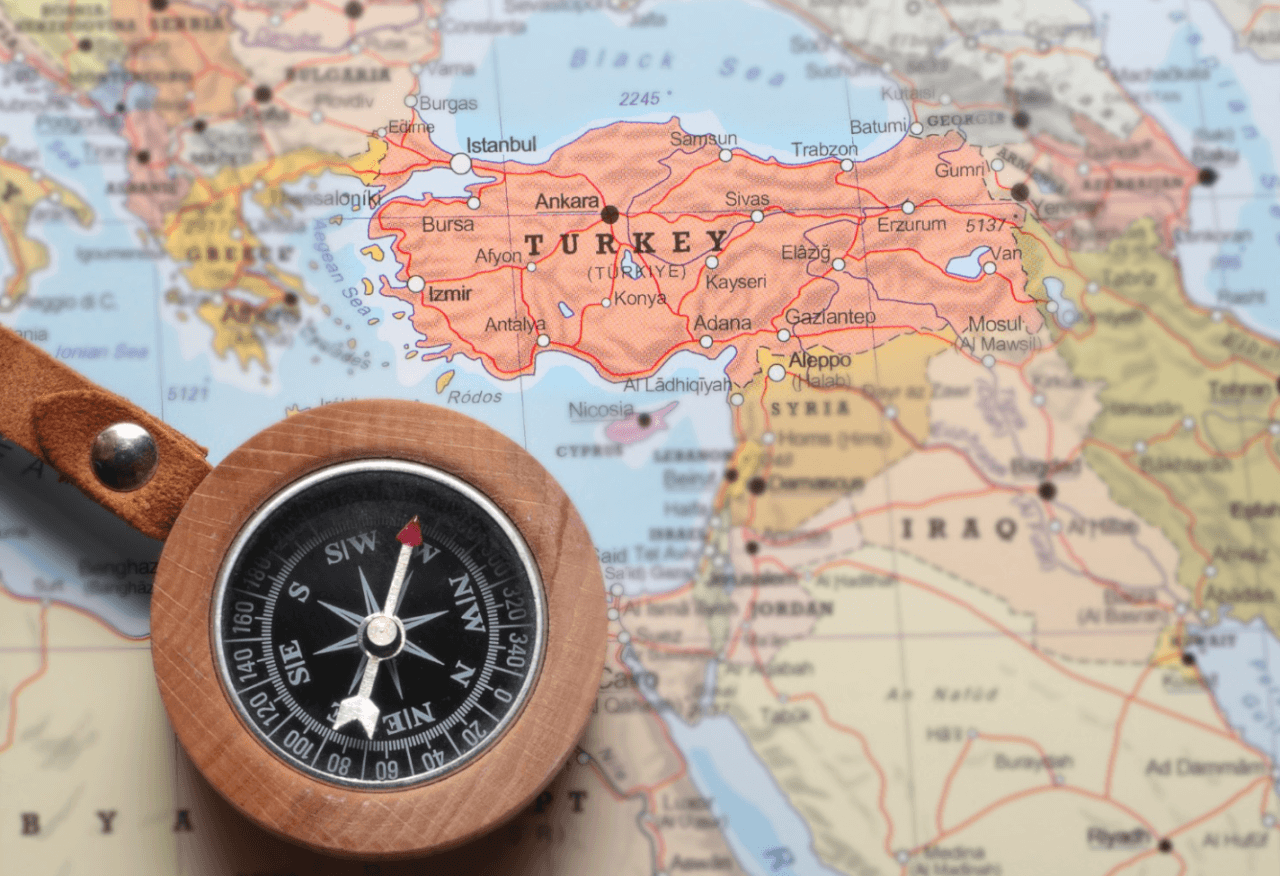
Very few countries occupy geography as strategically significant as Türkiye. Türkiye simultaneously touches Europe, Asia, the Black Sea, the Eastern Mediterranean, the Caucasus, the Balkans and the Middle East. It sits astride energy corridors, digital infrastructure routes, logistics networks and migration pathways. This position creates enormous opportunities. It also guarantees continuous external competition. History demonstrates a simple geopolitical principle: Strategic vacuums do not remain empty. If one actor hesitates, another fills the space.
Many analysts still interpret cooperation among Greece, Israel and the Republic of Cyprus primarily through the lens of bilateral disputes with Türkiye. That interpretation is incomplete. Energy security, subsea infrastructure, maritime domain awareness, intelligence sharing, cybersecurity, offshore investment, and American strategic planning are gradually becoming integrated into a broader regional architecture. The issue is not whether every initiative targets Türkiye.
The issue is that an increasingly institutionalized strategic ecosystem is emerging around Türkiye. Diplomacy must anticipate structures rather than merely react to events. The expansion of American military facilities in Greece has generated understandable debate in Türkiye. However, great powers rarely rely exclusively on one logistical platform. The war in Ukraine fundamentally altered NATO’s operational calculations across Southeastern Europe and the Black Sea. Türkiye remains indispensable because of its geography, military capability and control of the Turkish Straits. But indispensable does not mean irreplaceable. The United States, like every major power, seeks optionality.
Perhaps nowhere is modern geopolitics more visible than in Türkiye-Russia relations. The two countries cooperate on energy, nuclear technology, tourism and trade. Yet, they compete across Syria, Libya, the South Caucasus and increasingly over the future balance of power in the Black Sea. Neither friendship nor rivalry adequately describes the relationship. Strategic competition and pragmatic cooperation now coexist. This hybrid model is becoming the norm rather than the exception in international affairs.
Many discussions about Chinese investment assume that political goodwill automatically attracts capital. Global investors—whether Chinese, American, Gulf or European—ultimately evaluate predictability. Their questions are remarkably simple: Can contracts be enforced? Will regulations remain stable? Is macroeconomic policy credible? Can profits be repatriated? How resilient are institutions? Investment follows confidence more than diplomatic symbolism.
The Turkic World Is Also Practising Multi-Vector Diplomacy
Central Asia offers perhaps the clearest lesson. Kazakhstan, Uzbekistan and others maintain close historical and cultural ties with Türkiye while simultaneously strengthening relations with China, Russia, the European Union and Gulf investors. Some have also expanded contacts with the Republic of Cyprus. This should not automatically be interpreted as distancing themselves from Türkiye. Rather, they are behaving exactly as medium powers increasingly behave: maximizing strategic flexibility.
Azerbaijan demonstrates that brotherhood and sovereignty can coexist. The principle of “One Nation, Two States” remains one of the strongest foundations of Türkiye-Azerbaijan relations. Yet, Azerbaijan is also an increasingly confident regional power pursuing its own strategic priorities. Whether concerning the Middle Corridor, the Zangezur corridor, Caspian connectivity, or relations with Russia, Iran, Europe, and China, Baku will naturally act in line with Azerbaijan’s national interests.
That should not surprise Türkiye. Strong partnerships do not require identical tactics. They require compatible long-term objectives. Indeed, the Türkiye-Azerbaijan partnership could become the backbone of the emerging Middle Corridor, linking Europe with Central Asia and China through resilient transport, energy and digital connectivity. In a world seeking alternatives to vulnerable maritime chokepoints, this corridor represents not merely an infrastructure project but a strategic proposition.
The New Competition Is Geoeconomic
The most decisive battles of the coming decades will not necessarily be fought by armies. They will be fought over: Artificial intelligence, semiconductor supply chains, critical minerals, electricity grids, rare earth processing, hydrogen, data centers, digital payment systems, maritime corridors, human capital. Power is increasingly measured not only by military capability but by the ability to organize production, technology and finance. Geoeconomics has become geopolitics by other means.
After decades spent in diplomacy, international energy and global investment, I have reached a simple conclusion. Countries that shape history are seldom those that everyone likes. They are those that everyone needs. Türkiye, therefore, should not devote its energy to lamenting new alignments. Its strategic priority should be to strengthen institutional credibility, improve competitiveness, attract high-quality investment, deepen technological capability, enhance legal predictability and consolidate its position as the indispensable bridge connecting Europe, Asia, the Middle East and the Turkic world.
The emerging international order will not be defined by permanent camps but by flexible coalitions. The real question facing Türkiye is therefore not whether it is losing friends. It is whether it can transform its extraordinary geography into extraordinary strategic value. Because in a multipolar world, influence belongs not to those who speak the loudest, but to those whose absence others cannot afford.