Since 2015, global politics and the international economy have entered a new phase in which energy transition, digitalisation and environmental sustainability are no longer separate policy areas but mutually reinforcing pillars of national power. The defining competition of the 21st century is no longer based solely on industrial production or technological innovation. Increasingly, it is shaped by the ability of states to secure an uninterrupted energy supply, develop resilient digital infrastructures and manage sustainability simultaneously.
Artificial intelligence, cloud computing, 5G networks, data centres and smart manufacturing systems are rapidly increasing global electricity demand. According to the International Energy Agency, electricity demand from data centres is projected to grow significantly and could more than double in the mid-2020s under current trends. This transformation is fundamentally reshaping the concept of energy security itself. Energy security today is no longer simply about access to oil, gas or electricity. It has evolved into a broader issue of digital sovereignty, economic resilience and geopolitical competitiveness. Countries capable of integrating renewable energy, artificial intelligence, smart grids and advanced digital infrastructure will shape the future balance of global power.
Digitalisation and the New Energy Challenge
Digitalisation is often viewed primarily as a technological revolution. In reality, it is equally an energy revolution. Every AI model, data centre, mobile communication network and cloud system depends on massive electricity consumption. As digital infrastructure expands globally, the energy intensity of economies is also increasing.
The IEA estimates that electricity demand from AI-focused data centres alone surged by approximately 50 percent in 2025. Similarly, global electricity demand is forecast to grow by more than 3 percent annually over the coming years, driven largely by artificial intelligence, electrification, cooling systems and digital infrastructure expansion.
This transformation can be observed across different regions in the international system. The United States is experiencing a significant increase in electricity demand driven by the expansion of hyperscale artificial intelligence data centres. China, in parallel, is simultaneously strengthening its 5G infrastructure while substantially scaling up its renewable energy capacity. Within the European Union, sustainability standards for digital and industrial infrastructure are being progressively tightened under the Green Deal framework. Saudi Arabia, through the NEOM initiative, aims to develop smart urban environments powered by renewable energy sources. Canada, meanwhile, is seeking to reduce the energy consumption of data infrastructure by prioritizing the deployment of advanced cooling technologies. The strategic issue is therefore no longer simply producing more electricity. The real challenge is how intelligently, securely and sustainably energy can be managed.
Türkiye’s Energy Transformation
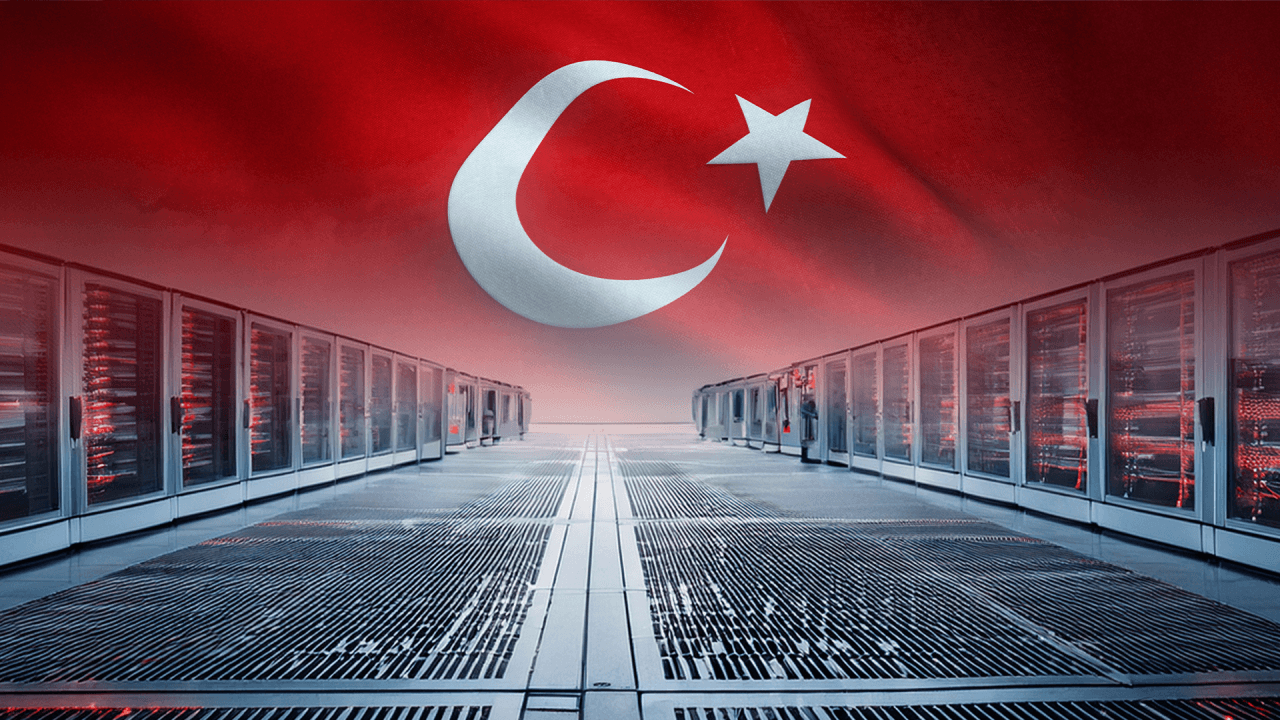
Within this changing global environment, Türkiye has emerged as one of the few countries attempting to simultaneously strengthen energy security, renewable capacity and digital infrastructure. Over the last two decades, according to TEİAŞ, Türkiye’s installed power capacity has increased significantly, rising from approximately 31 GW in 2002 to around 115 GW by 2024, reflecting a major expansion in national energy infrastructure. More importantly, renewable energy has become a central pillar of this expansion. Today, renewables account for nearly 60 percent of Türkiye’s installed electricity capacity, positioning the country among Europe’s leading renewable-energy markets.
Türkiye’s solar transformation has been particularly striking. According to TEİAŞ (2026), Türkiye’s installed solar power capacity has increased dramatically over the past decade, rising from approximately 40 MW in 2014 to more than 25,000 MW by the early 2020s, representing one of the fastest renewable energy expansions globally. This expansion reflects not only rising electricity demand but also a structural transformation in the country’s energy mix toward renewables. production but also the emergence of domestic manufacturing capacity, engineering expertise and renewable-energy supply chains. Wind energy has followed a similar trajectory. Installed wind capacity in Türkiye reached approximately 12 GW, while wind and solar together accounted for nearly 18 percent of the country’s total electricity generation in 2024. The country’s long-term objective is even more ambitious. Ankara aims to achieve 120 GW of combined solar and wind capacity by 2035.
The Strategic Link Between Energy and Digital Infrastructure
The intersection of digitalisation and energy is becoming increasingly visible in telecommunications infrastructure. Türkiye’s number of mobile base stations rose from around 5,000 in 2005 to more than 150,000 by 2024. At the same time, mobile data traffic has multiplied nearly fourfold within five years. This rapid growth creates a substantial energy burden. A single base station may consume between 10 and 30 MWh annually, making telecommunications infrastructure a major electricity consumer. Consequently, energy efficiency is no longer merely an environmental preference. It has become an economic and strategic necessity. Solar-powered base stations can reduce electricity consumption by approximately 35–40 percent, while hybrid systems in rural areas improve both energy resilience and digital access continuity. Artificial intelligence-based energy management systems are also transforming the sector. Since 2018, Turkish mobile operators implementing AI-supported optimisation systems have reportedly achieved energy savings of approximately 15–20 percent. This reflects a broader reality: future energy competition will depend less on production volume alone and more on intelligent management capability.
Artificial intelligence is rapidly becoming one of the most powerful drivers of global electricity demand. According to the IEA, electricity demand from data centres is growing four times faster than overall global electricity demand. At the same time, technology giants are increasingly struggling to reconcile AI expansion with climate commitments. Microsoft, for example, is reconsidering aspects of its 2030 clean-energy targets due to soaring AI-related electricity demand. This has profound geopolitical implications. Countries capable of combining: renewable energy, nuclear power, smart grids, AI-based optimisation systems, energy storage, semiconductor infrastructure and advanced cooling technologies will gain a decisive advantage in the emerging global order. In this context, energy infrastructure is becoming as strategically important as ports, trade routes and military bases.
Türkiye’s Strategic Opportunity
Türkiye possesses several structural advantages in this transformation. Its geographical location between Europe, Asia and the Middle East positions the country as a natural energy, logistics and digital connectivity hub. However, geography alone is not sufficient. The real strategic opportunity lies in integrating energy and digitalisation into a coherent national development model.
Türkiye’s future competitiveness will increasingly depend on expanding renewable-energy investments, strengthening domestic technology production, developing energy-storage systems,investing in smart-grid infrastructure, accelerating AI integration, expanding 5G infrastructure and improving digital resilience. Domestic production of solar panels, battery technologies, AI software and digital-energy systems should therefore be viewed not as isolated industries, but as components of a single strategic system.
Toward a Digital-Energy Power
Energy and digitalisation are no longer separate sectors. Digital technologies increase electricity demand, while digital systems simultaneously make energy production and consumption more efficient, resilient and sustainable. The countries that will lead the coming decades are those capable of managing this relationship intelligently. Türkiye has already built an important foundation through its renewable-energy expansion, infrastructure investments and digital transformation initiatives. Its strategic geography further strengthens its potential role within emerging global supply chains and energy corridors.
The next stage is more ambitious: transforming Türkiye from a transit country into a fully integrated digital-energy power. If supported by coherent long-term policies, technological investment and institutional coordination, Türkiye has the potential not only to secure its own energy future, but also to become one of the pivotal strategic actors of the emerging digital and energy age.