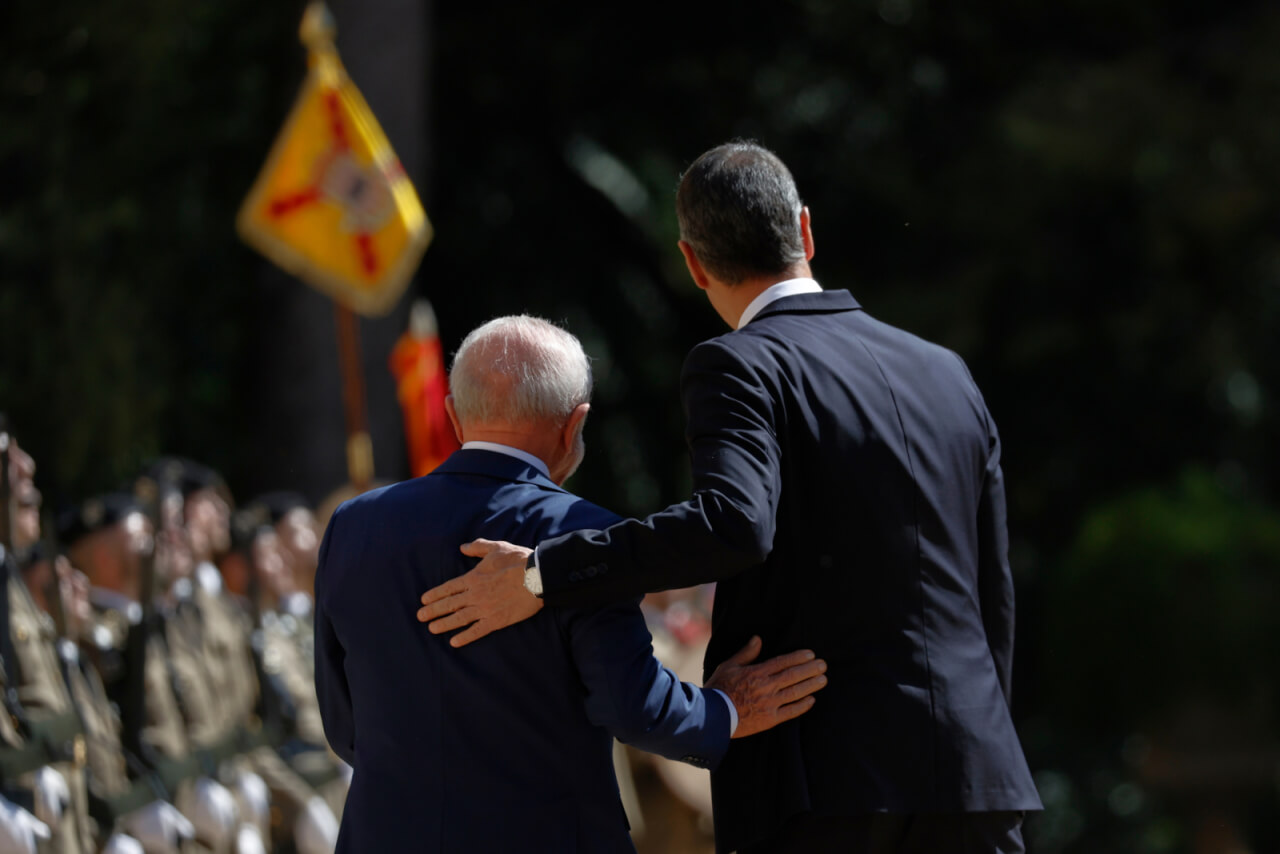
Two international crises erupted almost at identical times in late July of 2026, both of which have attracted significant attention on a global scale. The first of these crises involved the diplomatic crisis between two major Latin American states, Brazil and Argentina, which are traditionally on good terms with one another. The second crisis, in turn, was a major immigration crisis involving Spain and Morocco, based on a massive influx of migrants from mainland Morocco to the tiny Spanish North African enclave of Ceuta. The common element in both crises is that they are regional crises with broader global implications. The crises also have the common denominator in the sense that they highlight how progressive, left-of-centre governments come under serious pressure from the far right both on a regional and global scale.
Starting with the Latin American case, a dramatic diplomatic crisis broke out, leading to a downgrading of relations after Argentine President Javier Milei, a leader with strong far-right credentials and close links to President Trump, insulted Brazilian President Luiz Inácio Lula da Silva. Milei referred to Lula in an interview on an Argentine TV channel as “ex-convict”, “thief” and “corrupt”. The Brazilian Ambassador had already been recalled from Buenos Aires after Milei had criticized Lula whilst supporting the opposition’s presidential candidate, Flávio Bolsonaro, the son of the former president Jair Bolsonaro, as a part of a process to unseat Lula in the crucial October elections. Brazil decided that its Ambassador would not return to Buenos Aires and diplomatic relations between the two countries were downgraded and resumed at a lower level.
Turning to the North African and European case, the crisis involved Spain and Morocco. A migration crisis between the two countries had already taken place in 2021. On this occasion, however, the magnitude of the crisis was huge. An estimated 80,000 people, predominantly young men, have illegally crossed the border from Morocco into the Spanish enclave, Ceuta. The shocking images of Moroccans trying to make their way to Ceuta by sea were widely shared on social media, and the left-wing government of Pedro Sánchez came under strong criticism both within and outside Europe for its lax border controls and its liberal stance on immigration issues in general. It is important to state from the outset that the Spanish government displayed a firm stance during the Ceuta crisis. Migrants were initially allowed to land on the beach in Ceuta to avoid massive casualties. The vast majority of the migrants returned home after a short period, with only 2,000 to 5,000 migrants remaining in Ceuta.
The common dynamic underlying both crises is the role that far-right actors can play to discredit and undermine progressive political actors on a global scale. Donald Trump was inevitably involved in both crises. Arguably, his role was even more central in the Latin American context. Prior to the onset of the most recent crisis involving Lula and Milei, both Trump and his close regional ally Milei were attempting to interfere in Brazil’s electoral process long before the impending October elections. Indeed, one could think of the diplomatic crisis as a triangular crisis involving the US, Argentina and Brazil. Brazil’s foreign relations with the US experienced a significant setback as the US revoked the diplomatic visa of the Brazilian Ambassador in Washington DC. It is quite obvious that the United States played a critical role in the crisis not only by offering strong economic and diplomatic support to Milei, but also by supporting Flávio Bolsonaro, in the absence of the former president of Brazil, the far-right figure of Jair Bolsonaro who was under house arrest and barred from politics, for trying to instigate a coup after the 2022 elections. Trump had previously criticized the Brazilian government for treating Jair Bolsonaro unfairly and had demanded his release from prison. These actions, in turn, were interpreted by the Lula government as serious violations of the country’s sovereignty. Moreover, Trump’s attempt to impose a new 25% tariff on certain Brazilian imports, also generated widespread resentment from the Brazilian government.
Turning to the Spain-Morocco case, the role of Trump in the context of the Ceuta crisis was more of an indirect nature compared to the Brazil-Argentina episode. There is no firm evidence that the United States or Israel for that matter, both of which enjoy strong diplomatic relations with the Moroccan government, played a direct part in orchestrating the crisis. The various factors that led to the crises are quite complex and deserve separate treatment. What is important in the present context is that both Trump and the Israeli Prime Minister, Benjamin Netanyahu, were quick to capitalize and take advantage of the crisis to criticize the Sanchez government, once the crisis had erupted.
Trump heavily criticized the Sánchez government for its lenient approach to immigration control, in general, and weak handling of the crisis, in particular. Trump’s and Netanyahu’s criticisms were no doubt motivated by the fact that Pedro Sánchez had been a vocal critic of the war on Iran and the maltreatment of the Palestinians in Gaza. Sánchez was also under criticism for failing to increase Spain’s defense expenditures to the 5 % of GDP target proposed by Trump. Hence, it is interesting how geopolitical factors impinged and influenced the course of debate in what appeared to be a pure migration crisis.
Far-right parties in Europe, which in any case have been strongly supported by Trump and other key political figures such as Elon Musk, including the Spanish far-right, the Vox Party, took advantage of the horrible pictures of the massive influx of migrants landing on Ceuta. They instigated a massive disinformation campaign, which had no foundation, that massive numbers of people would find their way to mainland Spain and the rest of Europe. The strongest reaction to Spain came from Italy. Following the onset of the crisis, Prime Minister Giorgia Meloni’s government (with Meloni herself known as a hardline right-wing populist figure with a tough stance on immigration issues) partially suspended Schengen free-movement rules for arrivals from Spain. Italian actions provoked a strong reaction and backlash from Spain in return, leading to a set of counter measures in response to Italian policies.
Whilst the far-right reaction was understandable, mainstream parties were also quite critical of the Spanish government, especially in the early stages. Unlike the earlier migration crises involving Morocco and Spain in 2021 and Belarus and the EU member states in 2022, the European countries showed limited solidarity with Spain. Previously, countries like Morocco and Belarus had become the center of criticism and their recourse to “weaponization of migration”, by maintaining a relaxed approach to controls over their own borders. This time criticism has centered much more on the receiving end, Spain, than the sender country, Morocco, for allegedly failing to take effective action-a charge that, as indicated earlier, is not consistent with the evidence.
In conclusion, two very different crises, which took place ironically at the same time, signify the difficulties confronted by progressive leaders and governments, with their humanitarian approach to domestic and international problems, in a world where the far-right actors, led by the United States’s current administration, and significantly supported by their regional counterparts, play a dominant role. It is quite paradoxical that far-right leaders and parties are heavily nationalistic in their orientation and yet are quite global in their operations and form effective alliances with their counterparts in multiple regional spaces, as the discussion of the two interlocking crises amply illustrates.
Finally, it would be interesting to observe the electoral implications of these two important crises. What seems to be quite clear, however, is that the far right in Europe benefited from the Ceuta migration crisis, pointing towards a hardline approach to migration policy even on the part of traditionally centrist governments.