The history of international politics is not merely the history of wars, summits and treaties. It is equally the history of how great powers have advanced their strategic objectives through carefully sequenced diplomacy, economic incentives, security partnerships and negotiations designed to reshape political realities over time. The most consequential geopolitical losses are often sustained not on the battlefield but around the negotiating table. Wars may alter the balance of power; diplomacy determines whether that balance becomes permanent.
More than four decades in diplomacy, international energy policy and geopolitical negotiations have taught me one enduring lesson: states rarely seek major concessions in a single dramatic moment. They proceed incrementally.
Diplomatic history demonstrates that transformative agreements are rarely achieved overnight. Instead, negotiations tend to unfold gradually. Confidence-building measures come first, economic cooperation follows, and security coordination expands. Then, political expectations slowly develop. Eventually, questions once considered politically impossible become negotiable. Negotiation theory offers several names for this approach: incremental bargaining, salami tactics, or the familiar “foot-in-the-door” strategy. The terminology differs; the underlying logic does not.
For precisely this reason, every proposal currently being discussed with Türkiye should be evaluated within a broader strategic framework. Defence cooperation, energy partnerships, migration, Cyprus, NATO’s future posture…These are not isolated files. This is why I believe Türkiye is entering a period that demands exceptional strategic clarity. I do not raise this concern out of pessimism, nor do I subscribe to conspiracy theories. Rather, strategic foresight requires governments to prepare not only for what has already happened, but also for developments that could plausibly emerge as the geopolitical landscape evolves.
Today’s international environment is undergoing one of its most significant transformations since the end of the Cold War. Russia’s invasion of Ukraine has fundamentally reshaped European security. NATO is redefining its deterrence posture, defence planning and force structure. At the same time, the United States is progressively shifting its primary strategic attention towards the Indo-Pacific and the long-term challenge posed by China, while expecting European allies to assume greater responsibility for regional security.
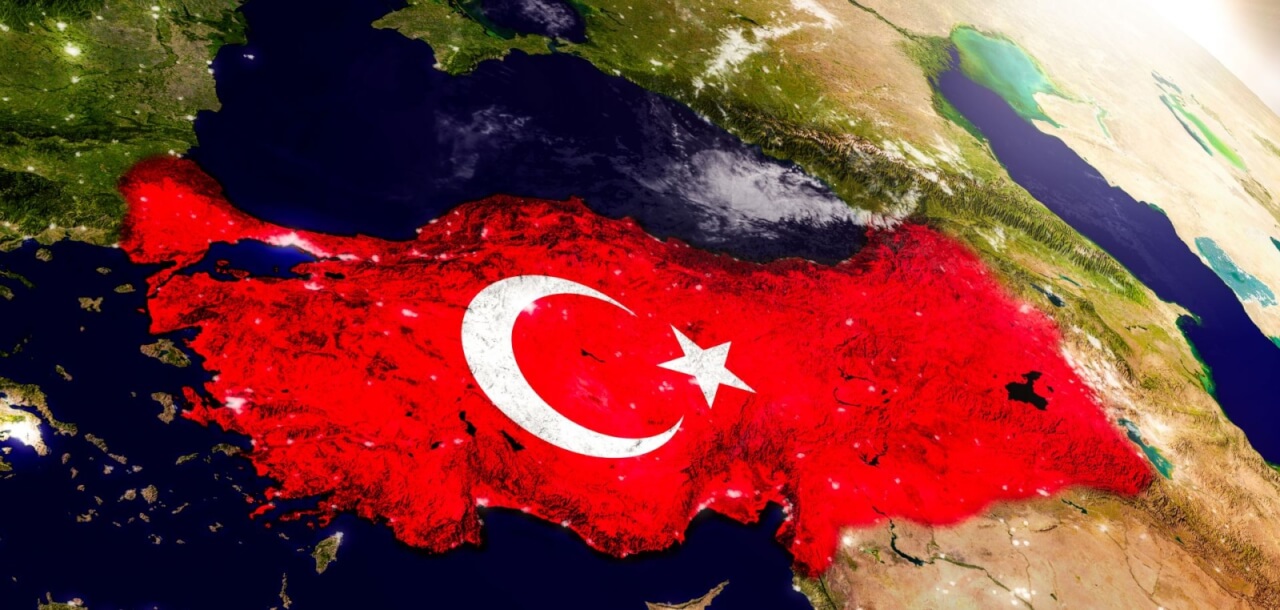
Against this backdrop, Türkiye has once again become indispensable. Its geography, military capabilities, defence-industrial base, control of the Turkish Straits, growing role as an energy transit corridor, and influence across the Black Sea, the Caucasus, the Eastern Mediterranean and the Middle East have all combined to restore Ankara to the centre of Western strategic calculations. This changing environment naturally creates opportunities.
Discussions surrounding the modernisation of Türkiye’s F-16 fleet have gained momentum. The possibility of renewed engagement with the F-35 programme periodically reappears. Defence-industrial cooperation, technology sharing and joint production receive increasing attention. The modernisation of the EU-Türkiye Customs Union is once again under discussion. Visa facilitation periodically returns to the agenda. Cooperation on Iraq, Syria and regional security appears to be improving.
Each of these developments could serve Türkiye’s national interests. Yet, international negotiations require governments to ask a more fundamental question: What might eventually be expected in return?
There is No Free Lunch in Geopolitics
International politics has never operated on sentiment. Washington does not formulate foreign policy out of affection. Neither does Brussels, nor Moscow, nor Beijing. This is not unique to Türkiye. It is the defining characteristic of international relations. States pursue interests rather than friendships. Consequently, improving relations with Western partners should not in itself generate either excessive optimism or unnecessary suspicion. The more useful approach is to understand the broader strategic context within which these positive signals emerge.
History suggests that major geopolitical bargains are rarely confined to a single issue. Negotiations today resemble multidimensional chess rather than isolated bilateral discussions. This is why developments in defence cooperation cannot be analysed independently from broader questions concerning the Eastern Mediterranean, Black Sea security, NATO’s evolving southern flank or Europe’s long-term strategic architecture. This observation should not be interpreted as evidence that any predetermined bargain already exists.
There is no public evidence that Türkiye has been presented with a comprehensive package linking defence cooperation to Cyprus or the Aegean. But prudent statecraft is not about reacting only after proposals formally appear. It is about recognising how strategic environments evolve before formal negotiations begin. Major powers increasingly treat them as interconnected components of a single strategic negotiation. Türkiye should do the same.
Why Cyprus Matters More Than Ever
Cyprus today represents far more than an unresolved political dispute. The island now occupies a pivotal position within the Eastern Mediterranean’s evolving strategic landscape: Natural gas discoveries, regional electricity interconnections, critical maritime routes, military facilities, and offshore energy development. Each of these factors has significantly increased Cyprus’s geopolitical value compared with previous decades. It should therefore surprise no one if new ideas concerning the island’s future security arrangements continue to emerge. Solutions such as alternative security mechanisms, discussions surrounding guarantor arrangements, greater involvement by international institutions, and closer integration between the Republic of Cyprus and Western security structures have already appeared in various policy debates and diplomatic discussions. For Ankara, the central challenge is not simply responding once proposals emerge. It is ensuring that Türkiye enters any future discussion with its own clearly articulated long-term strategic vision rather than reacting to initiatives developed elsewhere. In international politics, governments rarely influence outcomes merely by defending existing positions. They shape outcomes by defining the agenda before others do.
The Aegean: Competition is Becoming Structural
If Cyprus has become the strategic hinge of the Eastern Mediterranean, the Aegean is increasingly emerging as one of Europe’s most sensitive geopolitical theatres. Viewing these two issues separately is becoming progressively more difficult. They are linked not only geographically, but also through NATO’s evolving defence posture, Europe’s energy security, maritime competition and the wider balance of power across the eastern flank of the Alliance. Over the past two decades, Greece has pursued a remarkably consistent long-term strategy. Rather than treating disagreements with Türkiye exclusively as bilateral disputes, Athens has sought to embed them within broader European and transatlantic institutions. Enhanced defence cooperation with the United States, expanding military infrastructure from Alexandroupolis to Crete, closer political coordination within the European Union, new energy partnerships and increasing participation in multilateral regional initiatives all point towards a deliberate effort to strengthen Greece’s strategic position within the Western security architecture.
Whether one agrees with every aspect of that strategy is beside the point. The important observation is that it reflects long-term strategic planning rather than ad hoc diplomacy. Türkiye should draw an important lesson from this. Diplomatic engagement with Greece is undoubtedly desirable. Stable relations between neighbours serve both countries and contribute to wider regional security. Yet dialogue should never become a substitute for strategy. Successful diplomacy requires credibility, and credibility ultimately rests upon military deterrence, economic resilience, legal preparedness and political consistency.
In geopolitics, faits accomplis rarely emerge through dramatic confrontations. Each individual development may appear technical or limited in scope. Collectively, however, they can reshape the strategic environment and narrow the room for future negotiation. History repeatedly demonstrates that major geopolitical transformations often begin with seemingly modest administrative or diplomatic decisions.
Understanding Washington and Brussels Without Illusion
There is little value in either romanticising or demonising the policies of the United States or the European Union. Neither Washington nor Brussels formulates policy out of affection for Türkiye. Nor do they necessarily pursue policies designed simply to weaken it. They pursue their own national and institutional interests.
From Washington’s perspective, Türkiye occupies an indispensable position in the security of the Black Sea, NATO’s southern flank, the Middle East, energy transit routes and broader efforts to manage strategic competition with both Russia and China. For the European Union, Türkiye has become increasingly important in migration management, energy diversification, supply-chain resilience, regional stability and defence industrial cooperation.
These realities create significant opportunities for Ankara. They also create expectations. Every strategic partnership generates reciprocal interests. The critical question is not whether expectations will emerge. It is whether Türkiye enters future negotiations with sufficient strategic preparation to protect and advance its own priorities.
Türkiye’s leverage is greater than many assume. One recurring weakness in Turkish foreign-policy debates is the tendency to underestimate Türkiye’s own strategic assets. This is a serious mistake. Türkiye is already one of the principal geopolitical anchors of Eurasia. It possesses NATO’s second-largest military. It controls access to the Black Sea through the Turkish Straits and has developed one of the world’s fastest-growing defence industries. It is a pivotal transit country for the Middle Corridor connecting Asia and Europe. Few countries possess such a combination of geographic, military, economic and diplomatic advantages. Negotiations conducted from a position of self-doubt inevitably weaken bargaining power. The objective should never be to exaggerate Türkiye’s strengths, nor should they be underestimated.
Perhaps the most important question facing Türkiye is not what proposals may eventually arrive from Washington, Brussels or other capitals. The more fundamental question is: What strategic vision will Türkiye itself bring to the table? Countries that merely respond to other people’s initiatives inevitably negotiate from a reactive position.
Countries that define the agenda shape the negotiation itself. Rather than waiting for externally designed frameworks, Ankara should articulate a comprehensive strategic package encompassing a renewed vision for NATO’s Southern Flank; a Black Sea security initiative; a comprehensive Eastern Mediterranean energy and maritime cooperation framework; deeper defence-industrial partnerships based on joint innovation rather than simple procurement; cooperation in artificial intelligence, cyber security, critical minerals and emerging technologies; and an ambitious Middle Corridor strategy linking Europe, the Caucasus and Central Asia.
Such an approach would fundamentally change Türkiye’s negotiating position. Instead of discussing only what others expect from Ankara, the conversation would increasingly focus on what Ankara proposes for the future security architecture of the wider region. That is the difference between participating in geopolitics and shaping it.
Three Strategic Recommendations
First, Türkiye should never allow short-term military, economic or diplomatic gains to outweigh long-term strategic interests. Modern defence platforms, investment flows or improved relations with allies are valuable. But enduring questions relating to sovereignty, regional deterrence and national security deserve a much longer strategic horizon than any single procurement programme or political cycle.
Second, Cyprus, the Aegean, the Eastern Mediterranean, Black Sea security, defence industrial policy, energy strategy and relations with both the United States and the European Union should be treated as components of a single integrated national strategy rather than as separate policy files. Twenty-first-century diplomacy increasingly operates through interconnected negotiations, and Türkiye should organise its strategic thinking accordingly.
Third, Ankara should aspire not merely to respond to geopolitical developments but to shape them. Military capability remains indispensable, yet sustainable influence ultimately depends upon economic strength, technological innovation, institutional credibility, effective diplomacy and the capacity to generate strategic ideas that others find difficult to ignore.
Ultimately, the question is not whether Cyprus or the Aegean will inevitably become the subject of future geopolitical bargaining. No responsible analyst can make such a definitive claim. Nor is there publicly available evidence of a predetermined roadmap linking defence cooperation to specific political concessions. The more important observation is that periods of systemic geopolitical change invariably generate new negotiations, new expectations and new strategic opportunities for all major actors.
Türkiye should neither fear those negotiations nor approach them with complacency. It should approach them prepared. Statecraft has always been the art of distinguishing prudent caution from unwarranted alarm, and strategic confidence from strategic complacency. The real challenge facing Türkiye is therefore larger than defending its interests in Cyprus or the Aegean alone. It is a question of whether the country intends to become one of the architects of the emerging European and Mediterranean security order, or merely one of its participants. History tends to remember those states that arrive at the negotiating table with ideas, vision and strategic confidence, rather than those that simply react to proposals designed elsewhere. The central lesson of geopolitics remains remarkably consistent: if others draw the strategic map, they are also likely to define your place on it. Türkiye’s long-term objective should therefore be not simply to defend its position within an emerging order, but to help design that order itself.