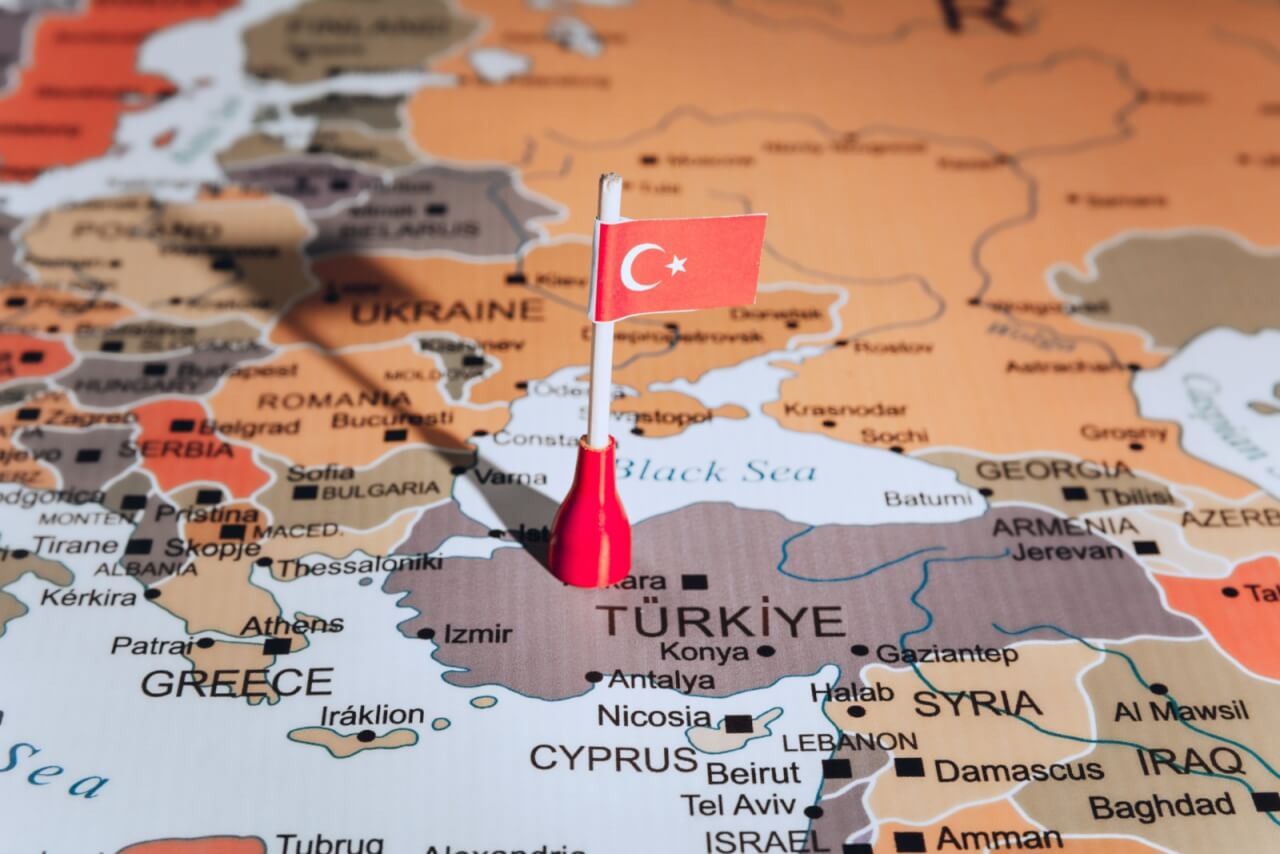
Former MI6 chief and former UK ambassador to Ankara Richard Moore’s recent description of Türkiye as a “very consequential country” is not simply a diplomatic courtesy. In his Wall Street Journal interview, Moore reportedly stressed that Türkiye’s geography makes it “utterly critical” to all its neighbours, positioning the country as a bridge between Europe, Asia and the Middle East. Coming from a figure who knows both British intelligence and Turkish politics closely, the remark captures a wider strategic reality, and Türkiye is becoming harder to ignore at precisely the moment when its domestic political system is becoming harder to challenge. This is the paradox that Western governments will increasingly have to confront. Turkey’s geopolitical value is rising, but so is the ability of President Recep Tayyip Erdoğan to convert that external indispensability into domestic consolidation.
The timing matters. As Western and regional actors look towards a possible Iran-related settlement, Ankara’s role is likely to grow. Türkiye borders Iran, Iraq and Syria, remains anchored in NATO, speaks to Tehran, has rebuilt ties with the Gulf, shapes northern Syria, and influences the energy, migration and trade corridors Europe increasingly needs. Any post-crisis arrangement for Iran will be difficult without Türkiye. Yet this comes as Türkiye’s domestic politics face sharp institutional intervention. The “mutlak butlan” debate, the doctrine of absolute nullity that could void the leadership process of the Republican People’s Party, Türkiye’s main opposition, is not a narrow legal quarrel. It reflects courts shaping opposition politics while international reactions remain limited.
The Indispensability Premium
Türkiye’s strategic premium rests on the convergence of several crises. The first is the Middle East after the Iran war. If Washington and Tehran move towards a limited understanding, Türkiye’s position becomes valuable not because Ankara can dictate the outcome, but because many of the secondary effects of any settlement run through Turkish interests. Iran’s regional posture, Iraq’s stability, Syria’s armed landscape, sanctions enforcement, energy routes, refugees and militia networks all touch Ankara directly. Türkiye’s preferred outcome is neither the collapse of Iran nor the unchecked expansion of Iranian influence. A collapsing Iran would generate border insecurity, economic disruption and new power vacuums in Iraq and Syria. An empowered Iran, by contrast, would strengthen networks and actors that Ankara sees as constraining its regional room for manoeuvre. Türkiye’s interest therefore lies in managed de-escalation and enough pressure to limit Iran’s disruptive reach, but enough stability to prevent a regional implosion.
The second theatre is the Black Sea. Since Russia’s invasion of Ukraine, Türkiye has occupied an unusual but useful position. It has supplied Ukraine with military equipment, especially drones, closed the Turkish Straits to warships under the Montreux Convention, and yet preserved a working relationship with Moscow. This has often irritated Western capitals, but it has also made Ankara useful in ways that more straightforwardly aligned allies are not. Türkiye is NATO’s most important Black Sea actor by geography. It controls access between the Mediterranean and the Black Sea, sits near the South Caucasus, and connects European, Russian, Ukrainian and Middle Eastern security questions. In a period when Russia is testing NATO’s eastern flank, Türkiye’s position becomes even more consequential.
The reported Russian drone strike into Romanian territory and the strong French, British and NATO reactions underline the emerging European mood. France’s foreign minister described the drone incursion into Romanian airspace as irresponsible, and the wider response shows that continental Europe is preparing for a longer period of Russian risk. Romania, Poland, the Baltic states and the Black Sea region are no longer peripheral to European security planning; they are becoming central to it. Türkiye may not automatically join a future European confrontation with Russia, and Ankara will continue to avoid being locked fully into any single Western line. But even if it does not directly stand beside continental Europe and the UK in every scenario, its defence industry, drone capacity, naval posture, Black Sea geography and ability to complicate Russian calculations make it an important balancing actor. For Europe, Türkiye may be difficult, but in a more dangerous security environment, difficult partners can still be indispensable.
The third theatre is connectivity. The Middle Corridor linking China and Central Asia to Europe through the Caspian Sea, the South Caucasus and Türkiye has become more important as Russia becomes a more problematic route and as Europe searches for alternatives in trade, logistics and energy. Türkiye’s energy role is not based primarily on production, but on passage. It connects the Caspian, the Black Sea, the Eastern Mediterranean, the Middle East and European markets. In a world of sanctions, chokepoints, war risks and disrupted supply chains, corridor power matters. This is especially important given the vulnerability of energy routes in and around the Gulf. Turkey’s economy remains weak, with inflation, currency volatility and external financing needs limiting its room for manoeuvre. But weak economies can still sit on powerful geographies. President Erdoğan understands that Türkiye does not need to be economically dominant to be strategically necessary. It only needs to control enough routes, relationships and security functions to ensure that external actors hesitate before applying serious pressure.
The fourth theatre is Syria and the silently continuing struggle against ISIS. Western governments remain uneasy about Türkiye’s operations against Kurdish forces linked to the PKK, particularly given the role of the Syrian Democratic Forces in the anti-ISIS campaign. Yet no credible Syria policy can bypass Türkiye. Ankara controls significant influence in northern Syria, shapes border security, manages refugee pressure, affects the balance among armed groups, and remains a direct stakeholder in any post-conflict architecture. If ISIS reconstitutes itself amid instability, if Syria fragments further, or if external powers reposition after an Iran-related settlement, Türkiye will become even more central. Again, the pattern is clear; Türkiye’s importance does not derive from being easy to work with, but from being impossible to ignore.
The Home Front Logic of Erdoğan
This growing geopolitical value creates a domestic opportunity for Erdoğan. His emphasis on strengthening the “home front” should be read not merely as nationalist rhetoric, but as a governing logic. External crises produce vocabularies of unity, security and national survival, which can be turned inward to justify institutional restructuring, tighter control over political competition and a narrower space for opposition. Pressure on the CHP, legal cases against opposition municipalities and possible judicial intervention in party politics all point in this direction. The state need not ban opposition if it can fragment, exhaust and delegitimise it. Options include extending or resetting Erdoğan’s term, transferring municipal authority to governors, and offering Kurds or Alevis symbolic representation within a more centralised, securitised and “local and national” order.
This is where Türkiye’s geopolitical premium becomes politically consequential. Western governments may continue to express concern overrule of law, judicial independence and opposition rights. But Erdoğan knows the difference between criticism and pressure. If Ankara is needed for Black Sea deterrence, Iran diplomacy, Middle Corridor connectivity, energy diversification, migration management, Syria and counter-ISIS policy, then external actors are likely to compartmentalise. They will cooperate strategically and complain politically. Erdoğan has spent two decades exploiting exactly this gap. The more dangerous the surrounding environment becomes, the easier it is for him to argue that Türkiye requires unity, discipline and continuity at home.
Working with Ankara Without Writing a Blank Cheque
None of this means that Western governments can afford to downgrade Türkiye. On the contrary, Türkiye’s importance is likely to increase in the coming years. A Europe preparing for long-term Russian pressure will need Ankara in the Black Sea and in defence-industrial calculations. Any serious discussion of energy diversification and east-west connectivity will need Türkiye. A post-war Middle East settlement involving Iran, Iraq or Syria will need Turkish participation. Counter-ISIS policy cannot be designed as if Türkiye were an external observer. The challenge, therefore, is not whether to engage Türkiye. The challenge is how to engage it without turning strategic necessity into political indulgence.
The central point is that Türkiye’s partners must distinguish between the country’s structural importance and Erdoğan’s domestic project. They should work with Ankara where interests overlap, especially on Black Sea security, energy corridors, Syria, counter-terrorism and regional de-escalation, without signalling that Türkiye’s strategic value gives its leadership a blank cheque at home. Quiet diplomacy has its place, but silence carries consequences. Richard Moore’s remark matters because Türkiye is becoming more consequential: its geography, defence industry, corridors and crisis diplomacy are gaining value. Yet this may also entrench presidential power, weaken the opposition and redesign politics in the name of resilience.