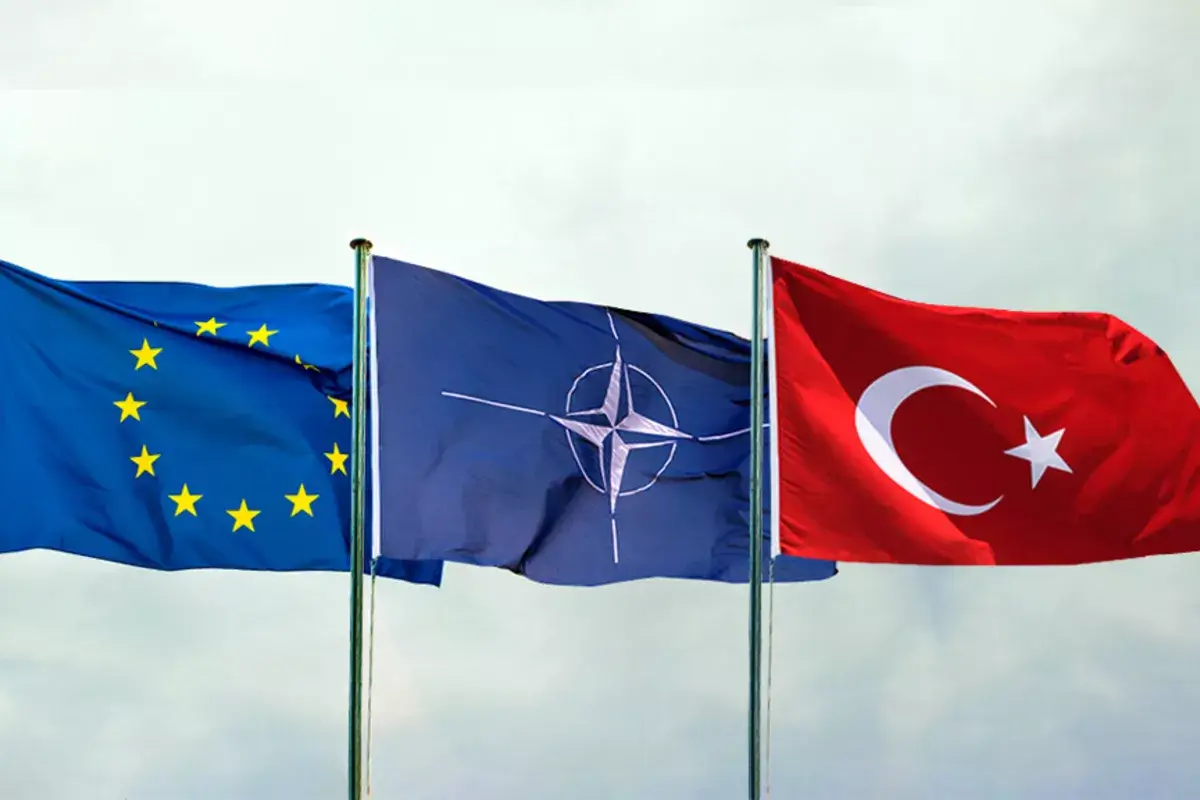
There is little doubt that Türkiye’s strategic value has increased considerably in recent years. Ankara enters the NATO summit week not merely as a host capital, but as a state increasingly rediscovered by Europe as an indispensable actor in the architecture of regional and continental security. The high-level visit to Ankara by EU High Representative and Commission Vice-President Kaja Kallas, Enlargement Commissioner Marta Kos, and Internal Affairs and Migration Commissioner Magnus Brunner, shortly before the summit, was therefore not a routine diplomatic gesture. It reflected a broader recalibration in European thinking. According to the joint EU–Türkiye statement, the parties discussed regional security, migration, economic cooperation, connectivity and shared strategic challenges. This diplomatic choreography reveals an important shift; Türkiye is no longer viewed by Brussels solely through the narrow prism of a stalled accession process, but increasingly through the wider lenses of defence, migration management, energy resilience, transport corridors and geopolitical stability.
This changing perception creates an important diplomatic opportunity for Ankara. Türkiye has NATO’s second-largest military force, a decisive position in the Black Sea, control over the Turkish Straits under the Montreux Convention, open channels with both Ukraine and Russia, and an increasingly visible defence industry. It is also one of the world’s largest refugee-hosting countries. Together, these factors make Türkiye a central actor for European security, migration management and regional stability. For the EU, Türkiye is no longer merely a “difficult candidate country”; it is also a security partner that cannot be easily ignored.
Yet this growing importance should not be confused with unlimited leverage. The fact that Türkiye matters more does not mean that every door Ankara wishes to open will automatically open. On the contrary, the more visible Türkiye’s strategic value becomes, the more visible the boundaries of that value also become. This is the central paradox of Türkiye’s current position. It is needed by the West but not fully trusted by it; it is courted as a security partner but not welcomed back onto the EU accession track with genuine political enthusiasm; it is valued within NATO, but still treated with caution in some European defence initiatives. Türkiye’s importance is therefore real, but conditional. It generates bargaining power, but not a blank cheque. It creates diplomatic visibility, but not necessarily institutional integration.
Strategic Necessity Without Institutional Re-Anchoring
The EU’s recent engagement with Ankara demonstrates this ambiguity. The visit by Kallas, Kos and Brunner signalled a desire to revitalise relations at a time of geopolitical volatility. Yet this has not produced concrete progress on the two issues Ankara regards as central; visa liberalisation and the modernisation of the Customs Union. For Türkiye, these are the real tests of whether the EU is willing to move beyond transactional cooperation. Defence, migration, transport and energy dialogue can continue, but visa-free travel and an updated Customs Union would require a deeper political decision. Both files are not merely technical dossiers; they are symbolic markers of trust, recognition and institutional commitment. So far, that threshold has not been crossed.
The European Parliament’s Türkiye report adopted on 17 June 2026 illustrates this constraint clearly. Prepared by rapporteur Nacho Sánchez Amor, it was approved by 381 votes in favour, 107 against and 171 abstentions. The result shows both a strong consensus around criticism of Türkiye’s democratic trajectory and continuing division over how Europe should deal with Ankara. More importantly, the report makes clear that Türkiye cannot return to the EU accession path under current political conditions without serious reforms in the rule of law, democracy, human rights and fundamental freedoms. This captures the core contradiction in EU–Türkiye relations. In this regard, Brussels needs Ankara on migration, security, energy, connectivity and regional diplomacy, but remains unwilling to reopen the accession horizon in a credible way. The result is a functional but fragile, file-based relationship that enables cooperation without producing deeper strategic trust.
NATO Relevance, Defence Capacity and the Limits of Trust
A similar dynamic exists within NATO and Türkiye’s relations with the United States. A pragmatic relationship between Donald Trump and Recep Tayyip Erdoğan may provide Ankara with certain short-term advantages. Leader-to-leader communication can accelerate files that might otherwise remain blocked within bureaucratic structures. Issues such as defence industry restrictions, F-16 and F-35 disputes, sanctions linked to the S-400 crisis, Syria policy, energy diplomacy and NATO burden-sharing all become more manageable when personal channels are active. However, a long-term national strategy cannot be built solely on personal chemistry between leaders. The institutional memory of Washington, the position of Congress, the Pentagon’s threat assessments, and the broader architecture of NATO security planning all matter. Türkiye may benefit from a favourable atmosphere in the White House, but this cannot substitute for institutional trust.
Türkiye’s military role inside NATO remains substantial. Turkish officials argue that NATO is adapting to a new security environment in which the United States is not withdrawing from the Alliance but pushing European allies and Canada to assume greater responsibility. Ahead of the Ankara summit, Defence Minister Yaşar Güler underlined Türkiye’s importance to NATO and criticised the exclusion of such military capacity from some European defence initiatives. This is not merely rhetorical. It is true that Turkish defence exports have tripled since 2021, reaching around 10 billion dollars, including approximately 5.6 billion dollars to Europe and the United States. Türkiye now supplies military products to nearly 40 countries and aims to double defence exports within two years.
These figures show that Türkiye is no longer only a consumer of Western security, but increasingly a producer of military capacity. Turkish drones, armoured vehicles, naval platforms, missiles and electronic systems have entered the global defence market, while firms such as Baykar, Turkish Aerospace Industries, ASELSAN and Roketsan have made defence industrialisation central to Türkiye’s search for strategic autonomy. This gives Ankara new bargaining power as Europe rearms and NATO debates higher defence spending targets. Yet the limits remain still visible. Türkiye’s defence industry still faces technological dependencies, export-control constraints, reputational risks and political barriers in European markets. More importantly, defence capacity does not automatically translate into political trust.
The Constraints of Multi-Vector Diplomacy
The limits of Türkiye’s geopolitical leverage are even clearer in the Russia file. Türkiye’s relations with Russia are not reducible to either partnership or rivalry. They are a complex mixture of competition, dependence and tactical cooperation. In Syria, Libya, the South Caucasus and the Black Sea, Ankara and Moscow often stand on opposite sides of the battlefield or diplomatic table. Yet in energy, tourism, trade, nuclear cooperation and regional crisis management, they remain deeply connected. This is why Türkiye has avoided placing itself fully within an anti-Russian NATO line. From Ankara’s perspective, this is not simply opportunism; it is also a rational response to geography, energy dependence and regional exposure. Türkiye cannot change the fact that Russia is a Black Sea power, a military actor in Syria, a player in the Caucasus and a major energy supplier.
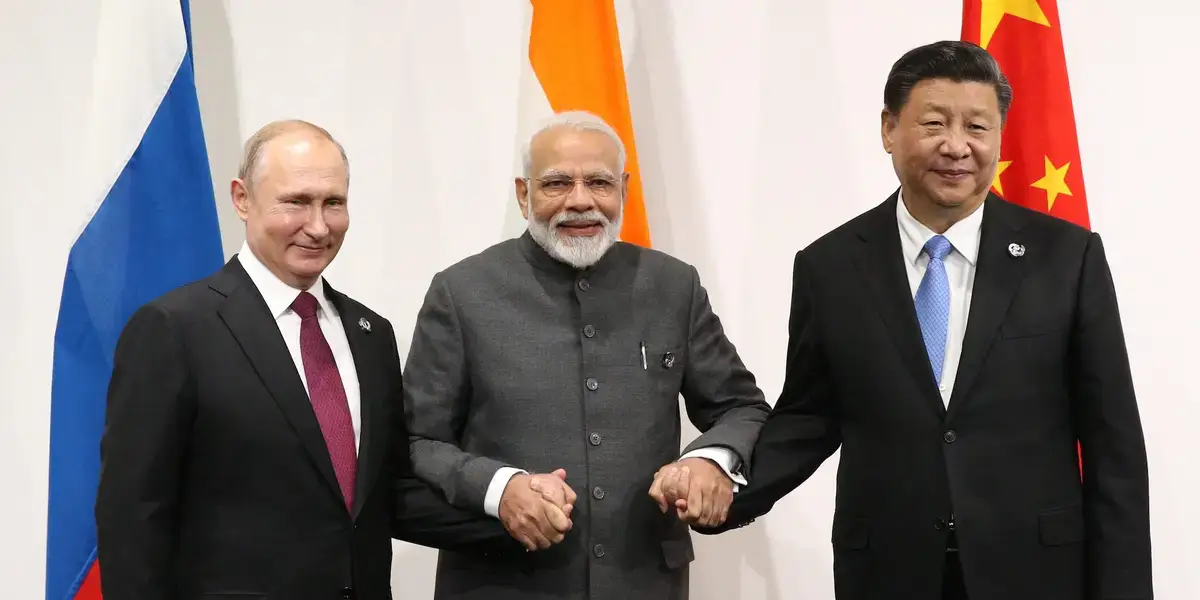
China adds another layer to this balancing problem. Ankara wants to deepen, but controlled economic, technological, infrastructure and trade relations with Beijing without allowing these ties to undermine its position in NATO or its economic links with Europe. This is understandable, indeed. Türkiye is searching for investment, market diversification and technological partnerships at a time when the international economy is becoming more fragmented. Yet the room for multi-vector diplomacy is shrinking. As great-power competition hardens, middle powers are increasingly asked to clarify where they stand. Türkiye’s attempt to maintain strong security ties with NATO, transactional cooperation with Russia and selective economic engagement with China is strategically understandable, but politically costly. The old metaphor of “playing two acrobats on one rope” is no longer sufficient, because the rope itself is becoming thinner.
From Relevance to Credibility
Türkiye therefore needs more than a balancing strategy. The challenge is not to abandon multi-dimensional foreign policy, but to make it predictable, institutional and credible. Ankara must be reliable within NATO, structured with the EU, cautious with Russia, selective with China and stabilising in its own neighbourhood. This requires not only tactical flexibility, but institutional statecraft, legal predictability and diplomatic consistency.
Türkiye’s importance to NATO and the EU is undeniable, but it is not unlimited. Geography, military capacity, defence industry, migration management and diplomatic reach make Ankara indispensable in many files. Yet indispensability is not trust, and leverage is not integration. Türkiye’s strategic relevance gives it influence, but that influence must be converted into durable diplomatic capital. Otherwise, Ankara risks remaining the actor everyone needs, but no one fully trusts. In the world now taking shape, being important is no longer enough; importance becomes value only when accompanied by credibility, consistency and strategic discipline.