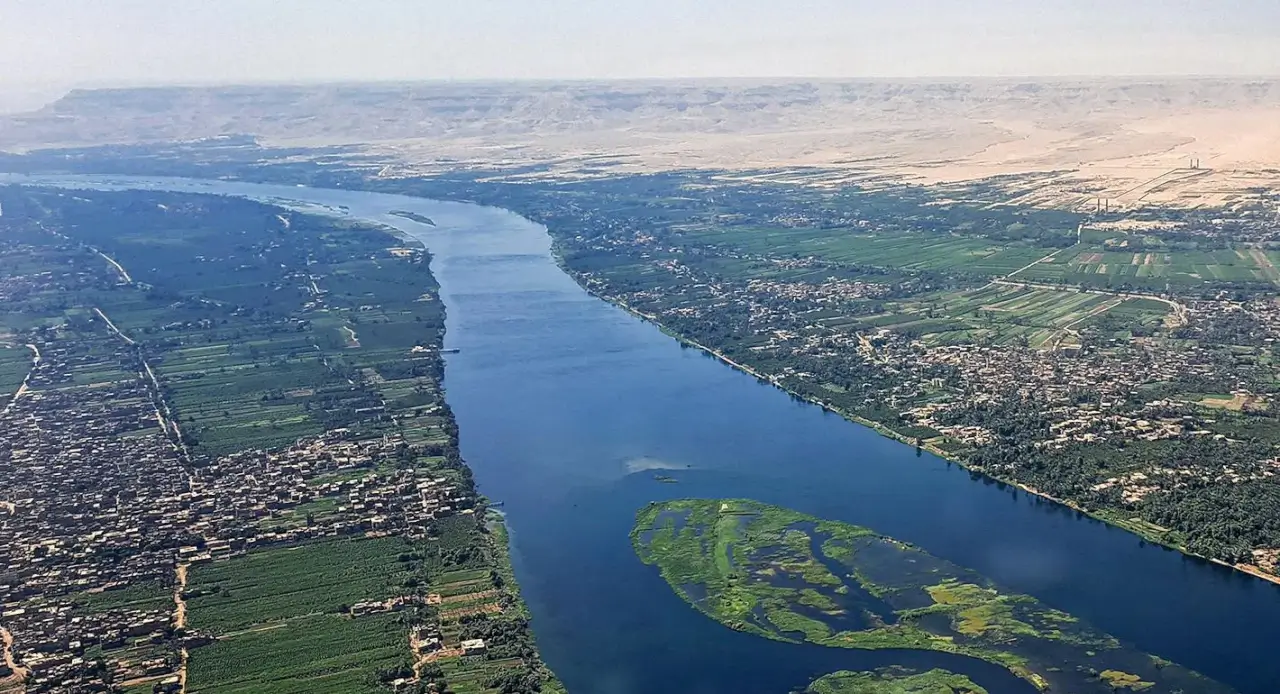
For years, analysts warned that the twenty-first century would be defined not by wars over ideology, territory, or energy, but by conflicts over water. As climate change intensifies droughts, populations grow, and demands on finite resources increase, access to freshwater is becoming one of the defining security challenges of our time. Few places have seemed more vulnerable to such a conflict than the Nile Basin.
The long-running dispute between Egypt and Ethiopia over the Grand Ethiopian Renaissance Dam (GERD) has often been portrayed as one of the world’s most dangerous water conflicts. For more than a decade, observers warned that competition over the Nile could trigger diplomatic breakdown or even military confrontation. Yet despite years of tension and recurring diplomatic crises, war has not occurred. That fact alone deserves closer attention.
These questions were at the center of discussions during a recent international symposium, co-organized by the Ethio-American Chamber of Commerce, Johns Hopkins University, and George Mason University’s Carter School for Peace and Conflict Resolution, which explored not only the future of the GERD itself, but also the wider challenges of regional integration, water security, environmental pressures, and conflict prevention. What emerged most clearly from those discussions was that the Nile should not simply be viewed as a potential source of conflict. It should also be understood as a test case for the future of diplomacy in an era of growing resource scarcity.
The most important lesson emerging from the Nile dispute is not that Egypt and Ethiopia have solved their differences. They have not. Significant disagreements remain over the operation of the dam, particularly during periods of drought. Rather, the lesson is that even when a resource is viewed as existential, diplomacy remains possible. The Nile demonstrates that conflicts over shared resources need not inevitably lead to violence. Under the right conditions, they can become catalysts for cooperation, negotiation, and institution-building.
More importantly, the Nile illustrates an emerging form of what might be called preventive peacebuilding. Too often, peacebuilding is viewed as something that begins after violence erupts. Yet some of the most successful examples of conflict prevention involve creating institutions, communication channels, and cooperative mechanisms before disputes escalate into confrontation. Preventive peacebuilding seeks to build the political, institutional, and social foundations that enable societies and states to manage disagreements without resorting to violence. Rather than waiting for conflict to occur, it invests in confidence-building measures, joint problem-solving mechanisms, information-sharing arrangements, and habits of cooperation that reduce the likelihood of escalation. In this sense, water diplomacy is far more than a technical exercise. River commissions, data-sharing arrangements, monitoring mechanisms, and regular diplomatic consultations are themselves forms of preventive peacebuilding because they create the relationships and institutional infrastructure needed to manage disputes before they become crises.
Why the Nile Matters
The stakes in the dispute could hardly be higher.
For Egypt, the Nile is nothing less than a lifeline. More than 95 percent of the country’s population lives along the river and its delta, and Egypt depends on the Nile for most of its freshwater needs. Agriculture, industry, energy production, and everyday life are all intimately tied to the river. Any significant reduction in water flow is therefore viewed not simply as an economic challenge but as a potential threat to national survival. It is understandable, therefore, that Egyptian policymakers approach developments on the Nile through a lens of security and vulnerability.
Yet the Nile is also a lifeline for Ethiopia, albeit in a different way. While Ethiopia contributes most of the Nile’s waters through the Blue Nile, for decades it remained largely excluded from the arrangements that governed the river’s use and was unable to fully harness its own water resources due to poverty, conflict, financial constraints, and competing national priorities. For many Ethiopians, the GERD represents a long-overdue opportunity to translate a natural resource into human development. Nearly half of the country’s population still lacks reliable access to electricity, and energy poverty continues to limit educational opportunities, healthcare access, economic productivity, and social mobility, particularly in rural communities. The GERD promises not only power generation and economic growth but also the possibility of addressing deeper developmental challenges that have constrained Ethiopia’s progress for generations.
This is what makes the dispute so complex. Both countries view the Nile through an existential lens, though in different ways. For Egypt, the concern is protecting a vital source of water upon which millions already depend. For Ethiopia, the aspiration is to use the river to overcome longstanding barriers to development and improve the lives of millions who have yet to benefit fully from its potential. Recognizing these dual realities does not diminish either side’s concerns. Rather, it helps explain why the dispute has proven so difficult to resolve and why any durable solution must acknowledge both downstream security and upstream development as legitimate and interconnected objectives.
Beyond Zero-Sum Thinking
The conventional framing of the conflict has often been misleading. Much of the public debate has treated the Nile as a zero-sum contest in which one country’s gain must come at another’s expense. Under this logic, Ethiopia’s development necessarily threatens Egypt’s water security, while Egypt’s demands for guarantees constrain Ethiopia’s sovereign right to utilize its own resources. Yet decades of research on transboundary water management suggest that such thinking is rarely productive.
Shared river systems are not fixed assets to be divided once and for all. They are dynamic ecosystems that require continuous cooperation. Successful water diplomacy, therefore, depends not on determining winners and losers but on creating arrangements through which all parties perceive benefits. The Mekong, Rhine, and several Southern African river systems demonstrate how cooperative management can generate outcomes impossible under purely competitive approaches. Countries that initially viewed each other as rivals gradually came to recognize that joint planning, information sharing, and coordinated management produced greater security for everyone involved.
The Nile Basin presents a similar opportunity. Instead of asking who controls the river, the more constructive question is how all riparian states can benefit from its sustainable management.
The Missing Ingredient: Trust
At the heart of every successful water agreement lies a factor that is often overlooked in technical discussions: trust. Technical expertise can calculate water flows, design infrastructure, and draft agreements. But none of these tools can substitute for political confidence between parties. The GERD dispute has frequently been characterized by a deficit of trust rather than a deficit of technical solutions.
Egypt has sought assurances that future dam operations will not jeopardize downstream water security. Ethiopia has resisted arrangements that it believes could limit its sovereign control over the project. These positions are not simply technical disagreements; they reflect deeper concerns about vulnerability, power, and historical experience. Many conflicts that appear material are ultimately shaped by perceptions, narratives, and relationships. Water conflicts are no exception. Progress, therefore, requires more than technical negotiations. It requires mechanisms that build confidence over time through transparency, communication, monitoring, and institutional cooperation.
The absence of a comprehensive agreement governing the long-term operation of the GERD illustrates this challenge. Although Egypt, Ethiopia, and Sudan signed a Declaration of Principles in 2015 that established broad commitments to cooperation, information sharing, and the peaceful resolution of disputes, the parties have not reached a binding agreement on several critical operational issues, particularly regarding water releases during prolonged droughts. As a result, the dispute today is less about the physical availability of water than about predictability, transparency, and trust. The technical questions are important, but they remain inseparable from the broader political challenge of building confidence between upstream and downstream states.
History offers powerful examples of this logic. Perhaps the most remarkable is the Indus Waters Treaty between India and Pakistan. Signed in 1960, the agreement survived multiple wars, military crises, and decades of political hostility between the two nuclear-armed rivals. While relations between New Delhi and Islamabad frequently deteriorated, the institutional framework governing the Indus River system endured because both sides recognized their mutual dependence on a shared resource.
The lesson is not that water agreements eliminate broader political disputes. Rather, they create channels of communication and cooperation that help prevent those disputes from escalating further. The Nile process may ultimately prove valuable for similar reasons. In many ways, the future of Nile diplomacy will depend less on engineering and more on relationship-building.
A Model of Regional Ownership
Another striking feature of the GERD dispute is what it reveals about regional diplomacy. Although external actors have occasionally offered mediation support, the fundamental challenge remains one that can only be resolved by the countries directly affected. No outside power can determine the future of the Nile. Sustainable solutions must ultimately emerge from regional ownership and regional consensus.
This principle extends far beyond East Africa. Whether in the Middle East, Central Asia, South Asia, or the Horn of Africa, durable peace is rarely imposed from outside. It is constructed by stakeholders who possess both the incentive and the legitimacy to sustain agreements over the long term. The Nile Basin, therefore, offers an important reminder that local and regional actors are not merely participants in conflict resolution. They are often its most essential architects.
Lessons for a Warming World
The broader significance of the GERD dispute extends well beyond the Nile Basin and lies in what it tells us about the future of resource diplomacy in a warming world.
Climate change is expected to increase pressure on freshwater resources across the globe. Rivers that cross national boundaries, from the Indus and the Jordan to the Tigris-Euphrates and the Amu Darya, are likely to become increasingly important arenas of diplomacy. The question facing policymakers is therefore straightforward: will water become a source of conflict or a platform for cooperation?
The answer is not predetermined. History shows both conflict and cooperation, but cooperation among states sharing river basins has been far more common than warfare. Even adversaries frequently discover that collaboration is preferable to confrontation when managing shared resources. Water security depends not only on infrastructure and legal agreements but also on institutions, trust, and habits of cooperation that transform competition into collaboration.
The most important lesson of the Nile may therefore be that peace is not built only through peace agreements. Sometimes it is built through dams, river commissions, monitoring mechanisms, technical exchanges, and institutions that encourage cooperation long before violence occurs. This is the essence of preventive peacebuilding.
As climate change intensifies competition over water, food, energy, and other scarce resources, the world will need more than crisis diplomacy. It will need mechanisms capable of transforming shared vulnerabilities into shared interests. The Nile dispute reminds us that peace is not the absence of disagreement. It is the capacity to manage disagreement without violence. In a warming world, water diplomacy may become one of the most important forms of peacebuilding we possess.