The signing of the framework agreement between Armenia and the United States on the Trump Route for Peace and Prosperity (TRIPP) on June 4, 2026, and the ruling Civil Contract party’s victory in Armenia’s June 7 parliamentary elections have opened a window of opportunity to advance Armenia-Türkiye normalization. Türkiye, in coordination with the United States, is well positioned to seize this moment and help move the region from frozen conflict toward normalization.
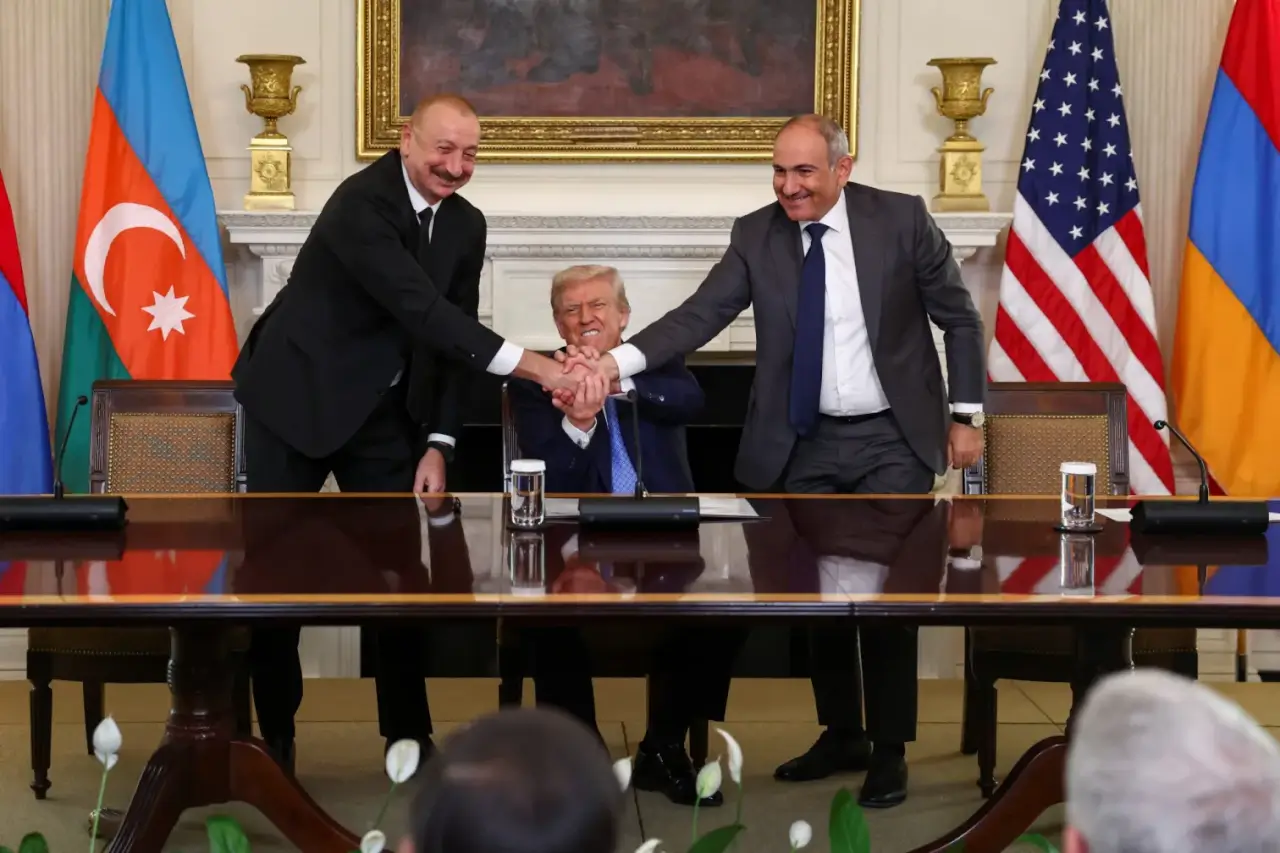
TRIPP emerged from the August 2025 Washington meeting, where Armenia and Azerbaijan also initialed a peace agreement, giving fresh momentum to regional normalization. Since then, TRIPP has been moving toward implementation. The framework agreement signed on June 4 established the basis for developing and operating the route. This was followed in early July by a visit from engineers from the U.S. consulting firm AECOM, who surveyed the proposed site for rail and other infrastructure development. On July 16, the Armenian government approved a draft law to ratify the framework agreement and submitted it to the Constitutional Court. These steps were encouraging for both the Armenia-Azerbaijan and Armenia-Türkiye normalization processes, as all sides view TRIPP as part of the region’s broader transition from conflict and isolation toward connectivity and cooperation.
Yet normalization has not proceeded as some may have expected, and the momentum generated in Washington is fading. The main hurdle to signing the peace agreement is Azerbaijan’s insistence that Armenia amend its constitution. The dispute centers on the preamble’s reference to Armenia’s 1990 Declaration of Independence, which cites a 1989 decision supporting the reunification of Soviet Armenia and Nagorno-Karabakh.
Armenia’s prime minister had stated that amending the constitution had been part of the ruling party’s election platform and promised to publish a draft of the new constitution by the end of 2026. But despite its victory, the Civil Contract party did not secure the two-thirds majority in parliament needed to approve a new constitution. Even if the ruling party can persuade some opposition MPs to support it, final approval would still require a nationwide referendum, whose outcome is far from guaranteed given significant public opposition.
That, in turn, has complicated Armenia-Türkiye normalization, as Ankara considers a peace agreement between Armenia and Azerbaijan a prerequisite for progress. Relations between Yerevan and Ankara have improved since 2022. In July 2022, the two sides agreed to open their border to third-country nationals and diplomatic passport holders as a first step toward full normalization. Since then, their special representatives have met several times, discussed rehabilitating the Gyumri-Kars railway, and agreed to permit direct trade. But the talks have produced no major breakthrough, and four years later, the border remains closed. This has created a vicious circle: without constitutional change, there is no Armenia-Azerbaijan peace agreement; without that agreement, Armenia-Türkiye normalization cannot advance; and without progress on either track, the momentum generated by the August 2025 Washington summit risks being lost. Meanwhile, the U.S. midterm elections in November may shift the Trump administration’s attention toward domestic politics, leaving roughly four months to break the deadlock and restore momentum.
Breaking this vicious circle will require sustained diplomatic engagement. Given the domestic political constraints in Armenia, there are only two realistic paths forward. Either Azerbaijan drops its demand that Armenia amend its constitution, sign and ratify the peace agreement, and stop blocking Armenia-Türkiye normalization, or Türkiye implements the July 2022 agreement and then proceeds toward full normalization without waiting for the Armenia-Azerbaijan peace agreement to be signed.
As Azerbaijan continues to insist on constitutional changes despite Armenia’s domestic political constraints, the fate of the momentum generated in Washington now depends largely on proactive U.S. engagement and Türkiye’s next steps in advancing the normalization process.
By opting for the second pathway, namely, opening its border with Armenia and normalizing relations, Türkiye stands to gain in a number of ways. It would strengthen its position as a regional energy and transport hub, a role Ankara considers strategically important. It is hardly tenable to claim to be a fully functioning hub while maintaining a closed border with one direct neighbor.
Additionally, normalization would also expand Türkiye’s overall presence in the South Caucasus. Ankara has an alliance with Azerbaijan and a strategic partnership with Georgia. Relations with Armenia remain the missing link in Türkiye’s regional policy. Such steps by Türkiye would also give Armenia greater maneuvering space in its relations with Russia, an outcome that aligns with Türkiye’s regional goals.
Normalization with Yerevan could also strengthen Türkiye’s relations with the United States and the EU, both of which would likely view such a step favorably at a time when Ankara seeks to improve ties with them.
Washington has long supported Armenia-Türkiye normalization and recently elevated its relations with Yerevan to a comprehensive strategic partnership. The last charter identifies the reconstruction and rehabilitation of the Gyumri-Kars railway as a catalytic step toward unlocking the region’s full economic potential. Normalization with Armenia may help Türkiye as Ankara seeks to improve relations with the US, including in defense cooperation.
The EU, meanwhile, has signed a Strategic Agenda for the EU-Armenia Partnership with Yerevan and established a connectivity agenda platform to mobilize up to €2 billion for strategic connectivity investments in the Black Sea region and the South Caucasus. This underscores the EU’s interest in opening up regional connectivity, including the Armenia-Türkiye border. Normalization with Armenia could reflect positively on EU-Türkiye relations, as both sides are in active discussions about the future trajectory of bilateral ties. Türkiye would also improve its prospects of benefiting from the fund.
The next three months will be crucial for achieving a breakthrough in the Armenia-Türkiye normalization process and breaking the current vicious circle, before the U.S. administration’s attention shifts to the midterm elections. Türkiye, in coordination with the United States, should consider convening a high-level Armenia-Türkiye summit in September-October 2026 and invite Prime Minister Pashinyan to Ankara. The primary goal of the summit should be to reach agreement on establishing diplomatic relations, opening the border, and launching the Gyumri-Kars railway.
Without action, the region risks slipping into a prolonged “no war, no peace” limbo that would weaken the prospects for lasting stability and open the door to future military escalation.