In international politics, names are rarely just names. They set strategic goals, establish political narratives, and send signals to allies and foes alike. States don’t only rename institutions. They use language to redraw geopolitical maps, to redefine relationships, and to convey shifts in strategic thinking. The transition from the “Asia-Pacific” to the “Indo-Pacific” over the past decade illustrates this phenomenon. It was not only a geographical shift but a political undertaking that acknowledged the increasing strategic interdependence of the Indian and Pacific Oceans and raised the role of regional powers in regional security architecture.
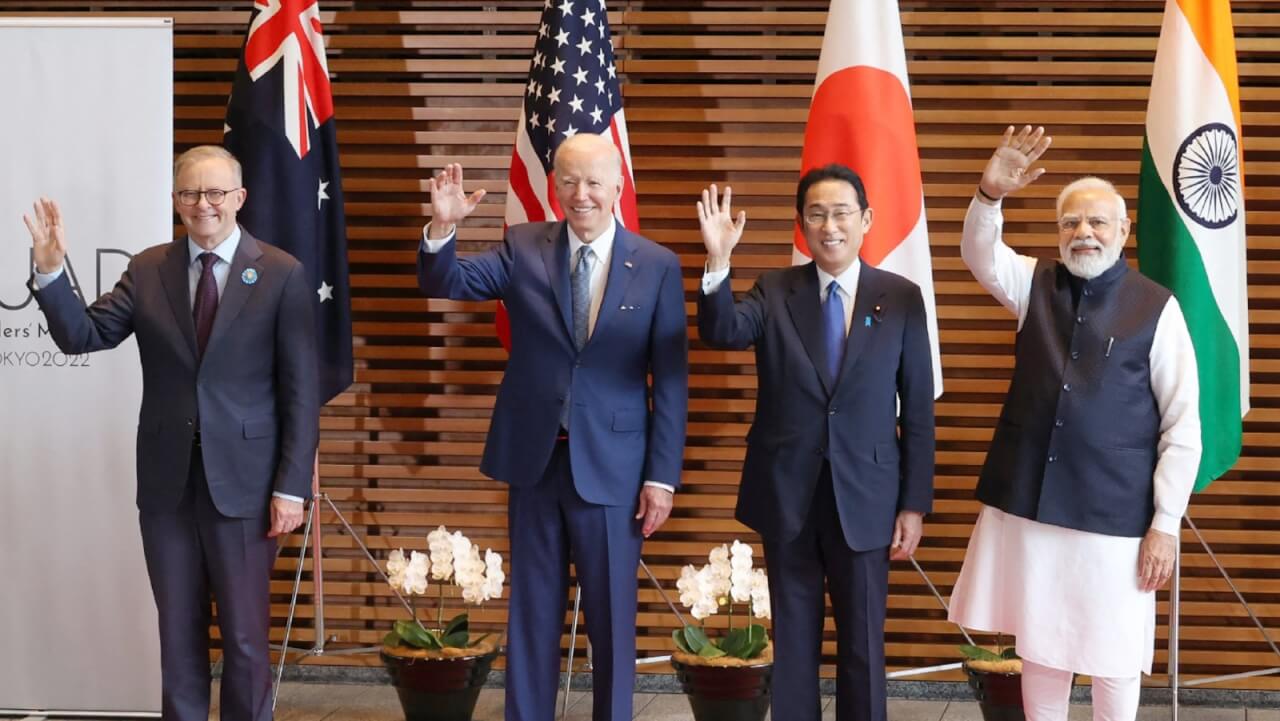
The United States reinforced this vision in 2018 by renaming the U.S. Pacific Command as the U.S. Indo-Pacific Command (USINDOPACOM), institutionalizing the Indo-Pacific as the central theatre of American strategy in Asia. The pivot marked Washington’s recognition that developments in the Indian and Pacific Oceans had become strategically intertwined and highlighted the growing importance of the Quadrilateral Security Dialogue (QUAD) in maintaining a free, open, and rules-based regional order. This strategy shift can be observed in official U.S. defence documents and congressional assessments.
Washington’s decision in June 2026 to restore the designation U.S. Pacific Command (USPACOM) has therefore generated considerable debate. According to the official announcement, the change was intended to honour the command’s historical legacy while maintaining the same area of responsibility, mission, and commitment to regional allies and partners. The command explicitly stated that its geographical scope—from the western coast of the United States to India’s western border—and its operational priorities remain unchanged.
Nevertheless, symbolism has always been an important instrument of statecraft. Strategic communication is conveyed not only through military deployments or diplomatic statements but also through institutional language. Names influence how allies interpret commitments, how competitors assess strategic intent, and how regional actors perceive shifts in geopolitical priorities. For this reason, even if the renaming does not signify an immediate change in U.S. military posture, it inevitably invites questions about its political meaning.
The timing of the decision is particularly noteworthy. It came after disagreements between Washington and several Indo-Pacific partners over the crisis involving Iran and the Strait of Hormuz, where key members of the QUAD adopted cautious and nationally differentiated responses rather than acting collectively. While there is no official evidence that the renaming was intended as a response to those disagreements, the sequence of events raises an important analytical question: can the restoration of the “Pacific” designation be interpreted as a strategic signal that Washington is reassessing the political cohesion of the Indo-Pacific coalition and recalibrating its expectations of its regional partners?
The Politics of Naming: Constructing the Indo-Pacific
The term Indo-Pacific was never intended as a mere geographical expression. Rather, it emerged as a strategic and political construct that redefined how major powers conceptualized Asia’s maritime order. Unlike the traditional “Asia-Pacific,” which primarily emphasized the Pacific Rim, the Indo-Pacific connected the Indian and Pacific Oceans into a single strategic theatre, reflecting the growing interdependence of maritime trade, security, and geopolitical competition. As Japan’s Ministry of Foreign Affairs notes, the concept builds upon Prime Minister Shinzo Abe’s 2007 Confluence of the Two Seas speech and the subsequent vision of a Free and Open Indo-Pacific (FOIP), which sought to promote a rules-based order across this interconnected maritime space.
The United States formally institutionalized this strategic vision in May 2018 when Secretary of Defense James Mattis announced the renaming of the U.S. Pacific Command as the U.S. Indo-Pacific Command (USINDOPACOM). Mattis explained that the change recognized “the increasing connectivity between the Indian and Pacific Oceans” and reflected the strategic importance of integrating both theatres under a unified command. Importantly, the Department of Defence emphasized that while the command’s mission and area of responsibility remained unchanged, the new designation acknowledged the broader geopolitical significance of the Indian Ocean in U.S. strategy.
The significance of this decision extended beyond military administration. As the Congressional Research Service observed, the renaming aligned with the 2018 U.S. National Defence Strategy and symbolized Washington’s broader engagement with partners across both the Indian and Pacific Oceans. In doing so, it reinforced the political narrative that regional security could no longer be understood through the Asia-Pacific framework alone but required an integrated Indo-Pacific approach.
Names, therefore, perform an important political function. They define strategic spaces, shape alliance expectations, and communicate priorities without altering military capabilities. The adoption of the term Indo-Pacific signalled that the United States expected its regional partners, including India, Japan, and Australia, to view security challenges across the wider maritime region as interconnected. If the original renaming in 2018 represented the institutionalization of a new strategic vision, then the recent restoration of the “Pacific Command” designation inevitably raises questions about the political messages such symbolic changes may convey. The issue is not whether American military capabilities have changed—they have not—but whether the language through which Washington communicates its regional priorities is itself evolving.
The Strait of Hormuz: The First Strategic Test of the Indo-Pacific
The Indo-Pacific has increasingly been conceptualized as an integrated strategic theatre stretching from the eastern coast of Africa to the western Pacific. This vision, however, rests on a crucial assumption: that its principal stakeholders are willing to respond collectively to security challenges across this vast maritime space. The crisis surrounding Iran and the Strait of Hormuz exposed the limitations of that assumption.
For Washington, the Strait of Hormuz is not merely a Middle Eastern chokepoint. It is one of the world’s most critical maritime corridors, through which approximately one-fifth of global petroleum consumption and a substantial share of liquefied natural gas transit each day. Disruptions in the Strait have immediate consequences for global energy markets, maritime commerce, and the economies of major Asian importers, including India, Japan, and South Korea. Recognizing this strategic importance, successive U.S. administrations have viewed the security of Hormuz as inseparable from the stability of the wider maritime order. This assessment is consistently reflected in the analyses of the U.S. Energy Information Administration (EIA), which identifies the Strait of Hormuz as the world’s most important oil transit chokepoint.
From the perspective of the Indo-Pacific strategy, the Hormuz crisis represented more than a regional contingency. It became an important test of whether the Indo-Pacific could function as a genuinely integrated strategic theatre. If the Indian Ocean and Pacific Ocean are strategically interconnected, then threats to maritime security in the Persian Gulf should, in principle, concern all major Indo-Pacific stakeholders. This logic underpinned the U.S. emphasis on protecting freedom of navigation and securing global sea lines of communication, principles repeatedly articulated in the Department of Defence’s Indo-Pacific strategy documents.
Yet the responses of America’s principal Indo-Pacific partners revealed important political differences. India maintained its long-standing policy of strategic autonomy and refrained from joining U.S.-led maritime security operations, prioritizing energy security and balanced relations in West Asia. Japan likewise chose an independent information-gathering mission rather than participating directly in the U.S.-led International Maritime Security Construct, despite its close alliance with Washington. These responses reflected national strategic calculations rather than a collective Indo-Pacific approach.
The Hormuz episode therefore exposed an important contradiction. While the Indo-Pacific has successfully redefined the strategic geography of Asia, it has not yet produced a common political commitment to respond collectively to security crises across that geography. The QUAD remains a coalition of converging interests rather than a formal alliance with shared obligations extending across the entire Indo-Pacific. It is against this backdrop that Washington’s subsequent decision to restore the Pacific Command designation acquires analytical significance. Although there is no official evidence linking the renaming to the Hormuz episode, the sequence of events invites an important question: did the crisis reveal the practical limits of the Indo-Pacific as a strategic coalition, prompting Washington to recalibrate the symbolic language through which it communicates its regional priorities?
Strategic Signalling or Strategic Recalibration?
The restoration of the U.S. Pacific Command designation does not alter America’s military capabilities, alliance commitments, or area of responsibility. The Department of Defence has explicitly stated that the command’s mission, operational responsibilities, and geographical coverage remain unchanged, stretching from the west coast of the United States to India’s western border. Officially, the decision was presented as a return to the command’s historical identity rather than a revision of U.S. strategy. Nevertheless, in international politics, symbols often communicate political messages that extend beyond their formal explanations. Governments interpret not only military deployments and diplomatic statements but also institutional language as indicators of strategic priorities. Official statements on the restoration emphasize continuity in mission while reviving the historic Pacific Command designation.
From this perspective, the renaming can be understood as a form of strategic signalling rather than merely administrative rebranding. Strategic signals are often designed to shape expectations among allies and partners. They communicate not only what a state intends to do but also what it expects others to contribute. The Indo-Pacific concept was built on the assumption that security across the Indian and Pacific Oceans is indivisible and that like-minded partners would increasingly share responsibility for preserving regional stability. Yet the differing responses to the Strait of Hormuz crisis revealed that this expectation remains only partially realized. When confronted with a security challenge outside East Asia, QUAD members responded according to their individual national interests rather than through coordinated strategic action.
Whether intended or not, the return to the Pacific Command designation may therefore be interpreted as reflecting a reassessment of political expectations rather than geographical priorities. The symbolic removal of “Indo” does not diminish India’s importance or signal the abandonment of the Indo-Pacific strategy. Instead, it may reflect Washington’s recognition that expanding the geographical scope of a strategy does not automatically produce a corresponding expansion of alliance commitments. In other words, the Indo-Pacific has become an accepted geopolitical concept, but it has not yet evolved into a fully integrated strategic community.
This interpretation carries broader implications for the QUAD. Since its revival in 2017, the grouping has deliberately avoided becoming a formal military alliance. Its strength has rested on flexibility, shared democratic values, and practical cooperation in areas such as maritime domain awareness, resilient supply chains, critical technologies, disaster relief, and infrastructure. That flexibility, however, also limits collective responses to crises beyond the members’ immediate national priorities. The Hormuz episode demonstrated that strategic convergence on China does not necessarily translate into convergence on every security challenge across the wider Indo-Pacific.
If this reading is correct, the renaming is less a retreat from the Indo-Pacific than a reminder that geopolitical narratives cannot substitute for political commitment. Strategic concepts acquire credibility only when their participants are willing to assume the responsibilities they imply. The future of the Indo-Pacific will therefore depend not on whether Washington employs the term “Indo-Pacific” or “Pacific,” but on whether its partners are prepared to act collectively when the strategic logic of the Indo-Pacific is tested beyond East Asia.
The Future of the QUAD and the Indo-Pacific
The debate surrounding the restoration of the U.S. Pacific Command ultimately extends beyond the name of a military headquarters. It raises a more fundamental question about the future of the Indo-Pacific as a strategic project. Since its emergence, the Indo-Pacific has relied heavily on American leadership to provide both strategic direction and political momentum. Yet geopolitical ideas mature only when they are embraced and sustained by the regions they seek to define.
The QUAD now finds itself at an important crossroads. During its early years, the grouping focused primarily on balancing China’s growing influence and preserving a rules-based maritime order. More recently, its agenda has expanded to include critical and emerging technologies, resilient supply chains, cybersecurity, maritime domain awareness, infrastructure, and disaster response. These initiatives have strengthened institutional cooperation, but they have not resolved a more fundamental question: Does the QUAD possess the political cohesion necessary to respond collectively when members’ national interests diverge?
The Strait of Hormuz illustrates this dilemma. The episode demonstrated that while QUAD members broadly share concerns over maritime security, their responses remain shaped by distinct strategic cultures, alliance commitments, and economic dependencies. India continues to prioritise strategic autonomy, Japan balances alliance obligations with regional diplomacy, Australia calibrates its policies within the framework of its alliance with the United States, and Washington increasingly expects greater burden-sharing from its partners. These differences do not signify the failure of the QUAD, but they underscore that the grouping remains a flexible strategic partnership rather than a formal security alliance.
If the restoration of the Pacific Command carries any enduring political message, it is that the future of the Indo-Pacific cannot depend solely on American strategic narratives. The credibility of the Indo-Pacific will increasingly be measured not by official terminology but by the willingness of regional partners to assume greater responsibility for maintaining the security of the wider maritime commons. In that sense, the challenge confronting the QUAD is no longer whether it can balance China alone, but whether it can evolve into a genuinely strategic coalition capable of addressing interconnected security challenges stretching from the Persian Gulf to the Western Pacific.
Military commands may change their names, but geopolitical realities endure. The Indo-Pacific has never been merely a geographical expression; it is a political vision built upon shared interests, collective responsibility, and strategic trust. If that vision is to remain relevant, its future will depend less on what Washington chooses to call its command than on whether the region itself is prepared to transform the Indo-Pacific from a powerful idea into a durable strategic community.