The celebration of Ukraine’s 35th anniversary of regaining independence amidst continuing war with Russia was symbolic on many levels – and also indicative of the growing risks of escalation. The arrival of many European leaders compelled Moscow to make a pause in its missile strikes on Kyiv, after a particularly heavy series of attacks in the first three weeks of August. Ukraine’s European allies reiterated their commitment to support its resistance against Russian aggression and made some new pledges, which are indeed necessary to compensate for the lack of aid from the Trump administration, which was conspicuous by its absence at the ceremonies. It was Andy Burnham, still new in the job of UK’s prime minister, who claimed the central role in the sombre festivities in Kyiv and attracted more than usual ire in Moscow.
The agreement Burnham finalised in Kyiv to transfer to Ukraine the technology for producing the Storm Shadow/SCALP missiles follows the French decision to share its part of the joint design and cannot have any immediate impact on fast-evolving combat operations. Ukrainian Air Force has too few platforms capable of using these missiles, and its F-16s are preoccupied primarily with missions to intercept Russian Kalibr and Kh-101 cruise missiles. What made the Kremlin worried was the fast progress in the process of Ukraine’s integration into the European defense-industrial complex, which effectively cancels its goals of keeping Ukraine down and Europe – divided. Moscow as usual tried to camouflage its fears as anger, but Burham resolutely shrugged off the threats of repercussions.
Russia indeed produced a volume of threats in order to prevent many European initiatives from the delivery of Leopard-2 tanks in Spring 2023 to the seizure of tankers last August. Each new threat needs to be graver and more specific to make any impact, and the proposition that British military installations beyond Ukraine could be targeted sets a new mark, which still doesn’t make it credible. An escalation of Russian “hybrid” operations in Europe has been reported, and authorities take the due measures to increase protection of military plants against possible acts of sabotage. The real scale of this Russian campaign executed mostly by cheaply recruited local thugs is, nevertheless, minuscule compared with Ukrainian long-distance strikes on such key ordnance facilities as the Kamensky plant in the Rostov region. Hacker group Rhysida has tried to blackmail the Berlin city authorities, but there are no traces of its links to Russia, and such major incidents as the blackout in the Heathrow airport on 21 March 2025, not to mention the massive grid failure in Portugal and Spain in April 2025, were most certainly not of Russia’s making. Every Russian attempt to test European resilience to unconventional attacks has so far only prompted various governments to invest more in protective measures and also backfired in the steady tightening of the EU sanctions regime.
Russia’s own vulnerability to attacks targeting civilian infrastructure has been exposed by the sequence of spectacular Ukrainian strikes on the huge warehouses constructed in the last few years by the Wildberries online retailer. The damage is far greater than just the value of consumer goods because the volume of debt accumulated by this fast-expanding business is painfully heavy even for the giant VTB bank, which is compelled to throw good money after bad. Andrei Kostin, VTB’s long-serving boss, has excellent connections in the Kremlin, but the government is still reluctant to come to his rescue because the state budget is deep in the red. Mainstream economists, like Andrei Klepach, warned already in the spring that the burden of war expenditures was too heavy for the stagnating economy, and in the early autumn, those warnings sound like a serious understatement, but the carriers of bad news are firmly silenced. Russians react to these attempts to order the economy to resume growth and investment in the most natural way – by withdrawing their savings from bank accounts.
President Putin could be informed very elliptically about the depth of this crisis, but a decision to overcome it by escalating the confrontation with Europe would still be far beyond the limits of common strategic sense. Russia’s most important interface with Europe is in the Baltic theatre, and it is exactly there that the balance of risks and opportunities is tilted heavily against Moscow. The newest NATO members Finland and Sweden are building up capabilities for supporting the three Baltic states, who joined NATO in 2004 (encountering few objections from Putin), and Poland increases its already boosted defense budget faster than any other member of the Alliance. The Kaliningrad exclave that used to be a fortified bastion with formidable A2/AD capabilities, is left undefended as the troops and key weapon systems are redeployed to the Ukrainian front, and no amount of assertive rhetoric can compensate for this vulnerability.
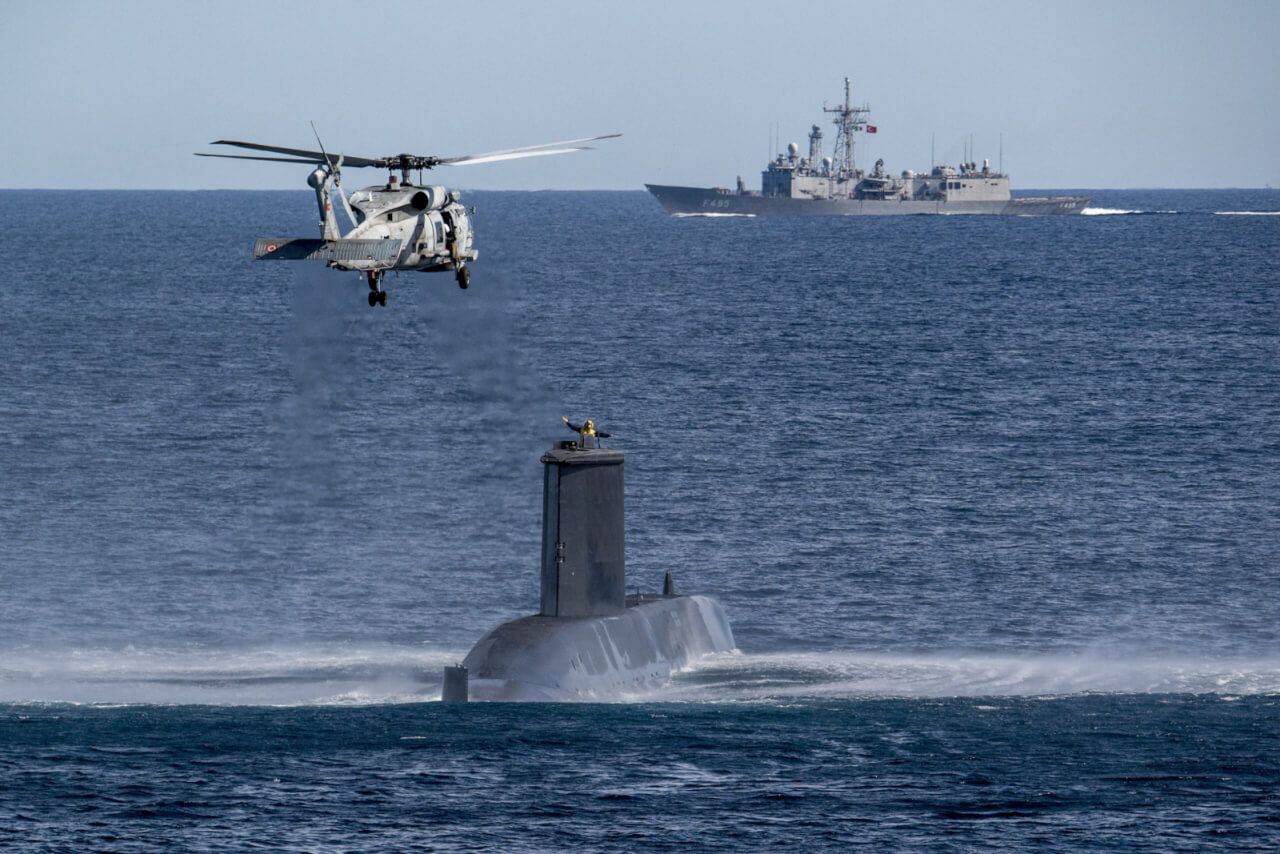
In the Black Sea theatre, Russia is facing a less potent pro-Ukrainian coalition, but the dynamics here is driven by Ukraine itself, as the drone hits in the mid-August on the missile frigates Admiral Makarov and Admiral Essen inside the Novorossiysk harbor demonstrated. Moscow keeps testing Romania’s resolve by recurrent aerial and naval drone incursions and also by increasing the political and military pressure on Moldova. The most important independent variable in the strategic equation on this theatre from the Russian perspective is Turkey, and Moscow takes great diplomatic pains to relate to it simultaneously as a NATO member-state and as a strategic partner. One recent illustration of this convoluted course is the reaction in Moscow to the approval by the US Congress of the deal on transfer by Ankara to Ukraine of a large amount of somewhat obsolete weapons, including 70 M39 ATACMS tactical missiles. Russian commentators try to present this arrangement as a feature of the US and not Turkish policy, while their criticism of the Trump administration decisions is also typically subdued because of the residual hopes in the Kremlin for making a favorable peace deal at Ukraine’s expense.
The big geo-strategic picture of the Ukraine War is changing irrespective of the tactical stalemate in the battle for Donbas. At the start of the offensive, Russia encountered a far stronger Western unity in opposing the aggression than it had expected, and the hopes for splitting the pro-Ukraine coalition were revived only by President Trump’s cancellation of the US leadership. Now Moscow can presume that it is engaged in confrontation only with Europe, but its capacity for gaining a position of power is fast diminishing, while the opponents invest in rearmament and integration with Ukraine. Putin’s new best hope is that the EU will be incapacitated by internal divisions and bureaucratic squabbles. In order to break this calculus, the Europeans must build a wider coalition than just the EU, so that the UK will be one of the leaders, and states like Norway, Turkey, and even Canada are rightful members.