The wave of ‘Anti-Semitism’ that existed in Europe spread after 1933, and the Nazi regime’s ruthless attitude towards opponents, forced German Jews and opponents of the regime to emigrate. One of these countries is Türkiye, and it has opened its doors to more than 800 German citizens. Among them are nearly 800 academics, cultural figures and politicians. Atatürk and the government of Türkiye encouraged them to come to Türkiye. During their stay in Türkiye German scientists made significant contributions to the establishment of Turkish universities.
Istanbul University made a major breakthrough with German scientists and became a scientific institution in the truest sense. Among them, Alfred Heilbronn and Curt Kosswig established the first botanical institute and national park in Istanbul. Paul Hindemith reformed music institutions. Professor Ernst E. Hirsch played a part in the establishment of the Faculty of Law in Istanbul and in the drafting of Turkish commercial law. Likewise, Prof. Fritz Neumark played an important role in the establishment of the Faculty of Economics and in the training of the new generation of economists. As a student at the Faculty of Economics of Istanbul University, I had the opportunity to attend the lecture he gave in Turkish because of the honorary doctorate. It is also said that Neumark corrected Turkish spelling errors on students’ exam papers. He collected his memories in the book Zuflucht am Bosporus. Upon his return, he served as the Rector of the University of Frankfurt.
The Grand National Assembly building was designed by the architect Bruno Taut from Berlin, and some of the ministry buildings in Ankara were built by the famous architect Clemens Holzmeister. Although the life of these people in our country was not easy, Türkiye provided them with the opportunity to survive. After returning to their countries, they made a significant contribution to the promotion of our country, such as Türkiye’s honorary ambassadors.
‘Excellent but a Little too Independent’
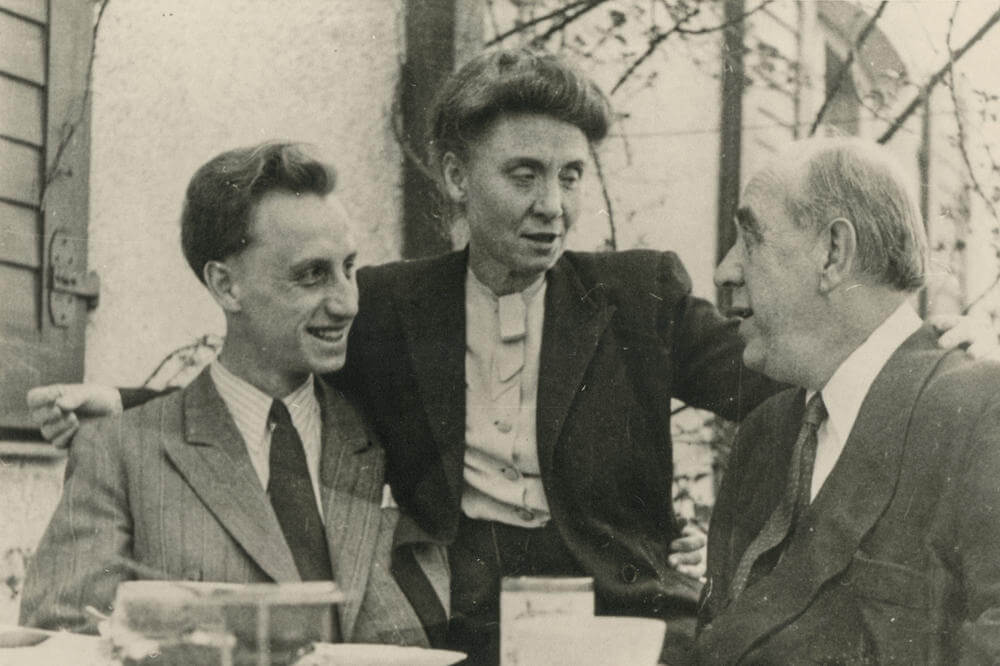
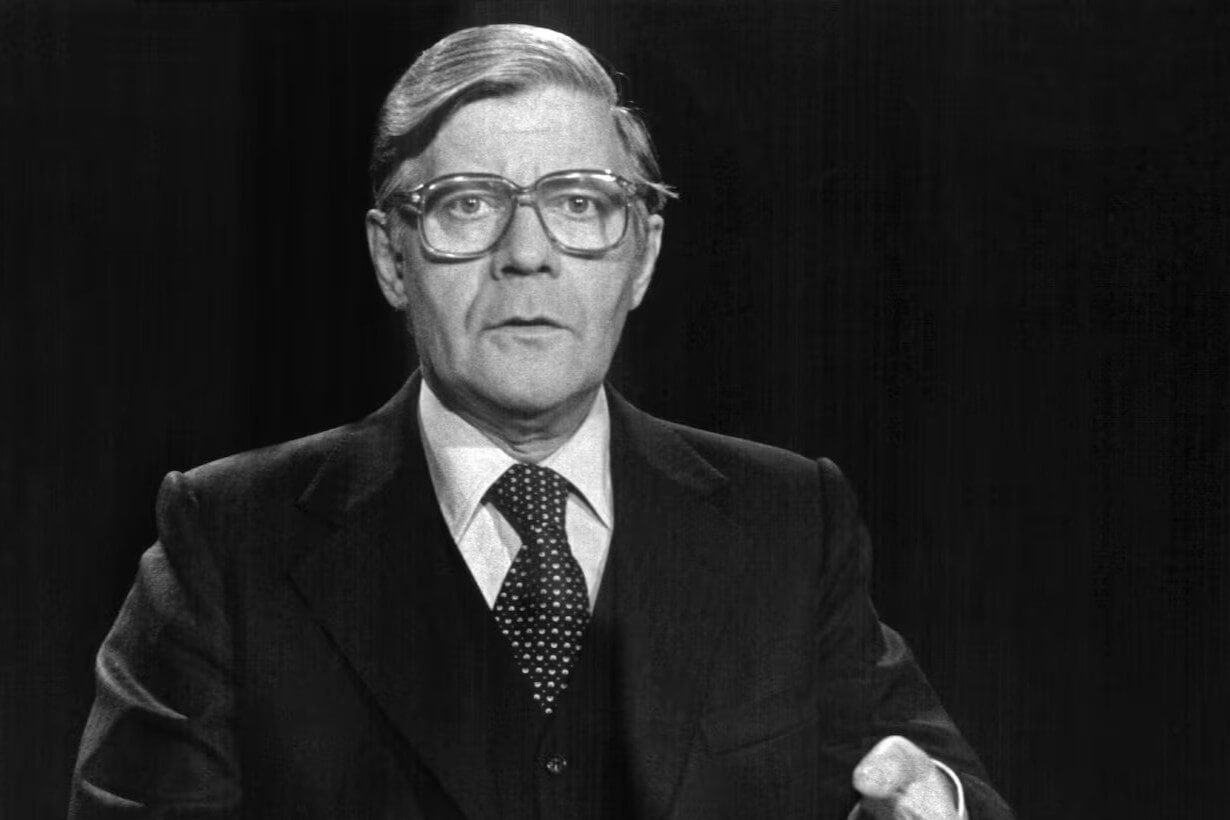
Ernst Reuter, whom former German Chancellor Helmut Schmidt said, “I took him as an exemplary politician”, had a very active life. Reuter was born on July 29, 1889, in Apenrade (today Denmark) in Northern Germany. He spent his childhood years in the city of Leer. In 1912, he completed his higher education at the universities of Münster and Marburg and became a teacher.
According to the famous historian Fritz Strene, his family was extremely conservative. He was at odds with his family because of his political views. Reuter said, “I can’t do anything about it. I am a socialist, and this is my worldview.” In 1912, he joined the German Social Democratic Party (SPD). During World War 1, he was wounded and captured by the Russian. Meanwhile, he learned Russian and joined the Bolsheviks. Lenin described himself as “excellent but a little too independent” and later sent him to Saratov for the establishment of the “Volga German Autonomous Republic”.
Reuter returned to Germany and married Hanna in 1920. He became a member of the German Communist Party (DKP) and returned to the German Social Democratic Party in 1922. He was mayor of Magdeburg from 1931 to 1933 and was elected to the German Parliament (Reichstag) in 1933. However, he was stripped of his parliamentary seat by the Nazis, tortured and sent to the Lichtenburg concentration camp near Torgau.
Türkiye Adventure
After his release, he came to Türkiye with his family in 1935 and stayed in our country until 1946. During this period, he contributed to the establishment of the “Urban Planning” chair at Ankara SBF and also served as an advisor to the government. Former Ankara residents remember going to university with his Bask beret and bicycle. His son Edzard Reuter, in an interview with journalist Nina Grunenberg for Die Chiefs in 1990 states that his parents could not stomach being out of politics and that their conversations intensified on the news coming from Germany. The most important question is when this period will end.
While all these German refugees were living in Türkiye, a very important figure was the Ambassador of Nazi Germany to Ankara. Franz von Papen (1879-1969). He was a politician who was German chancellor before Hitler and played an important role in Hitler’s rise to power. He served in Ankara between 1939 and 1944. Interestingly, von Papen served as the 4th Army of the Ottomans on the Palestine Front during World War II. He served as Chief of Staff in the Army. Although he was found not guilty at the International Nürnberg Tribunals in April 1945, a German court sentenced him to eight years in prison for collaborating with the Nazis; he was released from prison in 1949 and died in 1969 at the age of 89.
In a conversation with Edzard Reuter, I asked him about the relationship between von Papen and German refugees. From Türkiye’s point of view, German refugees were considered “Heimatlos-Stateless”, but at the same time, they continued to have German citizenship. They needed a visa from the German embassy to extend their passports. Edzard Reuter said that his relations with von Papen were distant and that he did not behave negatively towards them.
Turkish Mayor of Berlin
Ernst Reuter returned to Germany with his family in 1946. At the same time, famous Social Democrats who fled abroad from the Hitler regime and were imprisoned in concentration camps also began to return. These include famous Socialists such as Kurt Schumacher, Willy Brandt and Herbert Wehner. Ernst Reuter was elected Mayor of Berlin in 1947, during the height of the Cold War. During the Soviet siege of Berlin in 1948/49, he established an “air bridge” with the Americans and ensured the survival of the people of West Berlin.
Edzard Reuter, who is still striving to raise Turkey’s image in German society, refers to Turkey as “my second homeland” in one of his books.
It is known that Reuter had oratorical power. His speech in front of the burned Reichstag on September 9, 1948, before 300 thousand Berliners, is still remembered. Two months later, he won the election held only in West Berlin with 65 percent of the vote. Time magazine introduced Reuter to the world as “Herr Berlin” by making him the cover. I remember that the famous Der Spiegel magazine wrote under the picture “A Turk becomes the Mayor of Berlin”. Reuter was re-elected on January 18, 1951. He contributed to the establishment of the famous Free University of Berlin. With the “Mayor Reuter Foundation” he founded, he aimed to help the refugees coming to West Berlin.
Ernst Reuter died unexpectedly on June 17, 1953, at the age of 64, as a result of a heart attack. More than 1 million people attended the funeral. His grave is in the Waldfriedhof Berlin Dahlem. Today, visitors to Berlin are bound to encounter his name everywhere. Ernst Reuter is the unforgettable mayor of Berlin.
Another famous Berlin Mayor and German Chancellor, Willy Brandt, said in a conversation that he learned about Türkiye from Ernst Reuter. Helmut Schmidt, on the other hand, stated that he took him as an example in his political life.[1] The name “Ernst Reuter” was given to the German school affiliated with the German embassy in Ankara to keep his memory alive. Indeed, Ernst Reuter was a faithful and conscious social democrat as well as one of the last important statesmen to become extinct.
A Committed European
One of the living eyewitnesses of post-war Germany is Edzard Reuter, the son of Ernst Reuter. Edzard Hans Wilhelm Reuter, CEO of Daimler-Benz from 1987 to 1995 is one of the German business leaders who shared their views and warnings with their communities on time and led society in economic and political matters. The leading members of his generation of business leaders did not appear in tabloids and did not display their wealth in public. Instead of just telling society the recipes for getting rich, they try to help their governments and civil society by offering solutions in the depressed times of their societies. In other words, they are among the leaders of society and truly represent the bourgeoisie. They have good intellectual equipment. They closely follow economic and political developments and work with highly trained and talented consultants. They try to catch the problems in a timely manner by running ahead of developments, not behind them, and share their thoughts with society.
Edzard Hans Wilhelm Reuter was born on February 16, 1928, in Berlin. He made a trip with his mother in 1935, first to Istanbul and then to Ankara. Reiner Möckelmann describes the life of the Reuter family in Ankara where they stayed for 11 years.
Edzard Reuter returned to Germany with his family in 1946. He started studying mathematics and theoretical physics at Humboldt University. He then transferred to the University of Göttingen. After a while, he started his law education at the newly founded Freie Universität Berlin and worked as an assistant at the same university between 1954-56. After completing his law education, Edzard Reuter started his career at the famous German film company UFA. He continued his career at Bertelsmann, one of Germany’s leading media organizations. In 1964, he was appointed to Daimler-Benz by businessman Hanns Martin Schleyer, who was killed by terrorists in the following years. In July 1987, on the recommendation of Alfred Herrhausen, he was appointed as the head of the organization instead of Werner Breitschwerdt and remained in this position until 1995. During this time, he was criticized for his “open corporate culture” policy. He tried to transform Daimler-Benz into a technology-oriented multinational company operating globally, rather than a company that only produces automobiles. For this purpose, he acquired Mercedes, AEG, MTU, MBB, Dornier, Fokker. In 1994, his name was mentioned for the mayor of Berlin and in 1998 he was awarded the honorary citizenship of Berlin.
Edzard Reuter has been a member of the German Social Democratic Party since 1946. He is a convinced European who supports the EU. In his latest book “Egorepaublik Deutschland” (2013) he criticizes the German government and society for not giving enough support to the EU.
“Türkiye is my second homeland”
He still strives to raise Türkiye’s image in German society. In his book “Horizonte der Wirtschaft” published in 1993, he mentions Türkiye as his second homeland. His book “Stunde der Heuchler”, published in 2010, really had a wide repercussion in German society. In this book, Reuter argues that German politicians and businessmen do not fulfill their social responsibilities and that they are personally responsible for the crises. He argues that the solution lies in the elites’ return to the old values – restraint, honesty and contentment – and that it is imperative that they also take into account the welfare of society within the framework of the market mechanism. In addition, he states that his most important personal characteristics are interest in learning something new, and interpreting events, which he says he learned from the Turks. He wrote his memoirs in his book “Schein und Wirklichkeit- Erinnerungen” (1998).
The Reuter family has never forgotten Türkiye’s hospitality and help in their most difficult days. This humane behaviour of the Turkish Republic, which invited these people from the darkest days of Europe to our country, has always been a source of pride for me.
Note: This article was published in Turkish in the August 2026 issue of the ‘Economics and Society Journal (İktisat ve Toplum Dergisi).
[1] Helmut Schmidt, Ausser Dienst, Siedler, 2008, p.157