Türkiye should make access to working capital part of its Middle Corridor strategy. Working capital pays for the goods and services a business needs before customers pay their bills. A transport route can expand a firm’s choice of markets, but taking an order still requires a way to finance production and wait for payment. This is where Türkiye’s connectivity ambitions meet the decisions of banks, insurers and exporters.
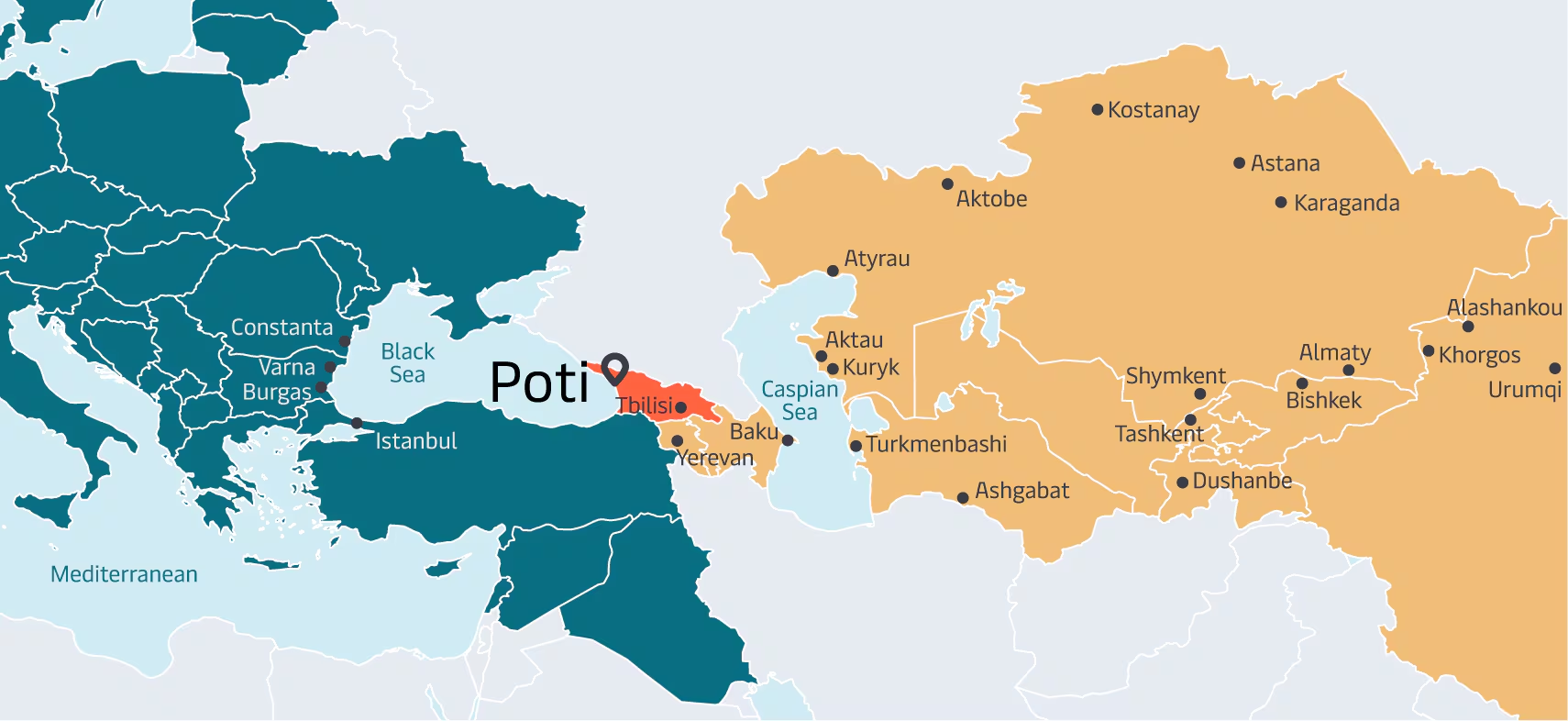
The World Bank’s September 2026 assessment of the Trans-Caspian Transport Corridor examines infrastructure and operating reforms across nine countries, including Türkiye. It recommends closer coordination and more integrated digital documentation. Those proposals offer an opportunity to ask how better information about shipments could also support the financing of the businesses using the route. That financial question deserves attention alongside the investment programme.
Fatih Ceylan’s earlier Panorama analysis sets out the corridor’s geopolitical importance. For Turkish economic policy, a further question is which domestic firms will be able to turn access to the route into regular sales. Smaller suppliers with a credible buyer can still need financing that reflects the terms of the particular transaction.
Consider a hypothetical Turkish machinery supplier with a €100,000 invoice payable 60 days after delivery. The supplier must cover inputs, wages and freight before receiving the customer’s money. A faster journey would shorten part of that wait. It would not remove the agreed period of customer credit. The supplier therefore needs to understand what can be financed, when funds become available and what happens if the buyer pays late.
Export credit insurance and a working capital loan perform different jobs. Insurance covers specified losses under the policy; a loan provides cash before the invoice is paid. If a loss occurs, conditions and a claims process apply. A business should not plan as though insurance delivers cash on the invoice’s due date. Its lender needs to understand the policy, the buyer’s credit limit and the documents required to support the debt.
Türkiye already has relevant instruments. Türk Eximbank’s short-term receivables insurance covers eligible commercial and political risks within its terms and buyer limits. The bank also offers a credit programme based on insured export receivables, accepting qualifying insured receivables as loan security. The policy task is to assess how such existing arrangements can serve additional viable transactions linked to the corridor, rather than assume that a new public institution is needed.
A practical starting point would be a limited pilot involving willing Turkish exporters, lenders and an insurer. Each transaction would have an identifiable buyer, an agreed payment date and evidence that the exporter can deliver. Before committing funds, participants would check who can claim payment and how any transfer of the receivable will be recognised. The pilot could test financing arrangements for a defined set of transactions and identify legal issues requiring wider agreement.
The pilot should begin with information that firms and banks already need. A bank assessing an invoice needs to verify the sale and the buyer’s payment obligation, and check whether the receivable has already been pledged elsewhere. Shipment records may help with part of that assessment. They do not, on their own, establish the buyer’s ability or willingness to pay.
Digital corridor records could reduce repeated requests for documents if the systems involved can exchange reliable information with the firm’s consent. The World Bank’s proposal for more integrated transport and trade documentation provides a useful context for exploring that possibility. The financing pilot should identify which records lenders actually use and where a legal or operational gap remains. Putting a document online does not automatically make it enforceable as security.
Risk also needs to stay visible. A receivable denominated in euros can expose a firm to exchange-rate changes when its costs or borrowing are in another currency. A strong buyer does not eliminate disputes over the goods delivered. Compliance checks and applicable sanctions rules remain necessary. Any public guarantee should have a defined scope and price, with losses monitored; commercial lenders should retain a meaningful reason to assess each borrower and transaction carefully.
Success should be judged through the financing decisions made. Participants could record the time from a complete application to approval, the total cost to the exporter and the share of the invoice advanced. They should also track repeat users and actual losses. A useful review would ask whether a firm obtained finance it could not otherwise secure, or obtained better terms, rather than simply count the amount guaranteed. Rejected applications would help identify whether the obstacle was documentation, borrower risk or product design.
This approach could also support more durable commercial relationships across the region. Firms that can finance repeat orders have a practical reason to maintain those links. Turkish exporters using the Middle Corridor could gain a clearer basis for dealing with buyers across the region, while partner institutions could gain experience working together on specific transactions. That is a modest, testable contribution to regional economic integration, without requiring a shared lending regime across every country involved.
Türkiye can use its existing export-finance institutions to test this alongside the corridor’s transport reforms. Start with a limited set of transactions, publish what was learned without disclosing firms’ confidential information, and expand only where the results justify it. The relevant question for an exporter is whether the next order can be financed through to collection. Giving that question a place in corridor policy would make the strategy more useful to the businesses expected to trade along it.