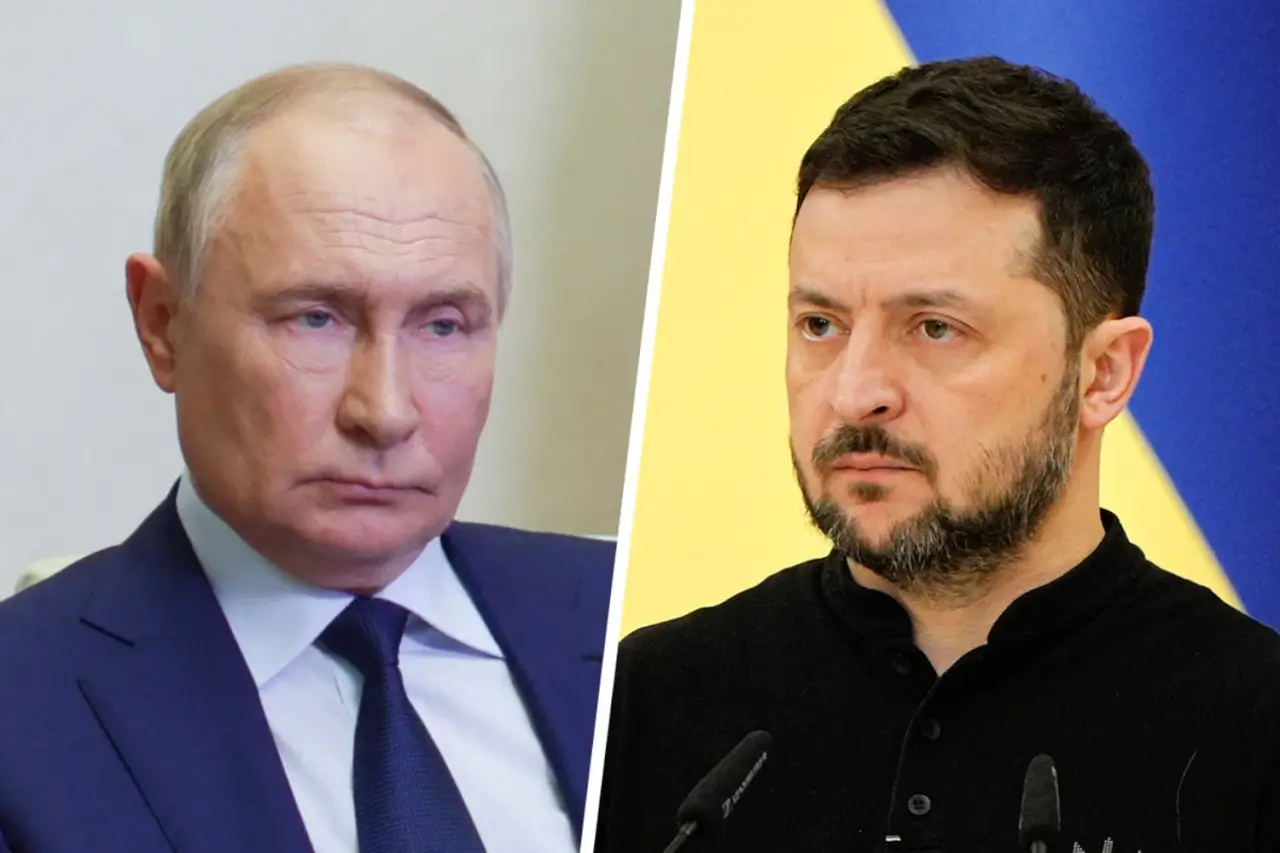
The wars are shaped by developments on the front line, the language leaders use, and the political messages they convey. The latest exchange between Zelensky and Putin is particularly noteworthy in this regard. While at first glance it may appear to consist of mutual accusations and the reiteration of diplomatic positions, it is, in fact, a significant indicator of the current dynamics of the war and the strategic calculations of the parties involved. While Ukraine is attempting to make Russia feel the cost of the war more acutely, Moscow is sending the message that it will not abandon its objectives despite the pressure. Zelensky, by placing the blame directly on Putin, makes it clear that he expects Putin to take the step that will end the war and to respond to this open letter, while Putin rejects this call because it does not align with his own terms and war objectives.
That is why Zelensky’s open letter to Putin and Putin’s response in St Petersburg are so significant. This exchange does not appear to be a gateway to peace. Rather, it reflects the current mood of the war. There is anger. There is exhaustion. There is no trust. There is a call for negotiations, but no common ground has been found. Both sides are speaking. Yet they are not talking about the same war.
Zelensky’s letter is not a call written with diplomatic courtesy. It targets Putin directly. It describes the war not as Russia’s war, but as Putin’s war. He sets aside justifications such as NATO, geopolitics, the Russian-speaking population, or security concerns. In his view, this war has no real cause. The ultimate decision rests with Putin. Therefore, the ultimate responsibility also lies with him.
This framework has been deliberately constructed. Zelensky is addressing Putin personally rather than the Russian state. In doing so, he is personalizing the war. This is not merely a moral accusation. It is a political move. A move that also seeks to reach the Russian public. The letter lists Russian casualties, economic hardships, fuel shortages, sanctions, restrictions, and war fatigue one after another. The message is clear: this war is not the Russian people’s fate, but Putin’s choice.
The timing of the letter is also significant. Ukraine is struggling on the front line but has not retreated entirely into a defensive posture. On the contrary, it is trying to make Russia feel the war’s costs more acutely. Long-range drone strikes, operations targeting energy infrastructure, and attacks on railways and naval assets in occupied territories are all part of this strategy. Zelensky’s emphasis that “our drones have reached as far as St Petersburg” is therefore not merely a provocation. It is a statement that the geography of the war has changed.
Ukraine now wants to demonstrate that distance does not guarantee Russia’s safety. The war is not confined to the trenches of Donbas. The St Petersburg area, Crimea, the Sea of Azov, the Black Sea, energy facilities, ports, and railway lines have all been drawn into this conflict. Zelensky’s letter translates this new reality into political language. “The war is coming for you, too,” he says. “You are paying the price too,” he says.
However, the letter contains pressure and a call for dialogue. Zelensky is offering Putin a direct meeting at the leaders’ level. He suggests they meet in a neutral country outside Moscow or Kyiv. He cites Switzerland, Turkey, and Arab countries as examples. He highlights issues such as a ceasefire, prisoner exchanges, the return of abducted civilians and children, and security guarantees. In this respect, the letter is a two-layered text. On the one hand, it portrays Putin as the perpetrator of the war. On the other hand, it places the responsibility for ending the war on him.
Putin responded to this letter at the St. Petersburg International Economic Forum. This choice was no coincidence. The SPIEF is one of the key platforms Russia uses to demonstrate that it remains strong, resilient, and a credible global player despite the war. Putin did not address Zelensky here. He spoke simultaneously to the Russian business community, foreign guests, the West, and the Russian public. It was therefore significant that he delivered a speech on the war at the economic forum because the war is now at the heart of the Russian economy as well.
Putin’s response was built around three main elements. Firstly, he targeted Zelensky’s tone. He found the letter rude. He said that such language did not create a suitable atmosphere for a leaders’ meeting. In this way, he sought to undermine Zelensky’s call more through its form than its content.
Secondly, he entered into a debate on legitimacy. He rejected the insinuations regarding his age and long tenure in power. He stated that he was carrying out his duties within the constitutional framework. He then raised the issue of the lack of elections in Ukraine. This was a continuation of an argument long used in Russian rhetoric. Putin sought to portray himself as a constitutional leader and Zelensky as a figure of questionable legitimacy.
Thirdly, he said that talks would serve no purpose at present. This response was not a direct ‘no’. It was a more carefully worded refusal. According to Putin, experts must first carry out their work, a solution must be found at a technical level, and the groundwork for a lasting agreement must be laid. Only then could the leaders step in. This sums up Moscow’s current stance. Russia does not wish to appear closed to negotiations. However, it is not keen on a process that begins with a ceasefire and accepts the current front line as a diplomatic starting point.
Putin’s reference to the Minsk Agreements is critical at this point. In his view, Minsk was used to buy Ukraine time and enable its rearmament. He therefore argues that any new talks would serve only to halt Russian advances. This argument reinforces Moscow’s narrative of mistrust. It also explains why it remains wary of a ceasefire. Russia fears that a ceasefire would undermine the military pressure on the ground.
The current course of the war makes this debate clearer. Russia is still maintaining its rhetoric of victory. Putin claims that the Russian army is advancing and that military success is inevitable. However, the picture on the ground is more complex. Russian advances have slowed since 2026. Ukraine is achieving tactical gains on some fronts. Russia’s claims regarding its control over Donetsk, Zaporizhzhia, and Luhansk also do not fully align with independent assessments.
This does not mean that Russia has been defeated. However, it shows that the war is no longer a straightforward attrition campaign for Moscow. The Russian army is attacking, but at a higher cost. Ukraine is defending, but it is not merely holding its ground. It targets Russian logistics, fuel supplies, rail links, maritime transport, and air defense capabilities. In this way, the pressure is shifting from the front line to the rear.
Recent Ukrainian attacks on Russian ships in the Sea of Azov, railway lines in Crimea, fuel infrastructure in the occupied territories, and military-industrial targets within Russia illustrate this new phase. These attacks alone will not end the war. However, they increase the cost of Russia’s war. They strain supply chains. They spread air defenses across a wide area. They give the public the sense that war is not far away.
Russia, in turn, is responding with intense drone and missile strikes. Ukrainian cities, energy infrastructure, railways, and civilian areas remain under pressure. Attacks on the areas around Kharkiv, Sumy, Odesa, Kherson, Dnipropetrovsk, and Kyiv are sustaining the burden of the war on Ukrainian society. Therefore, while Ukraine’s attacks deep into Russian territory may be a show of force, they do not eliminate Ukraine’s own vulnerability.
There is a direct link between Zelensky’s letter and the current course of the war. The letter can be interpreted as the political extension of Ukraine’s new pressure strategy. Slowing down the Russian advance on the front line, striking at Russian logistics behind the lines, holding Putin accountable in the diplomatic arena, and reminding the Russian public of the cost of the war are all part of the same strategy. Zelensky knows that war is not merely a military struggle, but a battle of psychological and political attrition.
Putin’s response is also not independent of the current situation. Moscow still believes it can exert pressure on the ground. For this reason, it is not inclined towards a swift meeting at the leadership level. From Russia’s perspective, time remains a tool. The Kremlin calculates that pressure on Ukraine’s human resources, Western support, air defenses, and economic resilience will increase. Putin’s response that “there is no point in talks” reflects this calculation.
Nevertheless, this calculation is not without risk. The strain on the Russian economy is mounting. Fuel shortages, labor shortages, war expenditure, and sanctions are creating long-term pressure. Ukraine’s deep-strike operations are making this pressure more visible. Russian society may have adapted to the war. However, adaptation does not equate to satisfaction. Zelensky’s letter targets precisely this distinction.
In the military sphere, the war is expected to see more attacks on rear areas. Ukraine will continue to target Russian logistics and energy infrastructure. Russia, too, will seek to wear down Ukraine’s air defenses, keep cities under pressure, and pursue small but steady advances on the eastern front. Unless there is a major diplomatic breakdown, the war may proceed along a less dramatic but more tiring trajectory.
In the long term, the key issue will be resilience. Who will be able to mobilize more troops? Who will sustain munitions production? Who will maintain external support? Who will be able to manage the economic cost? Who will be able to convince their own society that the war still makes sense? The Zelensky-Putin exchange has brought all these questions into sharp focus.
This exchange is therefore not merely a propaganda duel. It is a summary of the stage the war has reached. Ukraine is attempting to make Russia feel the cost of the war. Russia, for its part, is trying to demonstrate that it will not back down despite this cost. Zelensky is placing the responsibility for ending the war on Putin. Putin, however, is rejecting Zelensky’s call because it does not serve his own conception of victory.
There is no language here that suggests a move towards peace. There are two distinct languages at play: one seeking to manage the war, another seeking to make sense of it, and yet another seeking to make war more costly for the opposing side.