During the recent NATO Summit in Ankara, a British journalist asked me a thought-provoking question: “If the international security environment continues to deteriorate, which countries are most likely to seek nuclear weapons? Could Türkiye eventually be one of them?”
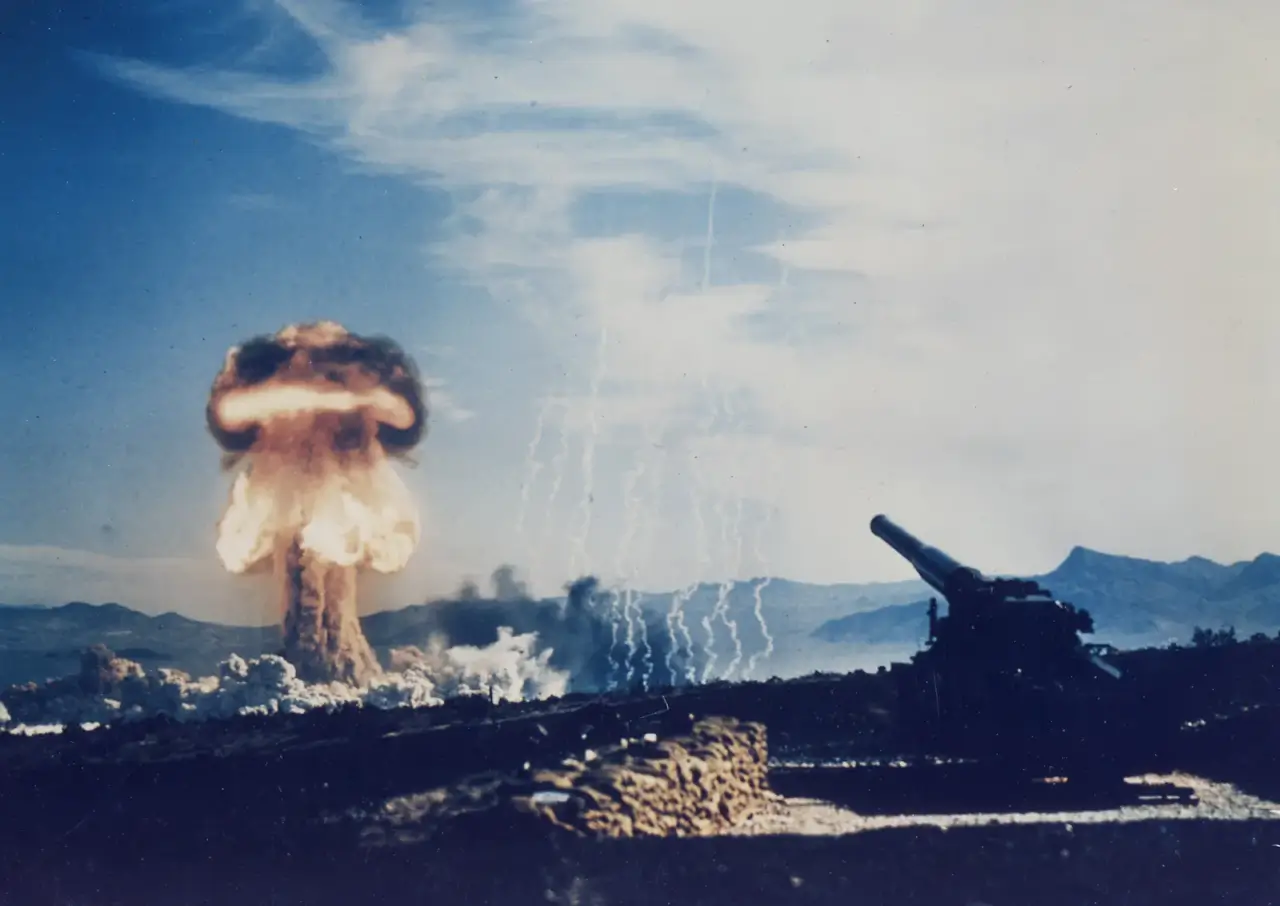
A decade ago, this would have been largely an academic exercise. Today, it has become a serious strategic question occupying presidents, national security advisers, military planners and intelligence communities around the world. The reason is simple: we are entering a new era of nuclear deterrence.
Following the end of the Cold War, many believed the liberal international order would gradually reduce the role of nuclear weapons. Economic interdependence, globalization and international institutions were expected to make major interstate wars increasingly unlikely. The opposite has happened. Russia’s invasion of Ukraine, the strategic rivalry between the United States and China, Iran’s advancing nuclear programme, North Korea’s expanding missile and nuclear capabilities, the collapse of regional balances in the Middle East and renewed military competition across Europe have returned nuclear deterrence to the very centre of international politics.
According to recent international estimates, the world still possesses roughly 12,000 nuclear warheads. While the United States and Russia continue to own around 90 per cent of them, China is expanding its arsenal faster than any other nuclear power. At the same time, every nuclear-armed state is modernising its strategic forces, investing heavily in new submarines, hypersonic delivery systems, cyber capabilities and next-generation command-and-control technologies. The debate, therefore, is no longer confined to today’s nuclear powers. The more important question is which countries possess the capability to become tomorrow’s nuclear powers should their strategic environment fundamentally change.
The Issue Is Not Technology—It Is Security
The greatest obstacle to acquiring nuclear weapons today is no longer scientific knowledge. Japan, South Korea, Germany, Canada and several other advanced industrial economies possess the technological, industrial and scientific foundations necessary to develop nuclear weapons if they ever made the political decision to do so. Strategic studies describe this condition as nuclear latency, the ability to move relatively quickly from civilian nuclear capability to military nuclear potential. Technology is only one variable. The decisive question is whether states continue to believe that their existing security arrangements will protect them in an increasingly uncertain world. Countries rarely pursue nuclear weapons because they are inherently aggressive. More often, they do so because they no longer trust that alliances, conventional military power or international institutions will guarantee their survival. Nuclear proliferation is ultimately driven less by physics than by geopolitics.
Ukraine Changed the Debate
No country has influenced today’s nuclear debate more than Ukraine. When the Soviet Union collapsed, Ukraine inherited the world’s third-largest nuclear arsenal. Under the 1994 Budapest Memorandum, Kyiv agreed to surrender those weapons in exchange for security assurances from Russia, the United States and the United Kingdom. Thirty years later, Crimea was annexed, and Ukraine became the victim of Europe’s largest war since 1945. No one can say with certainty that Russia would have acted differently had Ukraine retained nuclear weapons. But policymakers across the world are asking precisely that question. Whether justified or not, Ukraine has profoundly altered how many governments think about nuclear deterrence. The lesson many draw is uncomfortable but powerful: security guarantees may not always prove sufficient when confronted by determined military aggression.
Iran’s Nuclear Question
Iran remains the single most important proliferation challenge. An openly nuclear-armed Iran would not simply increase Tehran’s military capabilities; it would fundamentally reshape the strategic balance across the Middle East. Israel is widely believed to possess an established nuclear deterrent, despite maintaining its long-standing policy of deliberate ambiguity. If Iran were to cross the nuclear threshold openly, Saudi Arabia would come under enormous strategic pressure. Riyadh could attempt to develop an indigenous capability or seek a much closer strategic arrangement with Pakistan—an option discussed in security circles for decades, whether or not it ever materialises. Either scenario would trigger a regional chain reaction extending far beyond Iran itself.
Why South Korea and Poland Matter?
The same strategic logic applies elsewhere. South Korea faces a permanently nuclear North Korea. As long as confidence in America’s extended deterrence remains strong, Seoul is unlikely to seek an independent arsenal. But alliances ultimately rest on credibility. Should confidence in American security guarantees weaken significantly, South Korea’s domestic nuclear debate could rapidly shift from theoretical to practical. Poland represents another important case. Its security concerns are rooted not only in today’s Russia but also in centuries of historical experience. Warsaw continues to rely overwhelmingly on NATO. If confidence in NATO’s long-term credibility were seriously undermined, ideas that currently seem politically unrealistic could become increasingly mainstream.
Why Türkiye Is Different
Türkiye occupies a far more complex strategic position than most countries mentioned in these discussions. Today, Ankara has neither an active nuclear weapons programme nor an officially declared ambition to develop one. The reasons are obvious. Türkiye is a NATO ally. It remains a party to the Nuclear Non-Proliferation Treaty. Its economy is deeply integrated into global financial markets, Western institutions and international supply chains. The political and economic costs of pursuing an independent nuclear arsenal would be extraordinarily high.
Yet, strategy is not about managing today’s reality alone. It is equally about preparing for tomorrow’s uncertainties. Türkiye’s security environment is among the world’s most demanding. To the north stands a nuclear Russia increasingly willing to invoke nuclear coercion. To the south lies an Iran approaching nuclear threshold status. Nearby is Israel, widely believed to possess an established nuclear capability. The Eastern Mediterranean continues to witness growing geopolitical competition. No serious state situated in such an environment permanently excludes every strategic option.
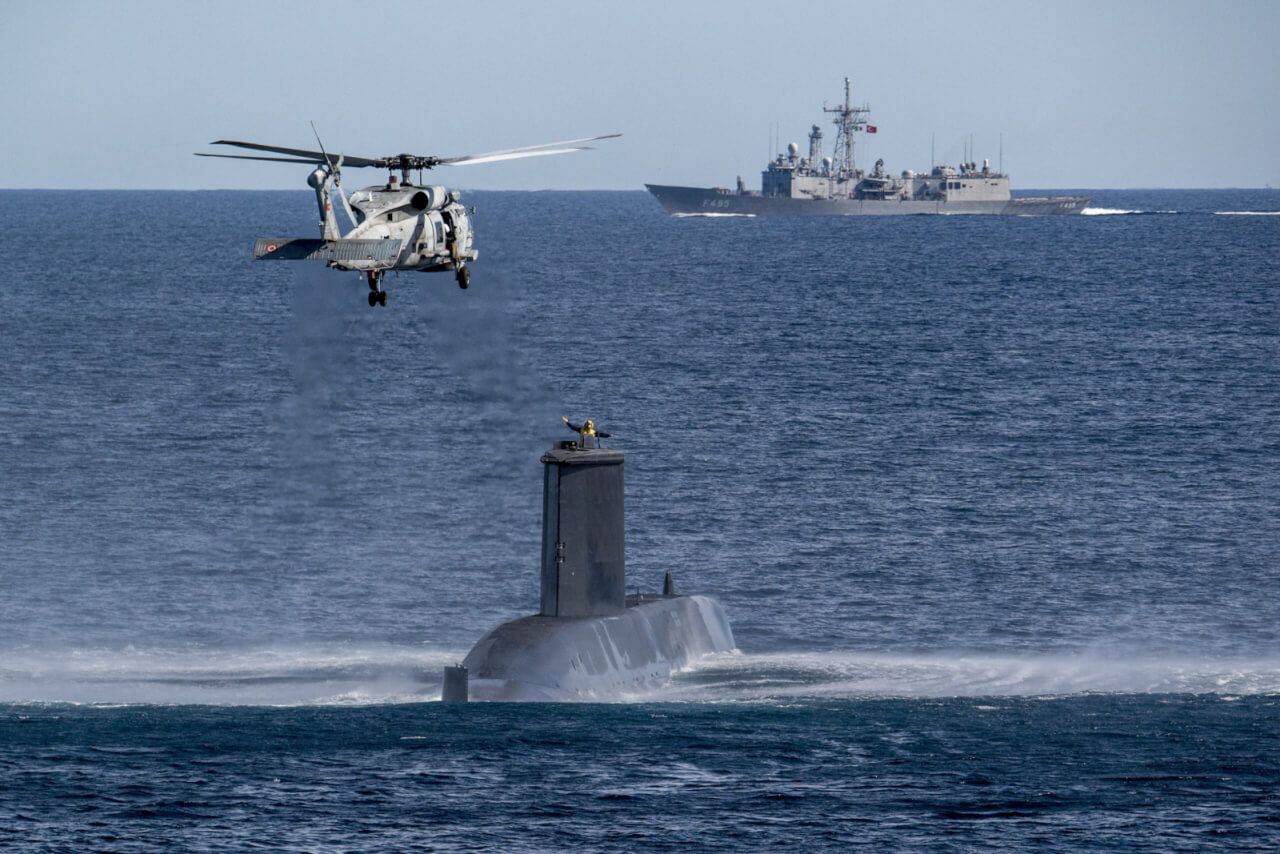
Over the past two decades, Türkiye has dramatically expanded its defence industrial base, missile programmes, aerospace capabilities, indigenous military technologies and civilian nuclear infrastructure. None of this suggests Türkiye is pursuing nuclear weapons. It does explain, however, why many foreign strategic assessments increasingly classify Türkiye as a country possessing significant long-term nuclear latency. That distinction matters. Capability and intention are not the same thing.
The New Deterrence Is Strategic Ambiguity
When Turkish Foreign Minister Hakan Fidan was recently asked whether Türkiye might one day possess nuclear weapons, he neither confirmed nor denied the possibility. I would not interpret this as evidence of a policy shift. Rather, it reflects a longstanding principle of statecraft. Responsible governments rarely close every strategic door permanently. Today, I see no compelling reason for Türkiye to pursue an independent nuclear deterrent. But I also recognise that strategic environments evolve.
If confidence in alliances weakens, if regional threats multiply, and if the international security order continues fragmenting, governments inevitably reassess assumptions that once appeared permanent. The defining nuclear question of the next decade will not be: “Which country will build nuclear weapons?” Instead, it will be: “Which country can credibly convince both allies and adversaries that it possesses the technological capacity, industrial capability and political resolve to build them if circumstances ever require?”
That is because deterrence in the twenty-first century is no longer created solely by warheads stored in underground bunkers. It is increasingly shaped by technological capability, industrial resilience, strategic ambiguity and the ability to keep future options open. Perhaps the most powerful deterrent of all is not necessarily the weapon you possess today—but the one everyone believes you could build tomorrow.